Explore papers
Filter by research area, year and venue. Every filter is in the address bar, so you can share a view as a link.
 Deepfakes & multimodalLLMs & generative AI
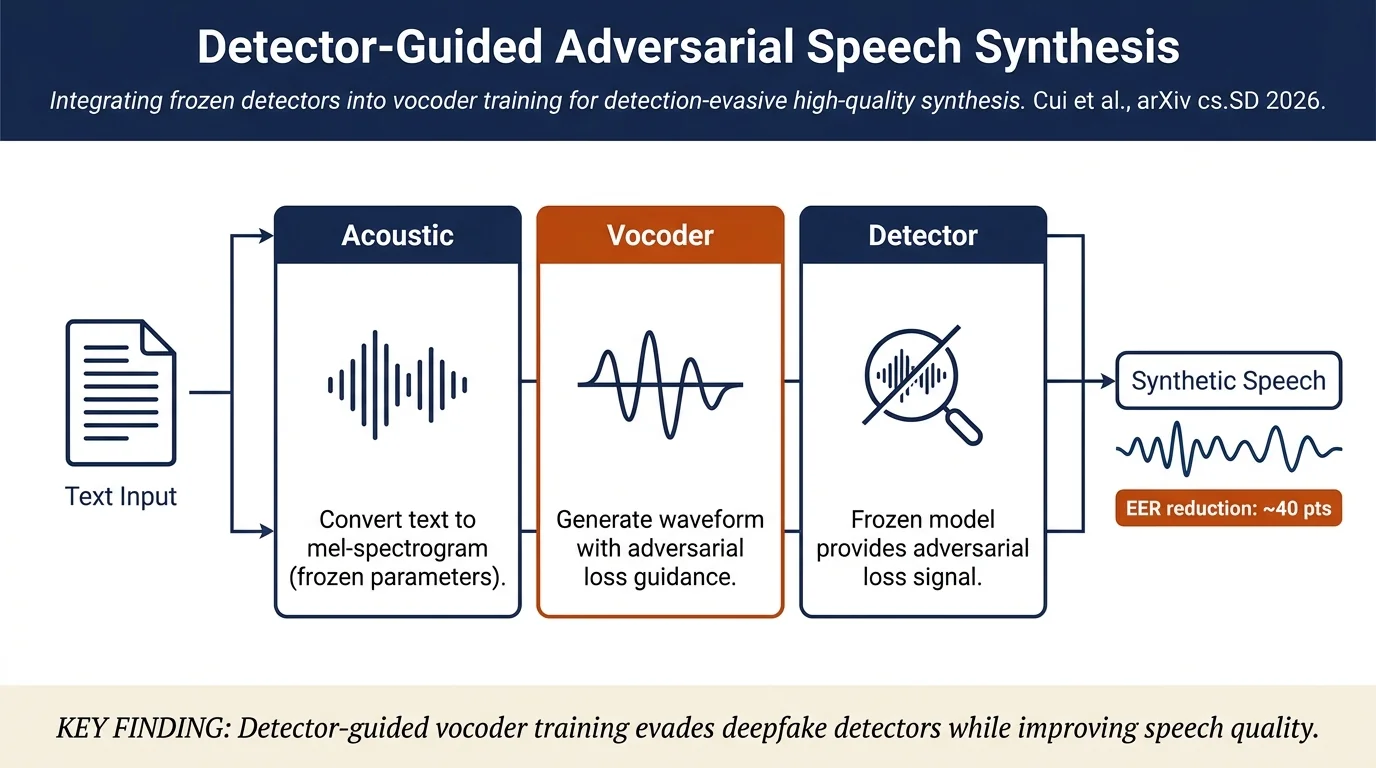
Detector-Guided Vocoder Training for Adversarial Text-to-Speech SynthesisThis paper presents a method to generate synthetic speech that evades deepfake detectors by integrating detector loss directly into vocoder training, rather than applying post-hoc perturbations. The approach fine-tunes a BigVGAN vocoder while freezing the acoustic model and detector, generating adversarial speech that retains high…
 Bots & coordinated campaignsDatasets & evaluation
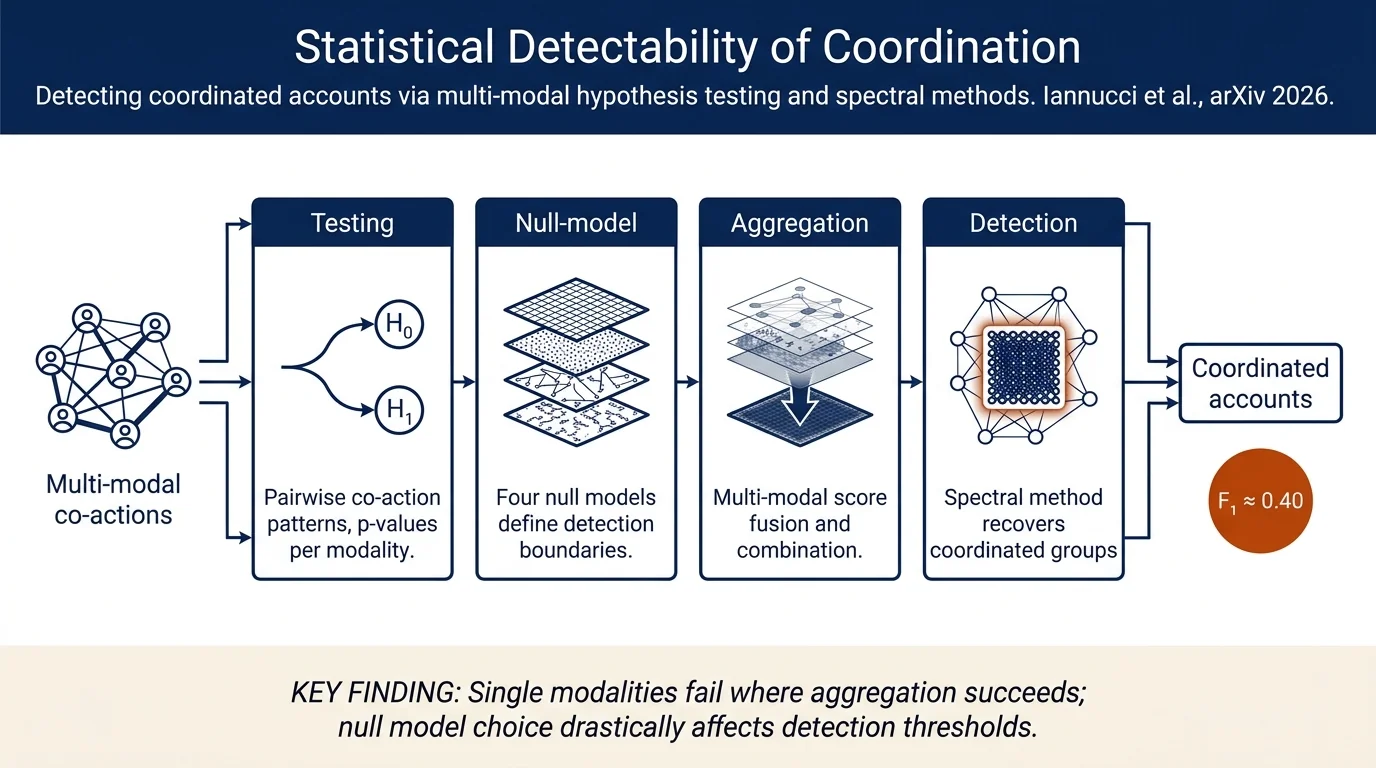
Statistical Detectability of CoordinationThis paper formulates coordination detection as a hypothesis-testing problem on account pairs, modeling coordination as a planted submatrix. The authors derive statistical and computational detection limits, test four different null models on 26 information-operation datasets across 7 modalities, and show that multi-modal aggregation is…
 Bots & coordinated campaignsSpread & networks
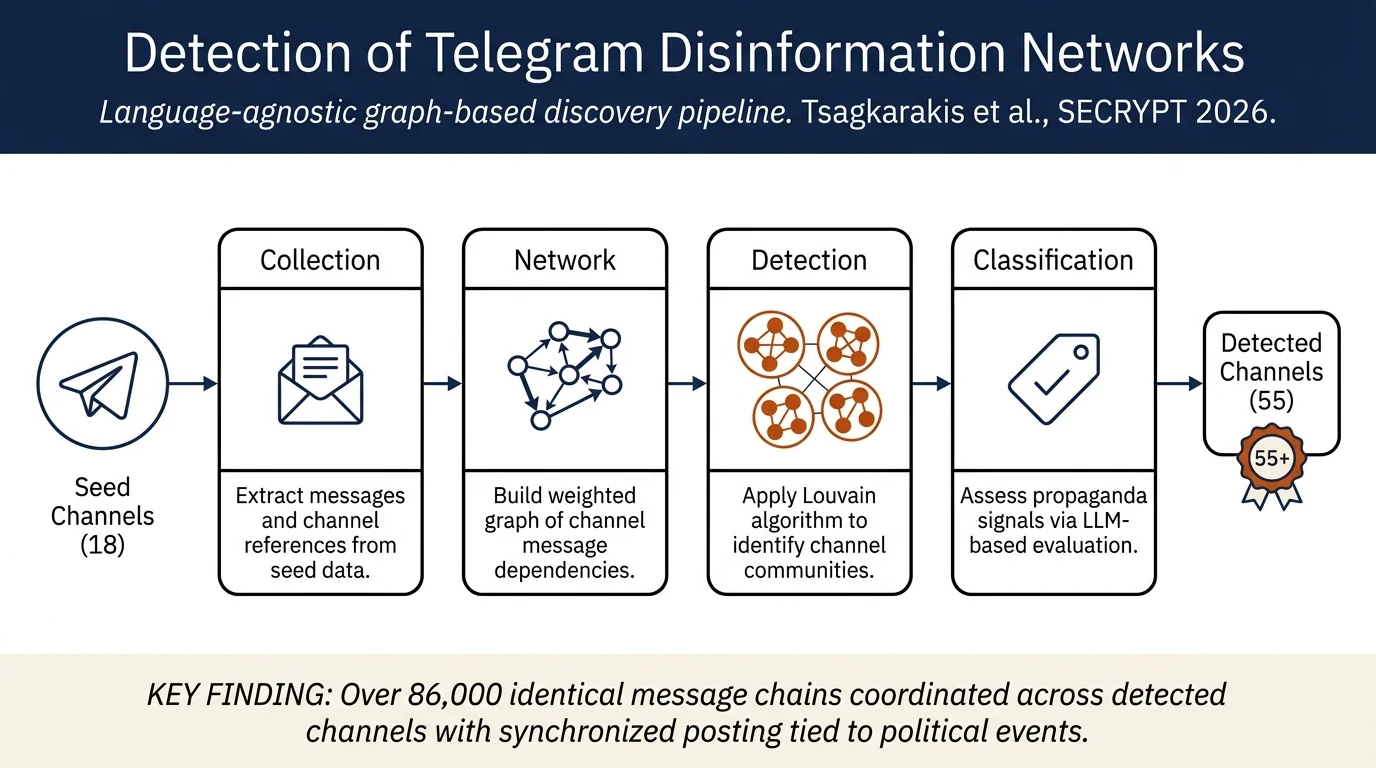
Birds of a Feather Flock Together: Network-Based Detection of Coordinated Disinformation Campaigns on TelegramA graph-based methodology discovers coordinated disinformation campaigns on Telegram by analyzing message-sharing patterns rather than content, requiring only structural relationships. The authors identified 55 disinformation channels and over 86,000 identical message chains spanning multiple channels, revealing a highly synchronized…
 Bots & coordinated campaignsDatasets & evaluation
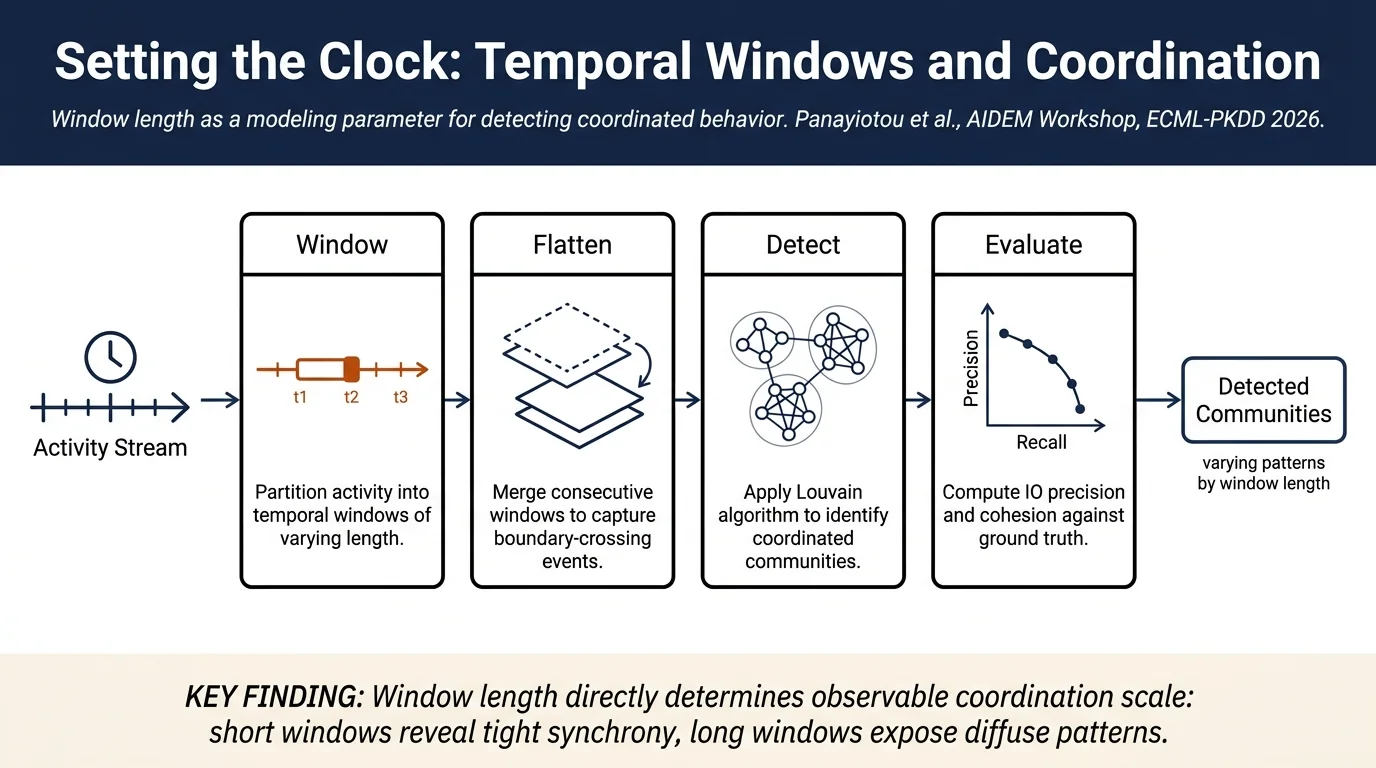
Setting the clock: Evaluating temporal window parameters for coordinated behavior detectionThe paper systematically evaluates how temporal window parameters (length and stride) affect detection of coordinated communities in co-repost networks. Using 14 labeled information operation datasets, the authors find that window length is a central modeling parameter: short windows (seconds to minutes) detect tight, highly synchronized…
 Platforms, policy & societySpread & networks
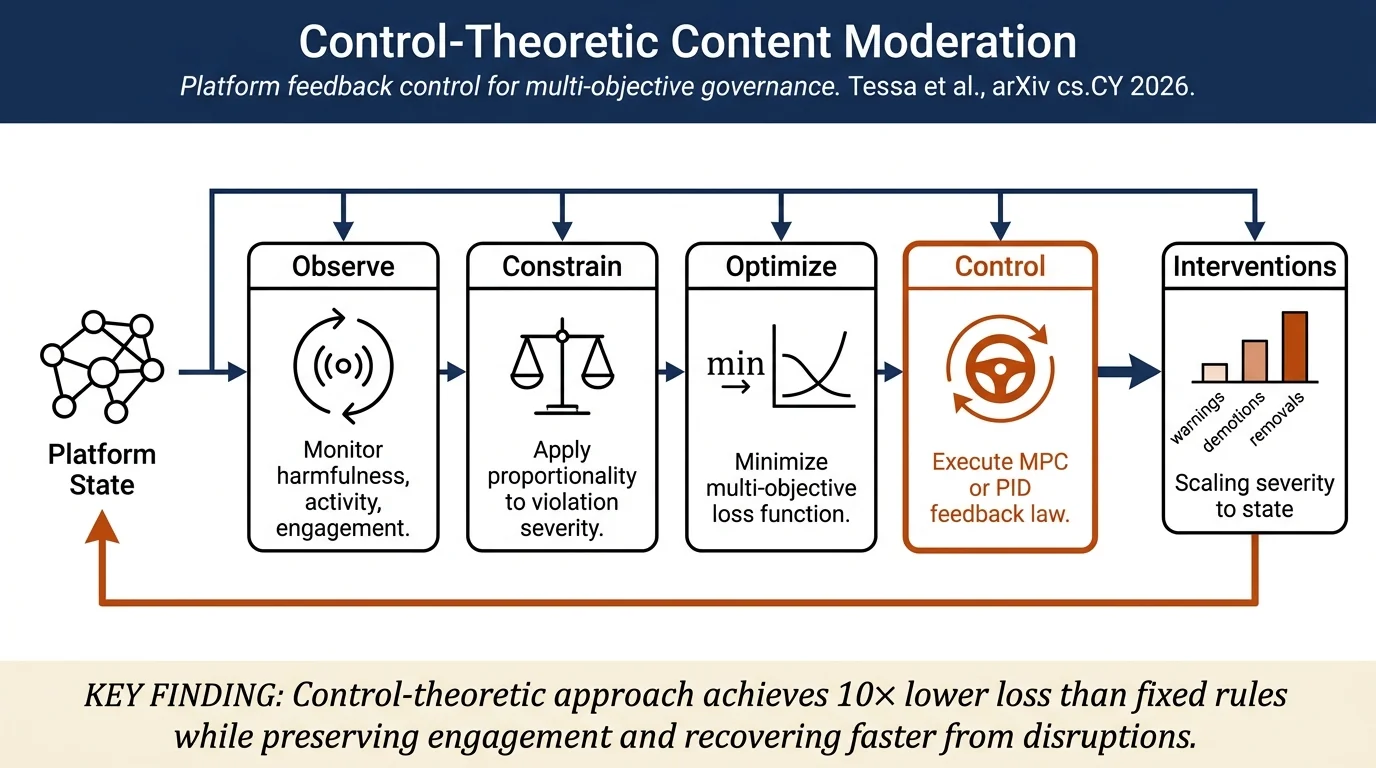
Control-Theoretic Content ModerationContent moderation at the platform level requires balancing multiple competing objectives (reducing harmful content, preserving engagement, maintaining activity). This paper formulates platform-level moderation as a feedback control problem with a multi-objective loss function, proposes control-theoretic moderators (including…
 Bots & coordinated campaignsSpread & networks
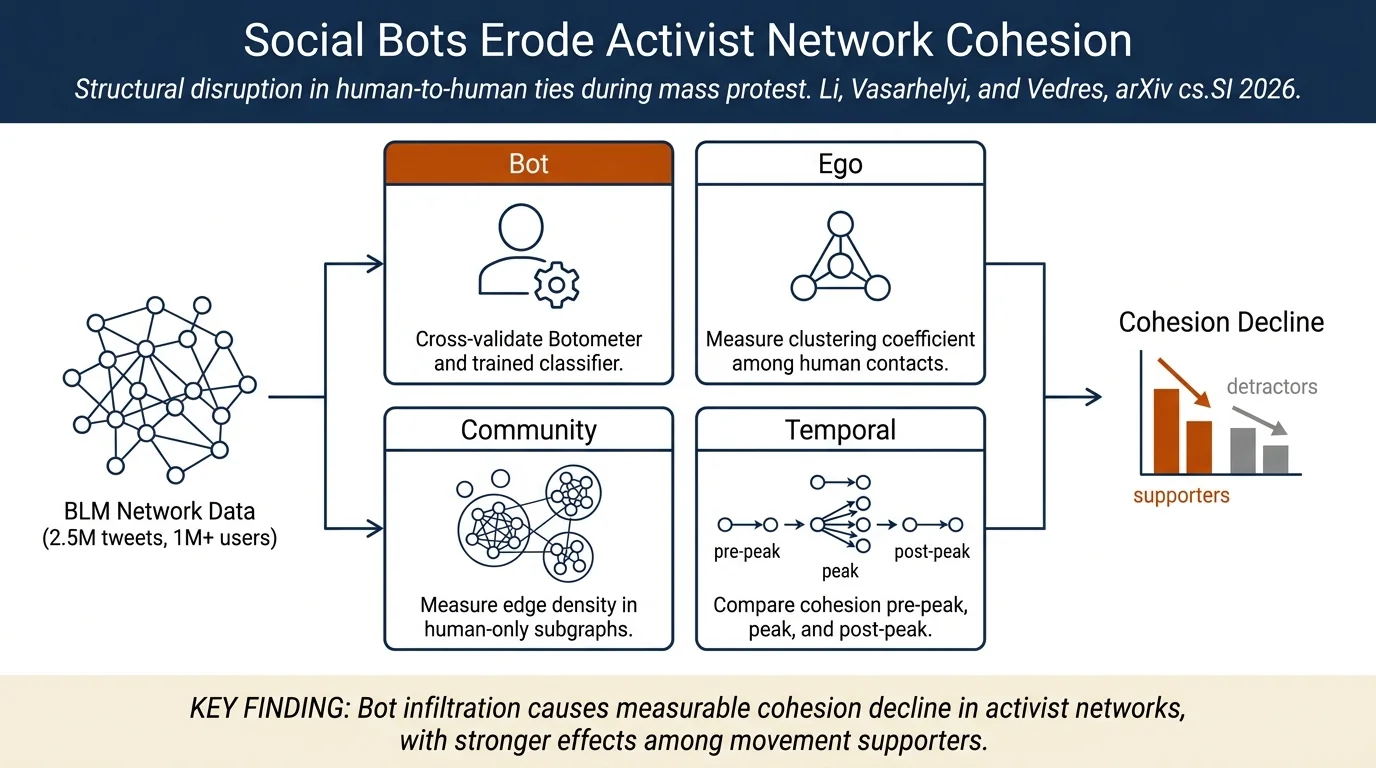
Social bots weaken activist cohesionSocial bots during protest peaks weaken the human relational infrastructure of activism. Analyzing 2.5M tweets from the 2020 Black Lives Matter protests, the authors show that networks more exposed to bot infiltration suffered steeper declines in human cohesion (triadic closure and edge density) after the peak, with effects concentrated…