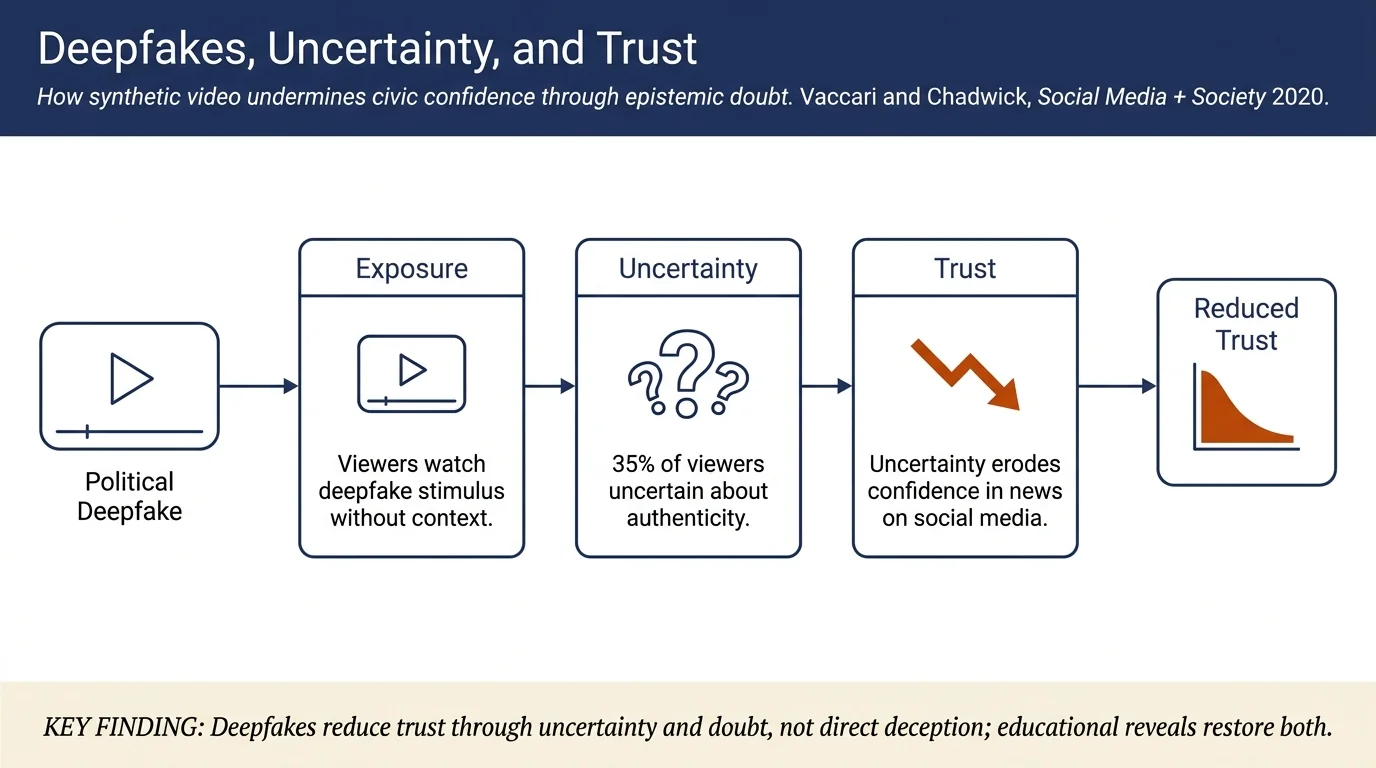
Video manipulation encompasses techniques for editing, altering, or synthesizing video content to create false, misleading, or deceptive footage. This includes both subtle edits (color grading, frame deletion, audio replacement) and sophisticated synthetic media creation (deepfakes, expression transfer, digital puppetry).
Techniques and types
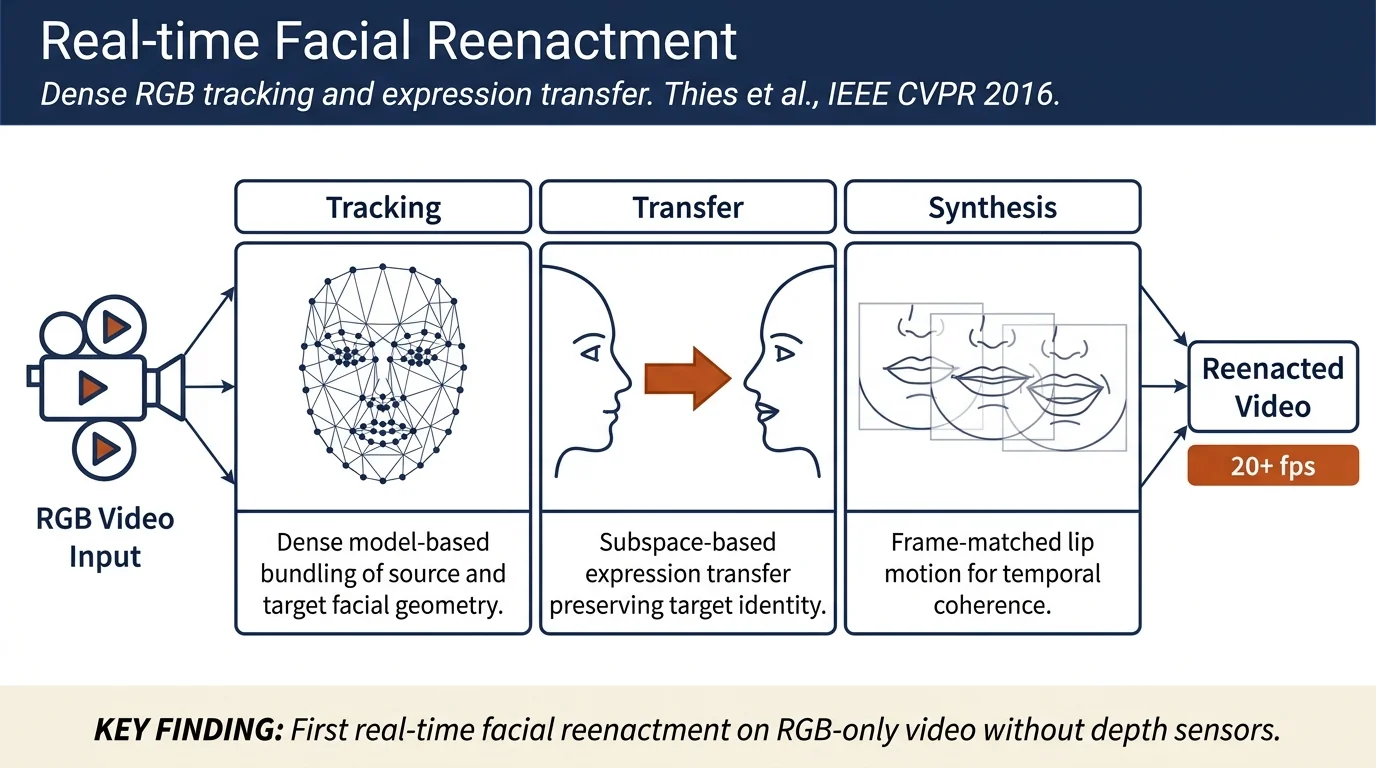
Facial reenactment: Transfer of facial expressions and head movements from one actor to another, preserving identity while changing performance. Example: 2016-thies-face2face.
Face-swapping: Complete replacement of one person's face with another in video, often using GANs or face-morphing techniques.
Audio manipulation: Synthesizing, replacing, or modifying speech and other audio to match video or create entirely synthetic audio tracks.
Expression synthesis: Real-time transfer of facial expressions via performance capture, enabling one actor to "puppet" another.
Lighting and appearance manipulation: Altering illumination, reflectance, and visual appearance of faces and scenes.
Why it matters to misinformation research
-
Lower barriers to creation: Unlike traditional video editing (requiring Hollywood-grade software and expertise), modern manipulation techniques enable rapid creation using commodity hardware and open-source tools.
-
Visual persuasion: Video is inherently more persuasive than text or images. Manipulated video can falsify evidence, misrepresent statements, or damage reputations at scale.
-
Detection difficulty: Humans struggle to detect video manipulation, especially when combined with social media distribution (compression artifacts obscure detection signals).
-
Dual-use nature: Manipulation techniques enable both beneficial applications (education, entertainment, accessibility) and harmful ones (disinformation, impersonation, harassment).
Key papers
- Thies et al. (2016) — Face2Face: Real-time Face Capture and Reenactment of RGB Videos — First real-time facial reenactment system; demonstrates practical manipulation of video expressions in real-time using commodity hardware.
- Rössler et al. (2019) — FaceForensics++: Learning to Detect Manipulated Facial Images — Largest dataset of manipulated facial videos with four manipulation methods (Face2Face, FaceSwap, DeepFakes, NeuralTextures); comprehensive detection benchmark.
- 2020-verdoliva-media-forensics-deepfakes — comprehensive survey of deepfake generation and detection methods, including forensic techniques applicable to video manipulation.
Related topics
- deepfakes (specific category of video manipulation using deep learning)
- face-synthesis (generation of synthetic facial content)
- media-forensics (detecting and analyzing manipulated content)
- synthetic-media (broader category including image, audio, and video synthesis)