Generalization refers to a model's ability to perform well on datasets and domains different from its training data. In misinformation detection, this is critical because:
- Domain shift: Claims and misinformation narratives evolve; systems trained on old data may fail on new claims
- Language and cultural variation: Misinformation differs across languages and regions
- Dataset artifacts: Models often exploit spurious correlations in training data rather than learning robust features
- Source variation: Performance often degrades when testing on sources unseen during training
Challenges to generalization
Research on models like RoBERTa and GPT-4 reveals substantial differences in error modes across datasets. 2023-pelrine-reliable-misinformation-mitigation demonstrates that GPT-4 and RoBERTa make substantially different errors, suggesting they rely on different feature sets. When models fail, they often fail for different reasons—a finding that motivates ensemble approaches and analysis of what each model has learned.
Multilingual evaluation exposes sharp performance drops in non-English languages, particularly where cultural context differs. The same paper shows French-translated LIAR-New achieves 70.1% accuracy compared to 67.8% in English, suggesting language-specific challenges in model prompt design or inherent linguistic differences in how misinformation is expressed.
Transfer learning and few-shot evaluation
When models are trained on one dataset and evaluated on another (transfer setting), performance often degrades significantly. Understanding which datasets transfer well and why is an open research question. Few-shot and zero-shot evaluation on new claims provides a more realistic scenario for deployment.
Key papers in this wiki
- 2023-pelrine-reliable-misinformation-mitigation — Analyzes generalization of GPT-4 vs. RoBERTa across LIAR, CT-FAN-22, and LIAR-New; finds different failure modes and explores error analysis to understand what each model learns
- Bommasani et al. (2021) — Discusses generalization challenges in large foundation models
Related topics
- llm — foundation models used for detection
- misinformation-detection — core task
- transfer-learning — technical approach
Papers on this topic
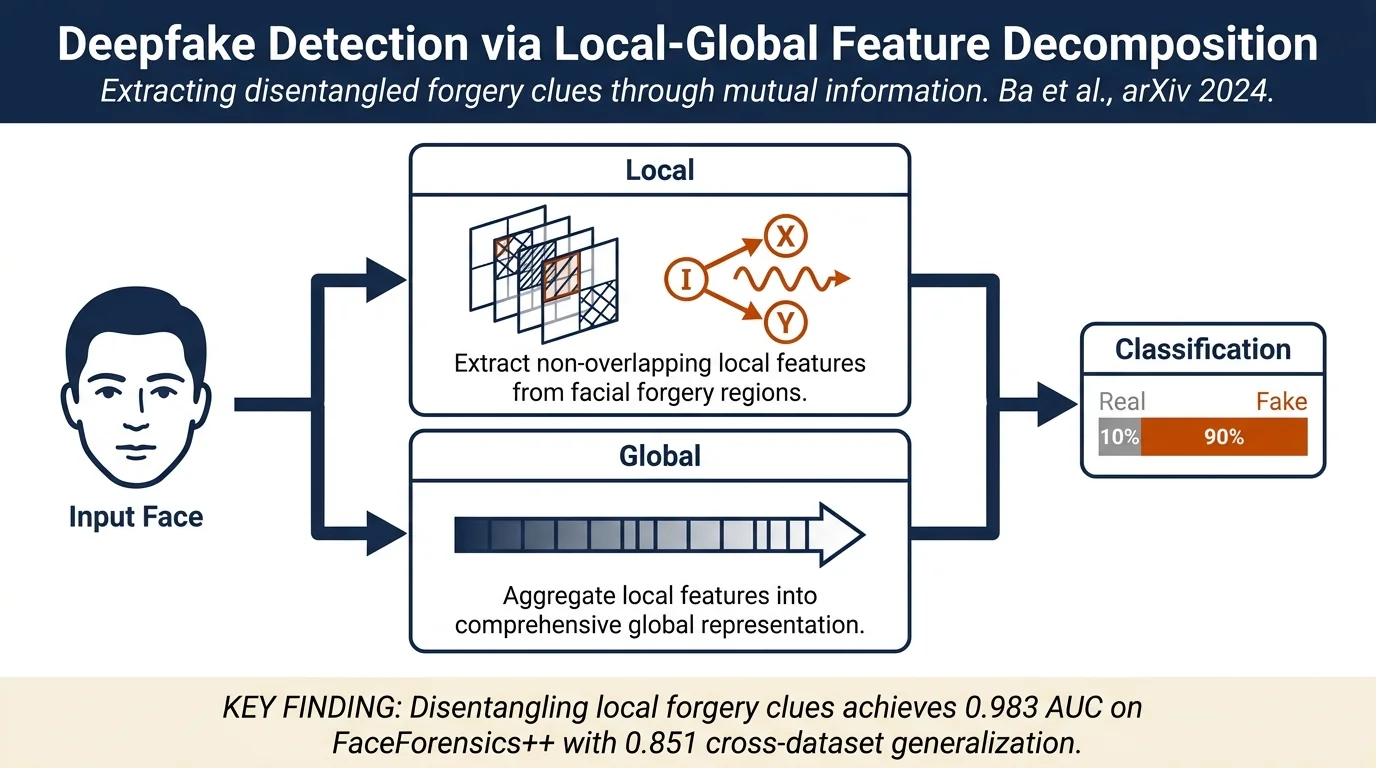 Deepfakes & multimodalDetection methods
Exposing the Deception: Uncovering More Forgery Clues for Deepfake Detection
Deepfakes & multimodal
Towards Universal Fake Image Detectors that Generalize Across Generative Models
Detection methodsLLMs & generative AI
Towards Reliable Misinformation Mitigation: Generalization, Uncertainty, and GPT-4
Detection methodsSpread & networks
Generalizing to the Future: Mitigating Entity Bias in Fake News Detection
Deepfakes & multimodalDetection methods
Face X-ray for More General Face Forgery Detection
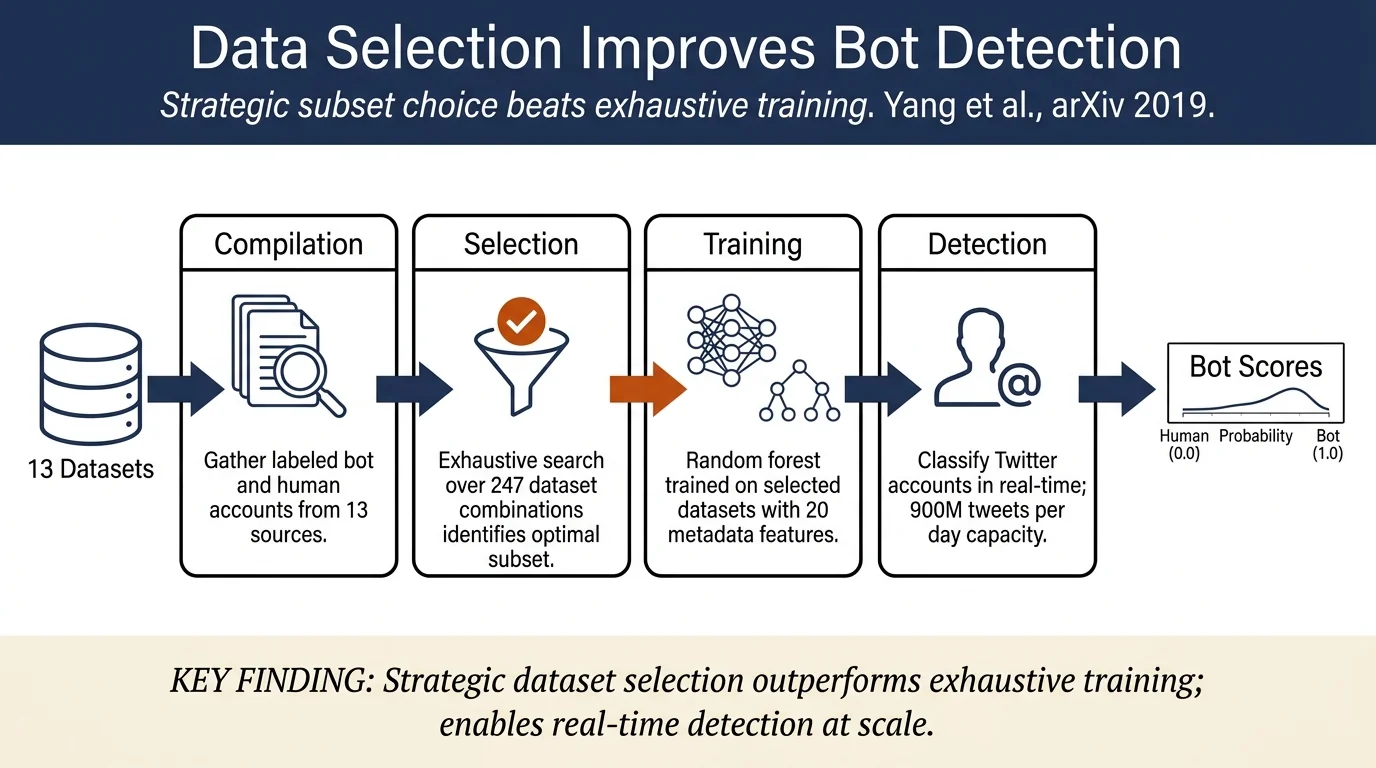 Bots & coordinated campaignsDatasets & evaluation
Scalable and Generalizable Social Bot Detection through Data Selection