Explore papers
Filter by research area, year and venue. Every filter is in the address bar, so you can share a view as a link.
 Spread & networksPlatforms, policy & society
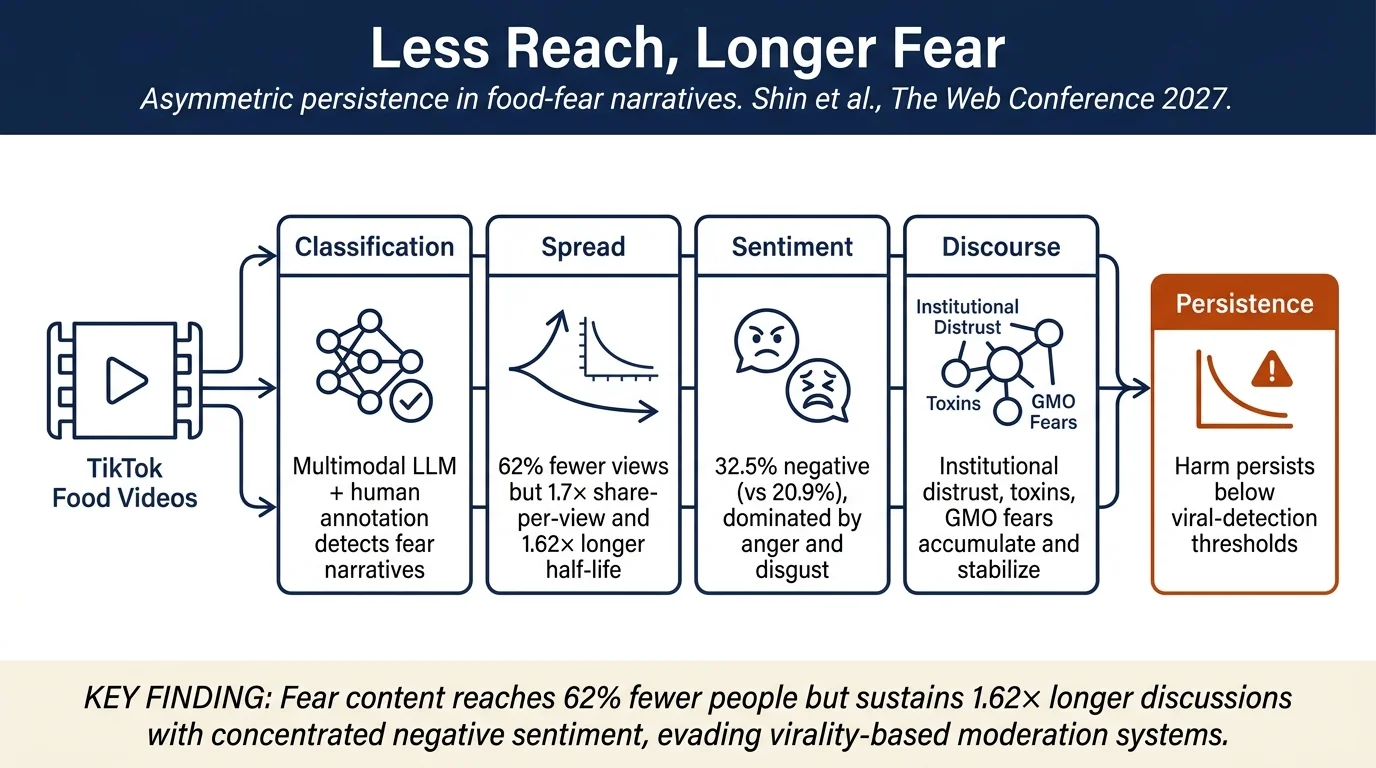
Fear Doesn't Go Viral, It Lingers: Spread, Affect, and Discourse of Food-Fear Content on TikTokFear-based content about food on TikTok reaches fewer people than non-fear nutrition videos but sustains engagement and discussion far longer. Fear videos trigger more negative, angry, and disgusted comments that persist for weeks; their discourse concentrates on distrust of food industry, contamination, and institutional skepticism.
 Bots & coordinated campaignsDatasets & evaluation
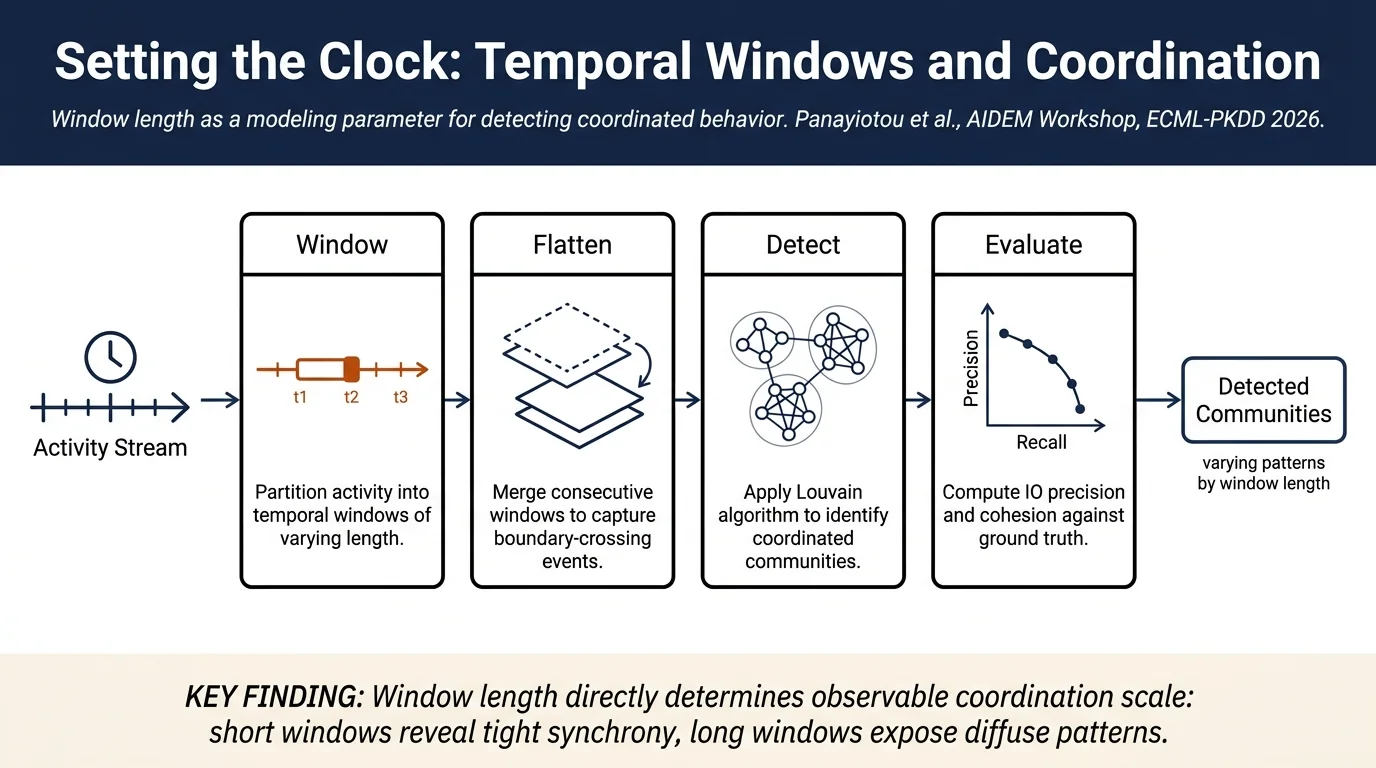
Setting the clock: Evaluating temporal window parameters for coordinated behavior detectionThe paper systematically evaluates how temporal window parameters (length and stride) affect detection of coordinated communities in co-repost networks. Using 14 labeled information operation datasets, the authors find that window length is a central modeling parameter: short windows (seconds to minutes) detect tight, highly synchronized…
 LLMs & generative AIDatasets & evaluation
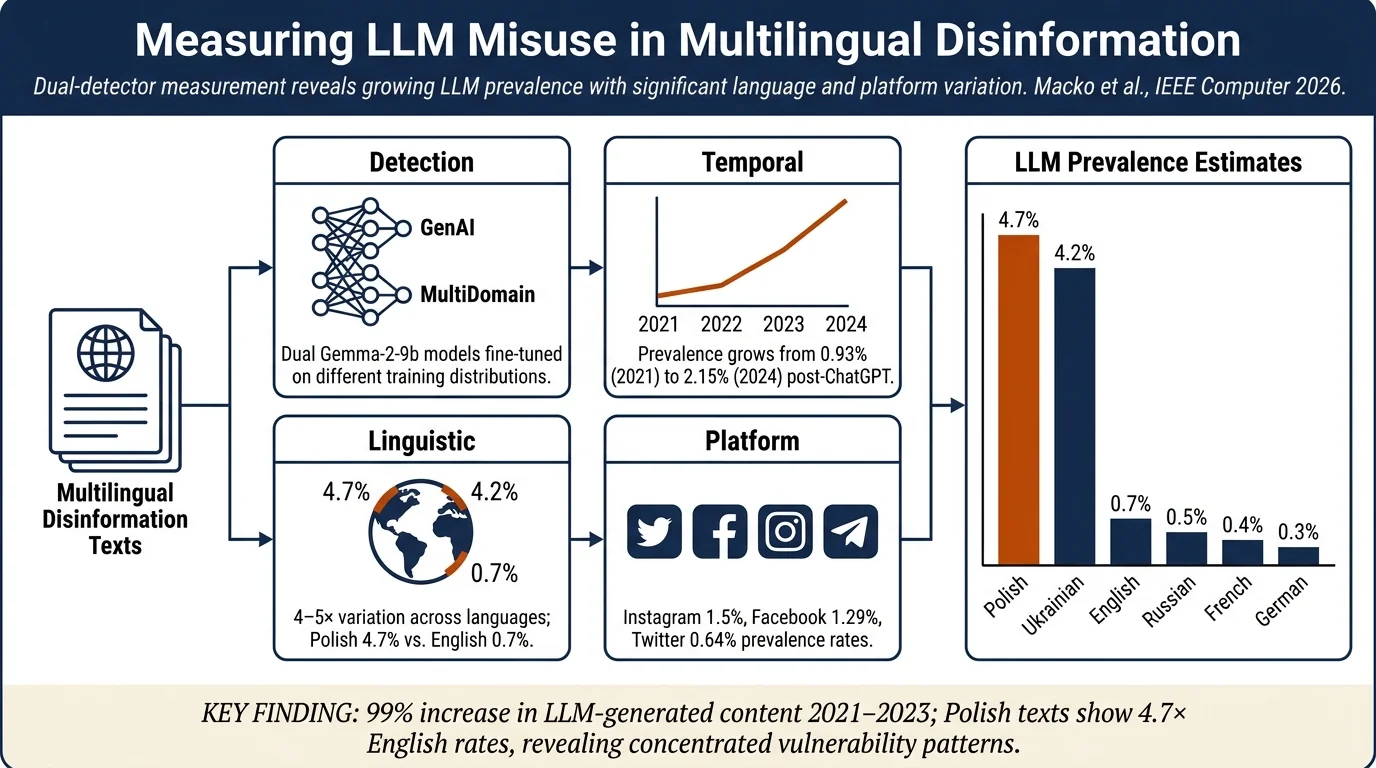
Beyond Speculation: Measuring the Growing Presence of LLM-Generated Texts in Multilingual DisinformationThis empirical study provides the first measurement of LLM-generated content in real-world disinformation datasets. Analyzing the MultiClaim dataset (fact-checked social media posts), the authors document a 99% increase in machine-generated content from 2021 to 2023 (0.93% to 1.85%), correlating with ChatGPT's November 2022 release.
 LLMs & generative AIDetection methods
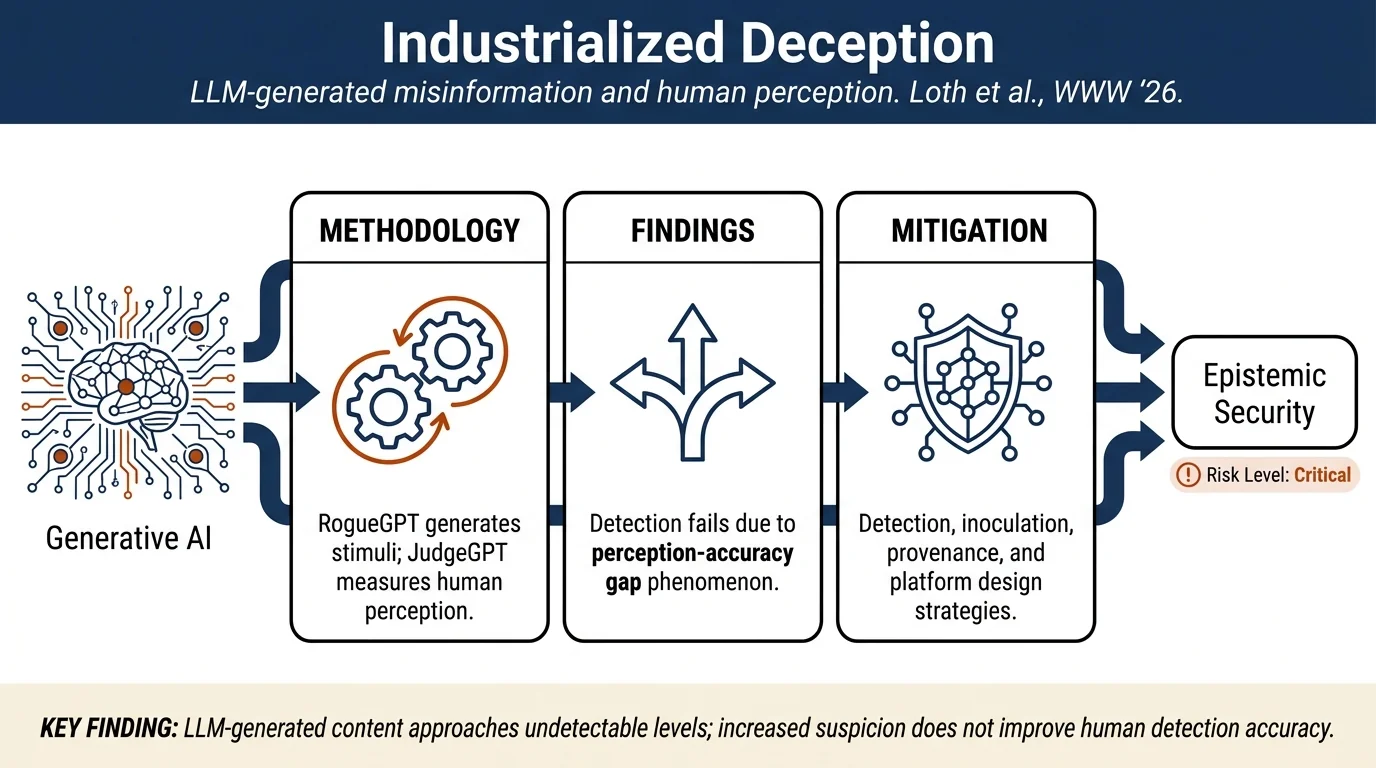
Industrialized Deception: The Collateral Effects of LLM-Generated Misinformation on Digital EcosystemsThis paper updates the state of generative AI and misinformation research since 2024, documenting the shift toward industrialized deception through improved LLMs and multimodal systems. The authors present two methodological tools—JudgeGPT (for measuring human perception of AI-generated content) and RogueGPT (for controlled stimulus…
Detection methodsLLMs & generative AI
Propasafe: A BERT-based offline tool for propaganda detectionOriginal privacy-focused, offline browser extension using fine-tuned BERT on the Propaganda Techniques Corpus for sentence-level propaganda classification. No online inference required; binary classification (propaganda or non-propaganda).