Explore papers
Filter by research area, year and venue. Every filter is in the address bar, so you can share a view as a link.
 Detection methodsFact-checking & verification
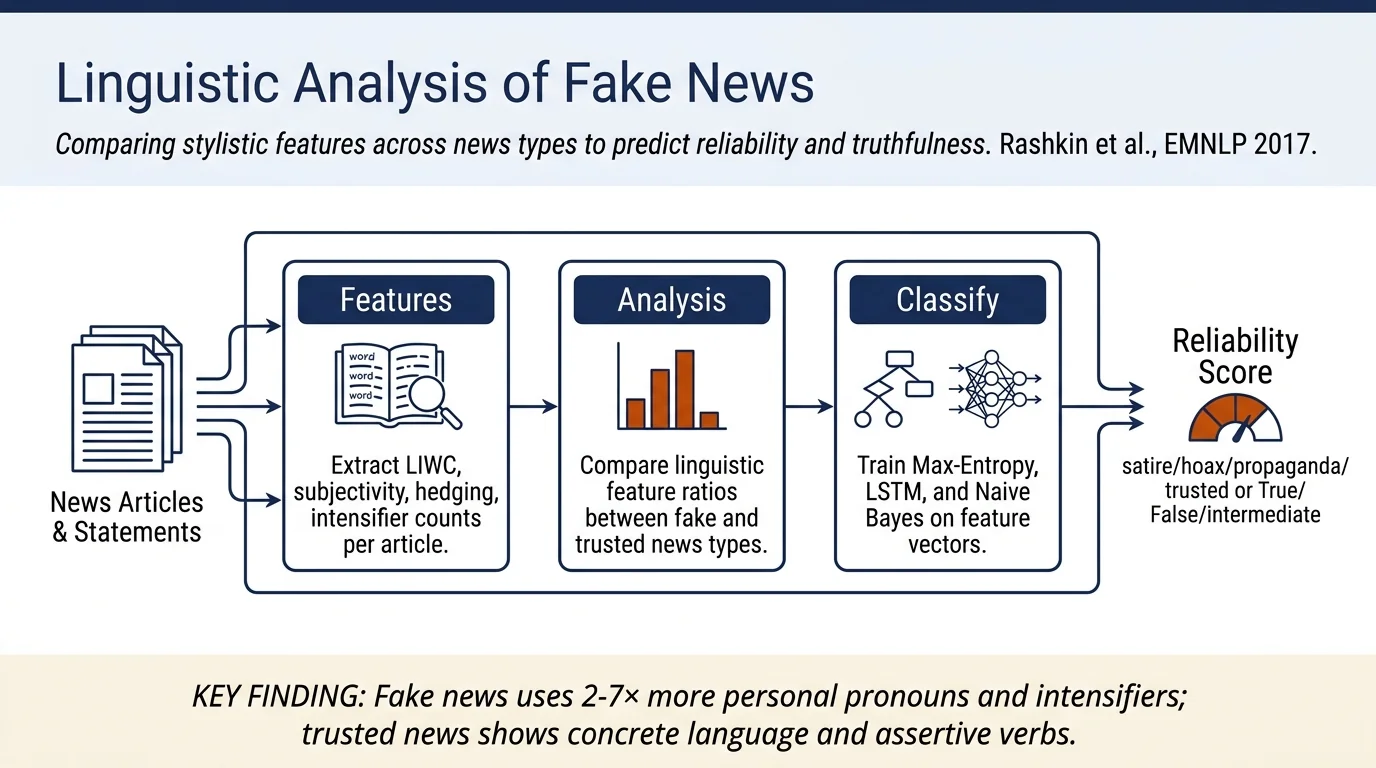
Truth of Varying Shades: Analyzing Language in Fake News and Political Fact-CheckingThis paper performs a linguistic analysis of fake news across four categories—satire, hoaxes, propaganda, and trusted news—using lexical features (LIWC, subjectivity, hedging, intensifiers). Experiments show that fake news articles use more first-person pronouns, exaggerative language (superlatives, modal adverbs), and hedging, while…
 Detection methodsSpread & networks
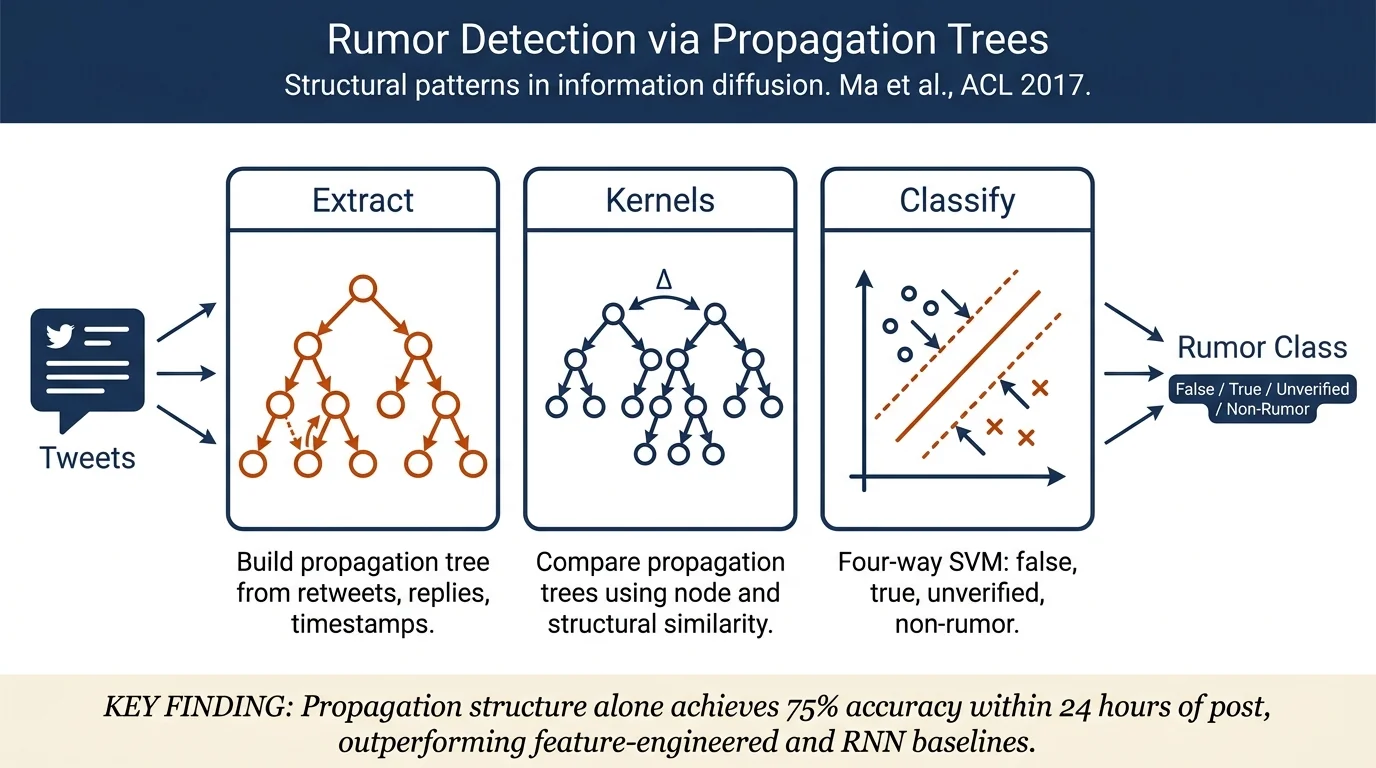
Detect Rumors in Microblog Posts Using Propagation Structure via Kernel LearningThis paper addresses rumor detection in microblog posts by modeling information diffusion as propagation trees and proposing a kernel-based method (PTK) that captures high-order structural patterns differentiating rumors from non-rumors. The approach extends to context-sensitive variants (cPTK) and achieves superior early detection…
 Bots & coordinated campaignsDetection methods
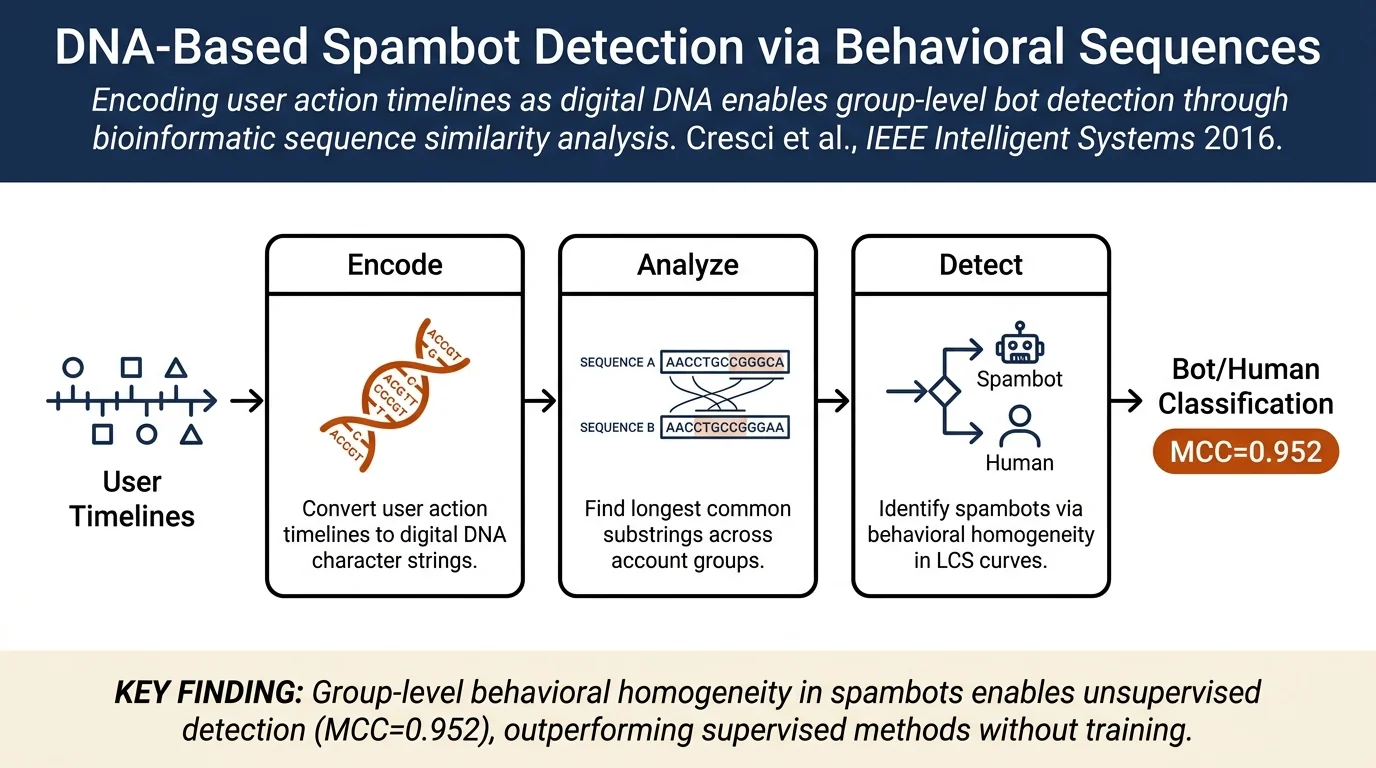
DNA-Inspired Online Behavioral Modeling and Its Application to Spambot DetectionProposes a novel methodology to characterize online user behavior using DNA-inspired digital sequences, where each user action (tweet type, content features) is encoded as a character in a string. Applies standard bioinformatic DNA analysis techniques—specifically longest common substring (LCS) analysis—to detect spambots on Twitter by…
 Bots & coordinated campaignsDetection methods
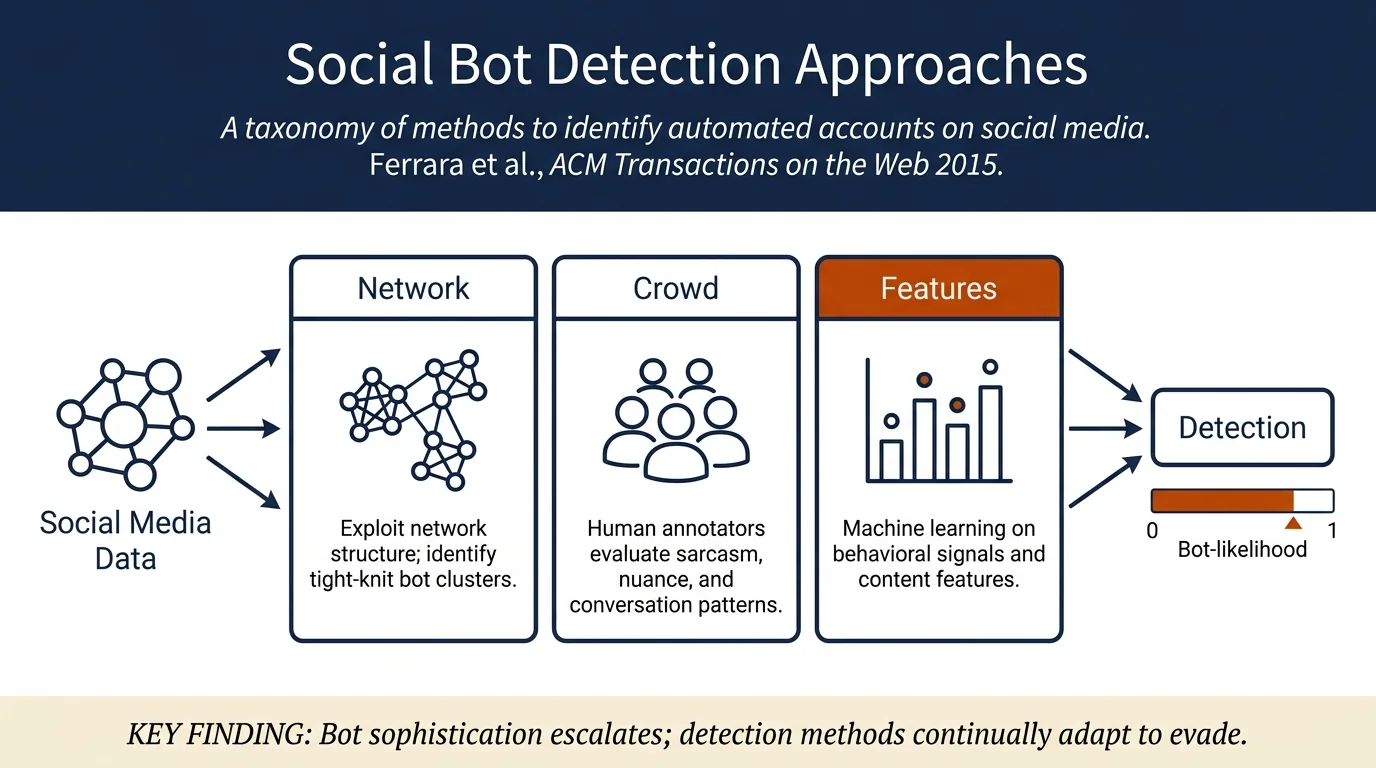
The Rise of Social BotsSocial bots—automated software agents in social media—are increasingly sophisticated and pose real threats including misinformation spread, trend manipulation, and election interference. This paper characterizes modern bot behavior, surveys detection challenges, and proposes a taxonomy of detection approaches: graph-based methods…
 Detection methodsFact-checking & verification
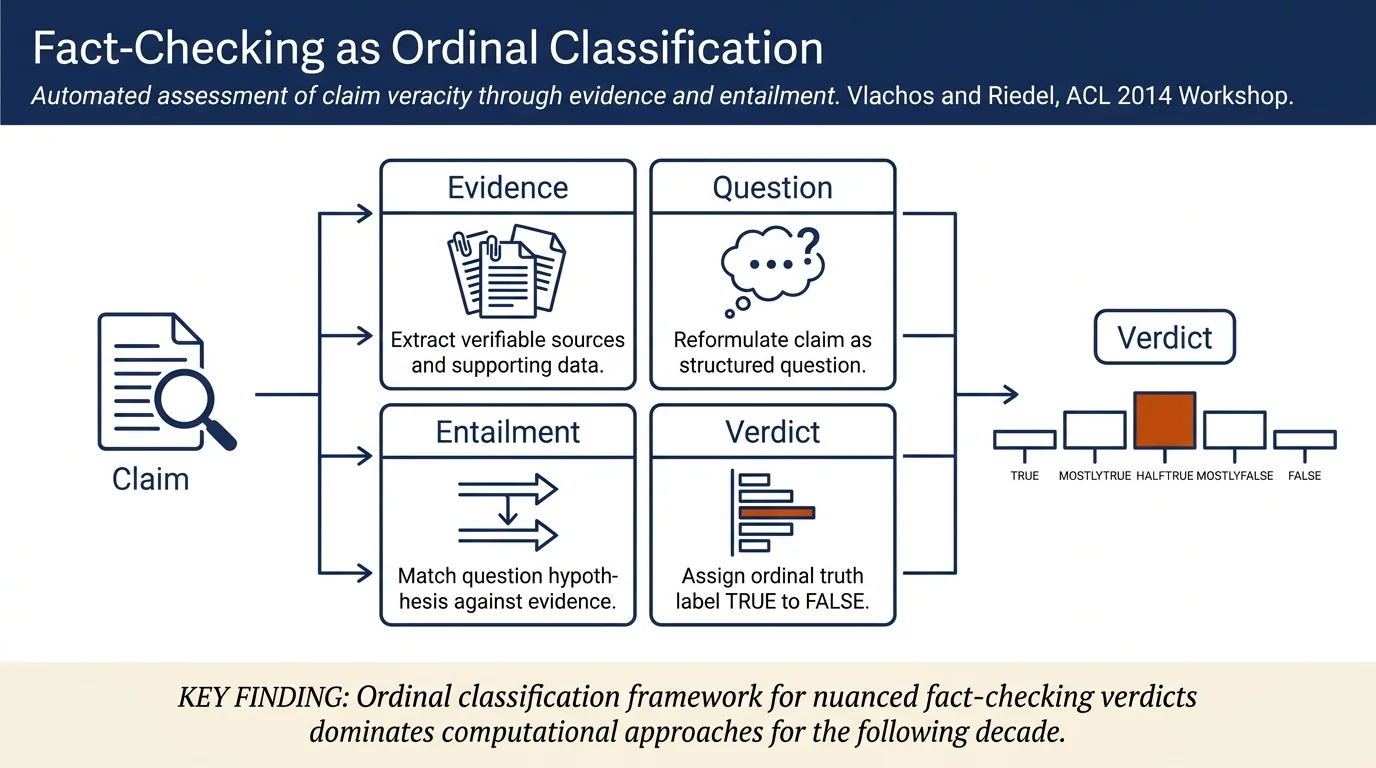
Fact Checking: Task definition and dataset constructionThis paper introduces fact-checking as a formal computational task: assessing the truthfulness of political claims as an ordinal classification problem with five labels (TRUE, MOSTLYTRUE, HALFTRUE, MOSTLYFALSE, FALSE). The authors construct a dataset of 106 objectively-verifiable fact-checked statements from PolitiFact and Channel 4 (out…
 Spread & networksDetection methods
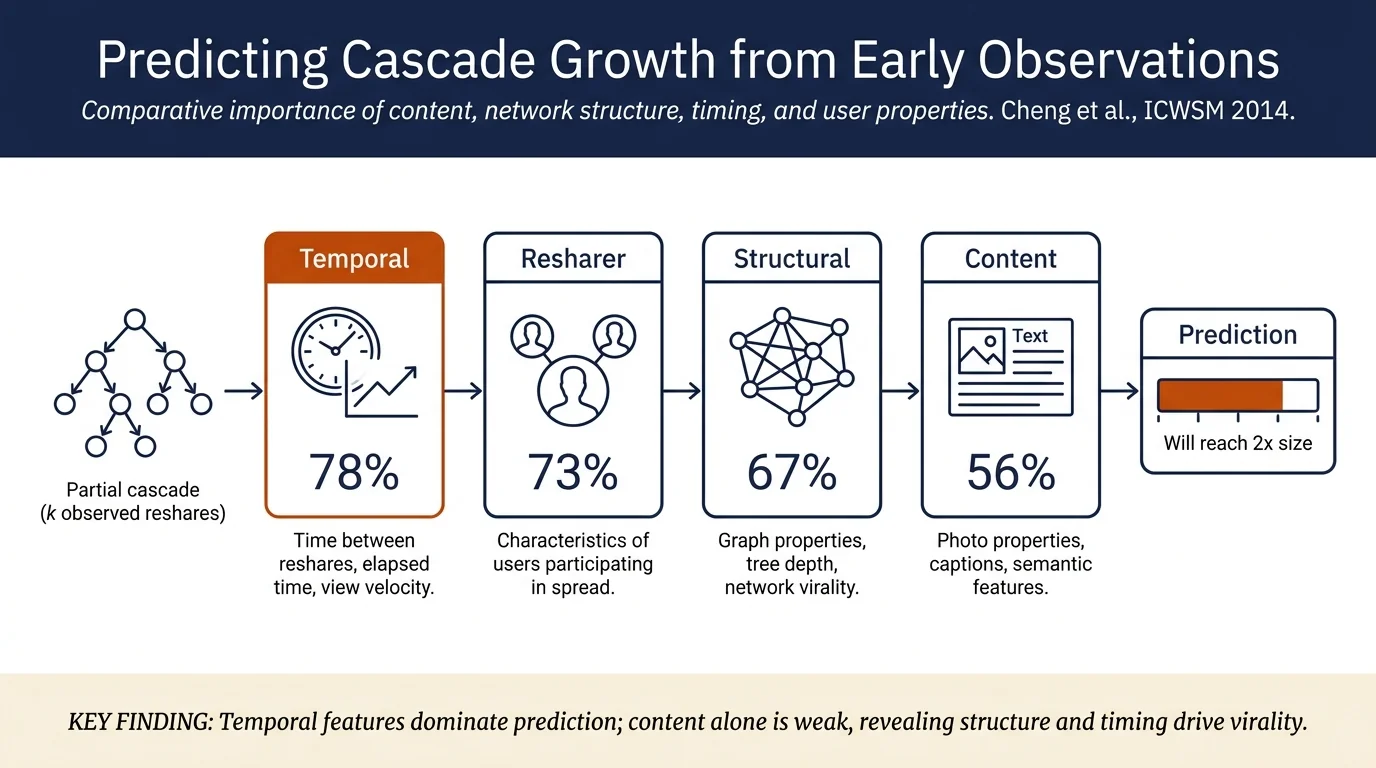
Can Cascades be Predicted?Information cascades on social networks can be predicted with reasonable accuracy (~80%) using temporal and structural features extracted from early observations. Performance improves substantially as more cascade stages are observed.
 Detection methodsSpread & networks
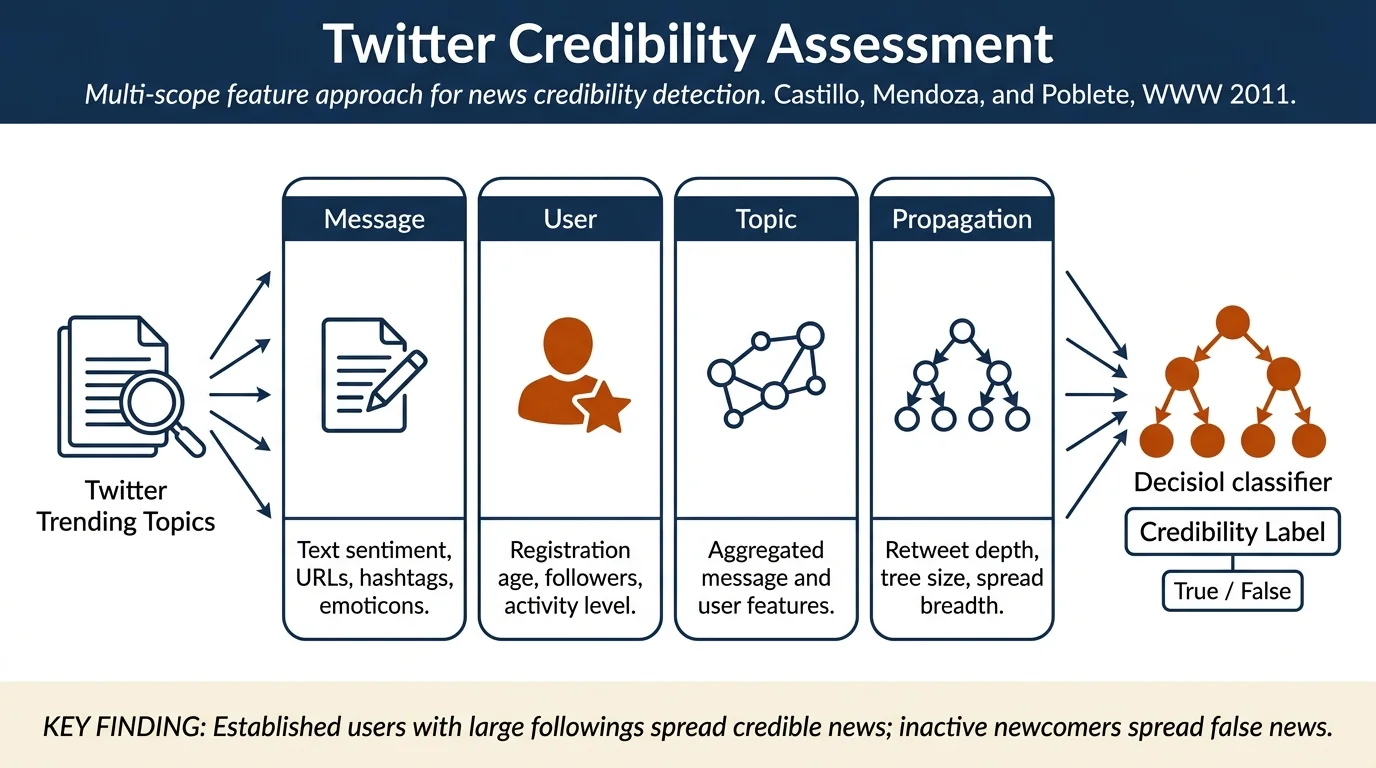
Information Credibility on TwitterThis paper proposes supervised learning classifiers to automatically assess the credibility of news discussed on Twitter. Using human-labeled topics from trending discussions, the authors extract message-level, user-level, topic-level, and propagation-level features to build classifiers that distinguish newsworthy from conversational…