Explore papers
Filter by research area, year and venue. Every filter is in the address bar, so you can share a view as a link.
 Spread & networksBots & coordinated campaigns
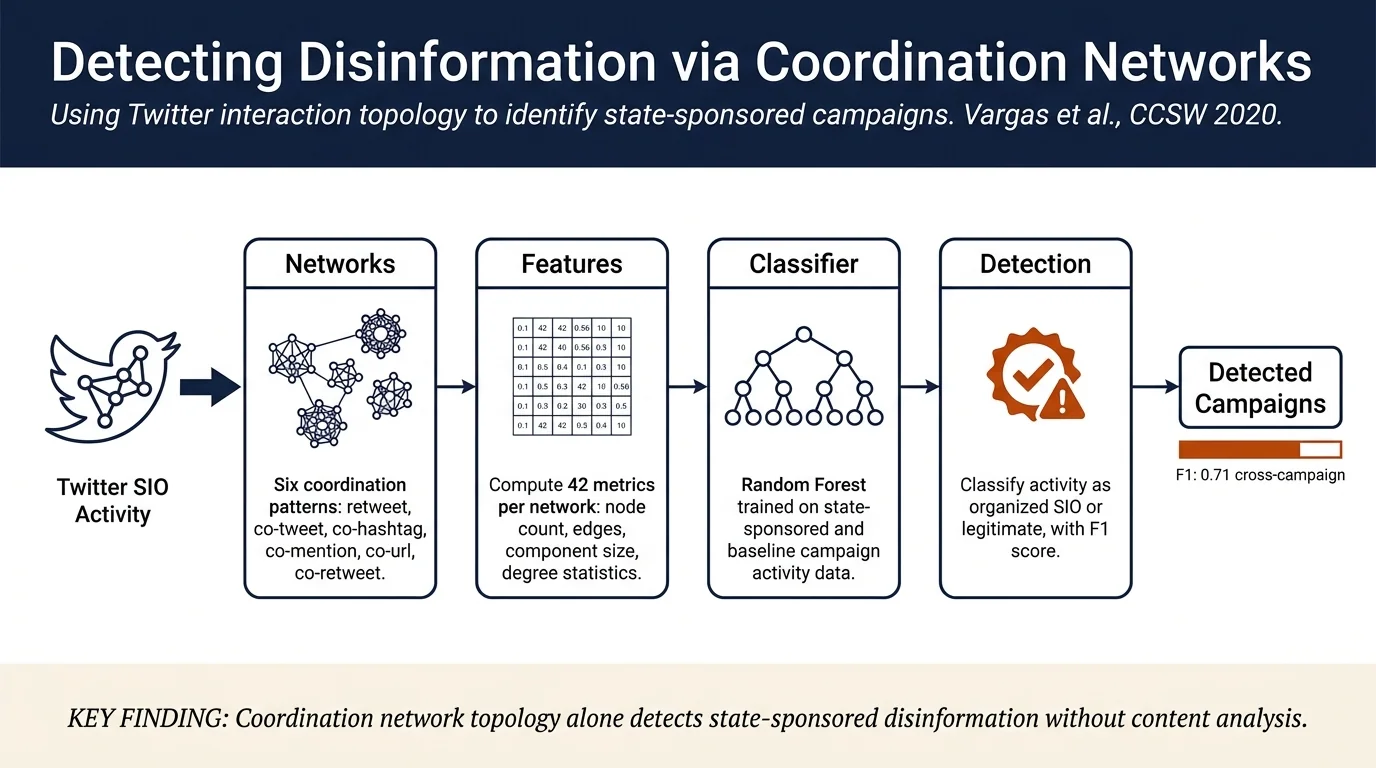
On the Detection of Disinformation Campaign Activity with Network AnalysisState-sponsored disinformation campaigns on Twitter exhibit distinct coordination patterns (shared messages, hashtags, URLs, retweet cascades) that differ from legitimate coordinated activity. The paper proposes using coordination network features—extracted from daily account interactions—to train a binary classifier that detects…
 Bots & coordinated campaignsSpread & networks
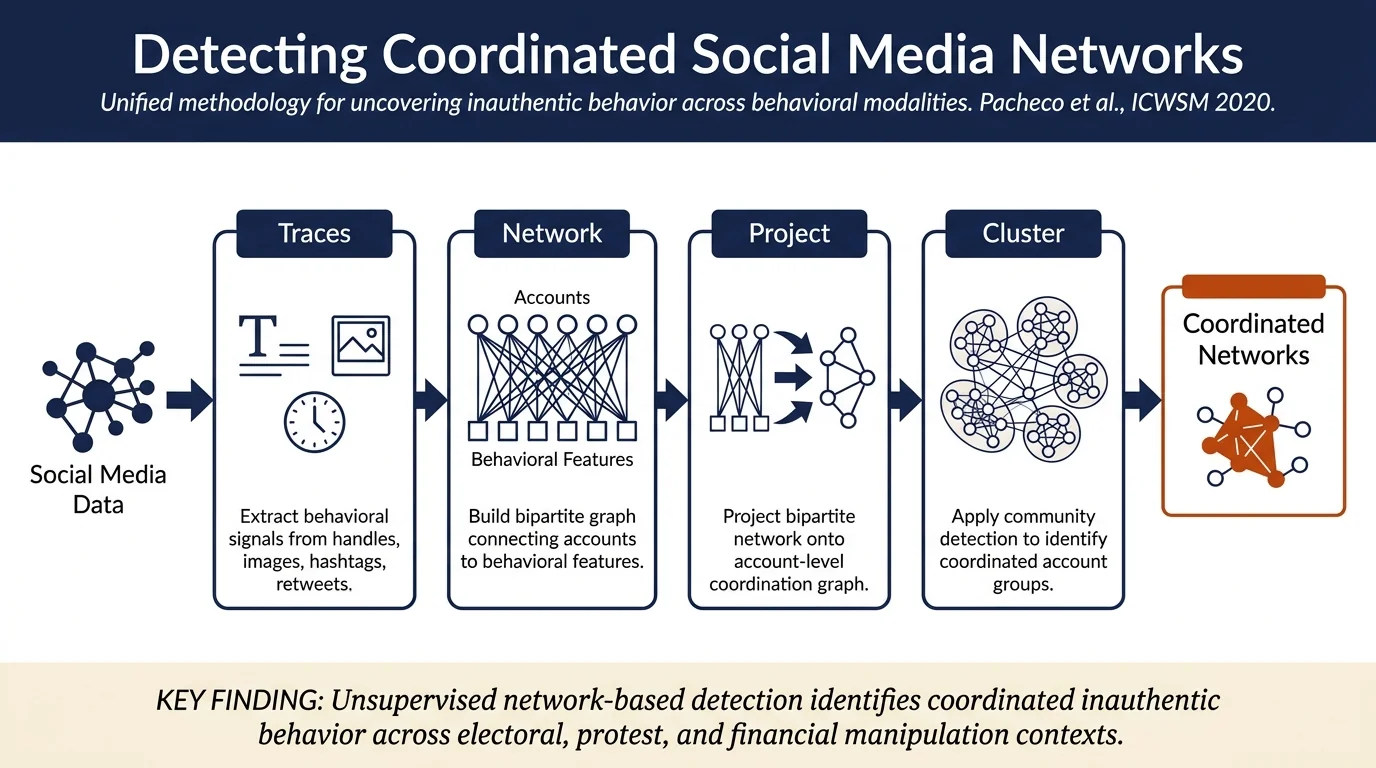
Uncovering Coordinated Networks on Social Media: Methods and Case StudiesThis paper proposes a general, unsupervised, network-based methodology to detect coordinated inauthentic behavior on social media. The approach identifies behavioral traces (handle changes, image sharing, hashtag sequences, co-retweets, synchronized actions) and constructs bipartite networks to discover clusters of accounts likely…
 Bots & coordinated campaignsDetection methods
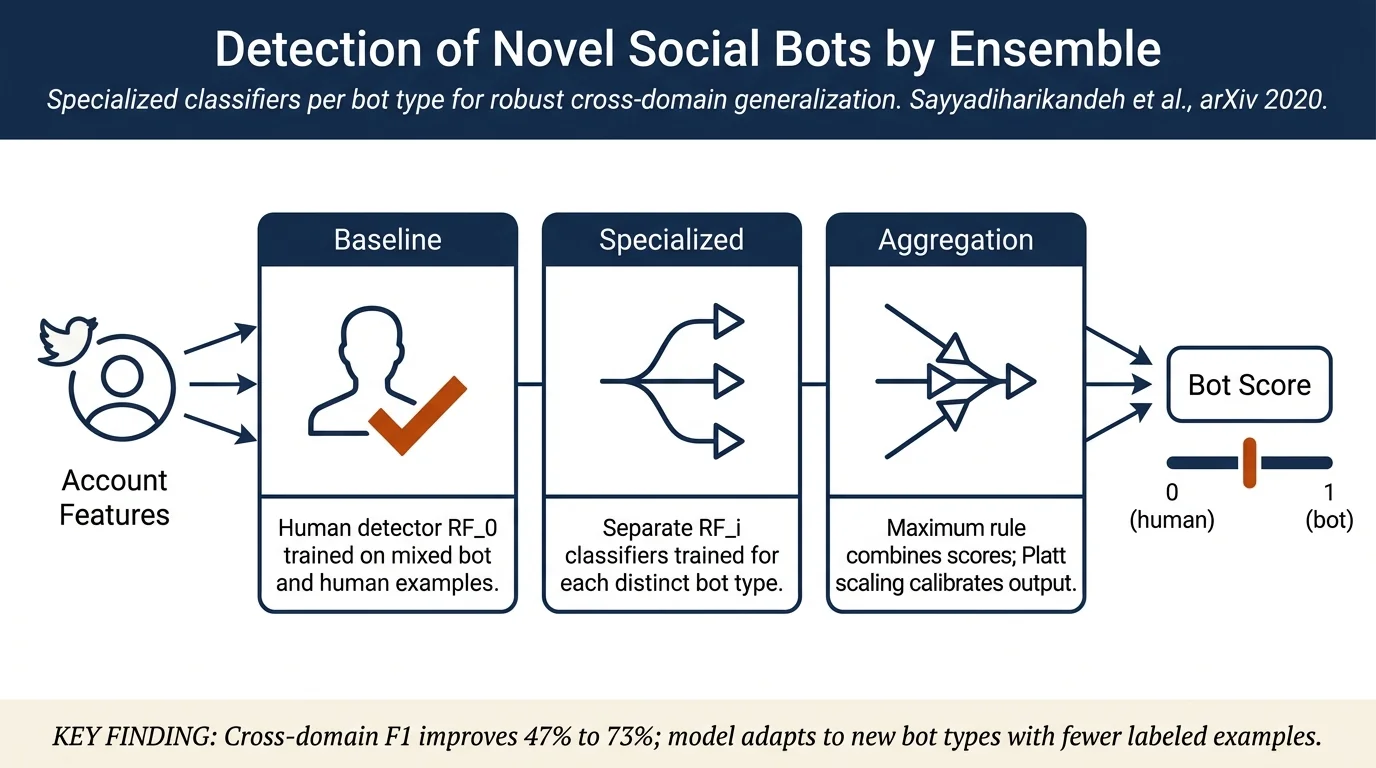
Detection of Novel Social Bots by Ensembles of Specialized ClassifiersDifferent types of social bots exhibit heterogeneous behavioral features; training a single classifier on all bots fails to generalize to novel bot types. The authors propose ESC (Ensemble of Specialized Classifiers), which trains separate classifiers for each bot class and combines their decisions via a maximum rule, achieving a 56%…
 Datasets & evaluationSpread & networks
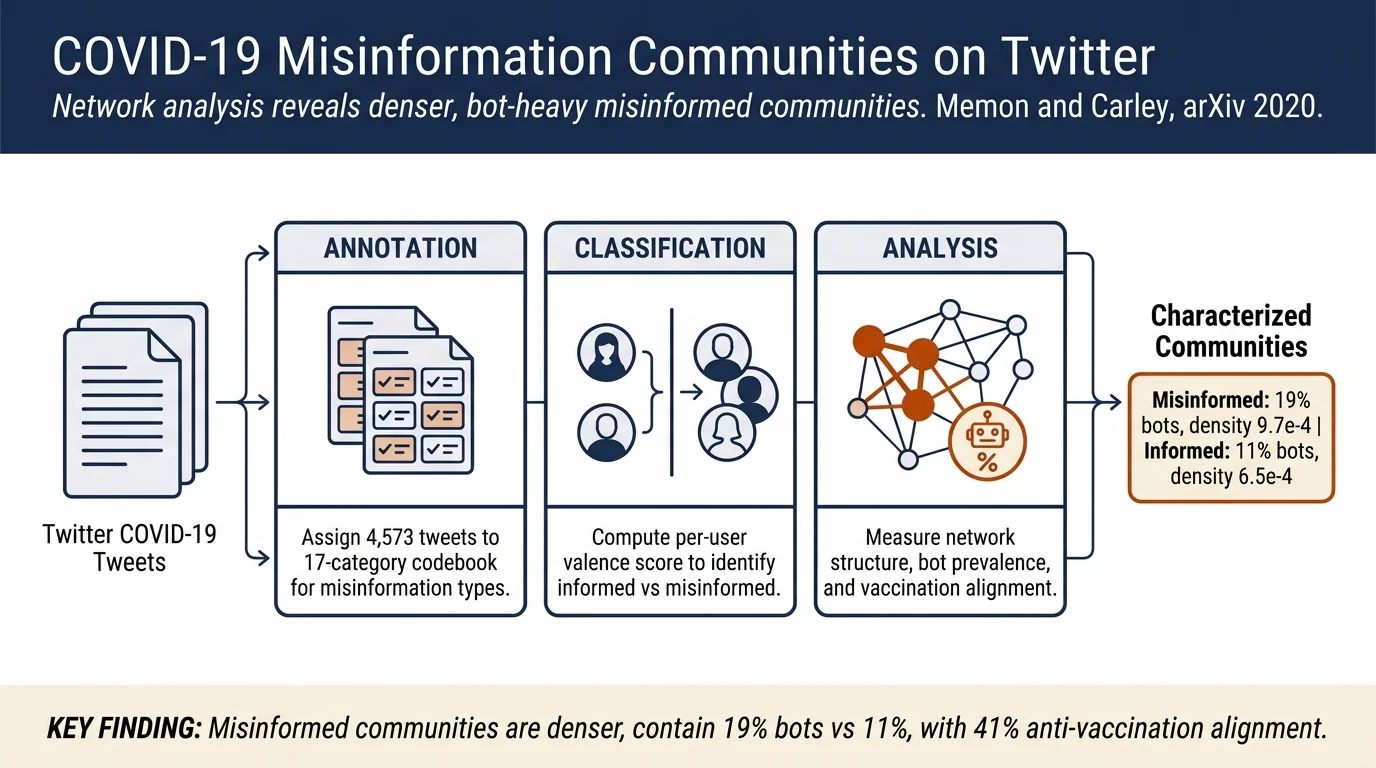
Characterizing COVID-19 Misinformation Communities Using a Novel Twitter DatasetThis paper presents CMU-MisCOV19, a manually annotated Twitter dataset of 4,573 COVID-19 tweets across 17 categories, and characterizes misinformed versus informed online communities. Key findings: misinformed communities are significantly denser (higher network density), contain more bots (19% vs 11%), and demonstrate higher…
 Bots & coordinated campaignsDatasets & evaluation
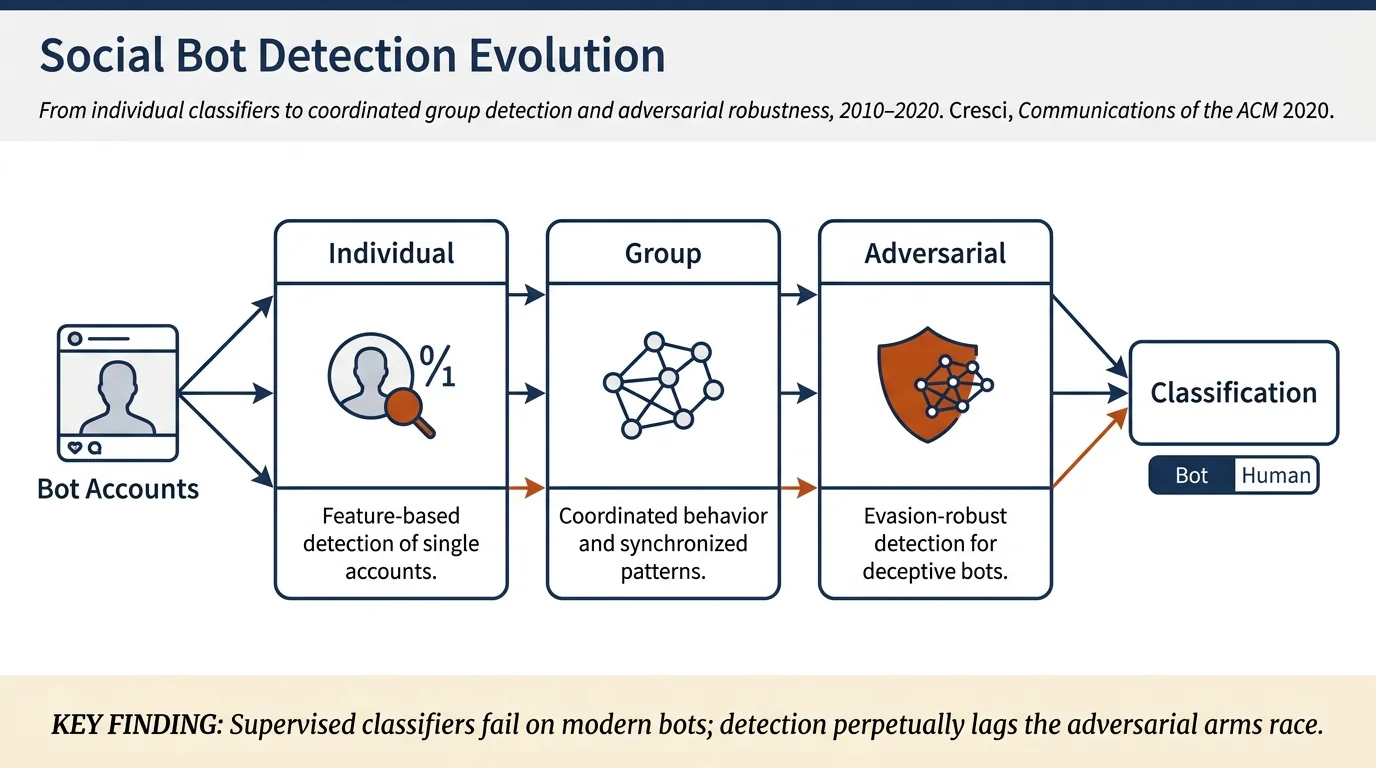
A Decade of Social Bot DetectionA comprehensive review of social bot detection research from 2010 to 2020, documenting the evolution from supervised individual-account detection to group-level approaches targeting coordinated inauthentic behavior. The paper traces the escalating "arms race" between bot developers and detection researchers, illustrates bots' documented…
 Bots & coordinated campaignsPlatforms, policy & society
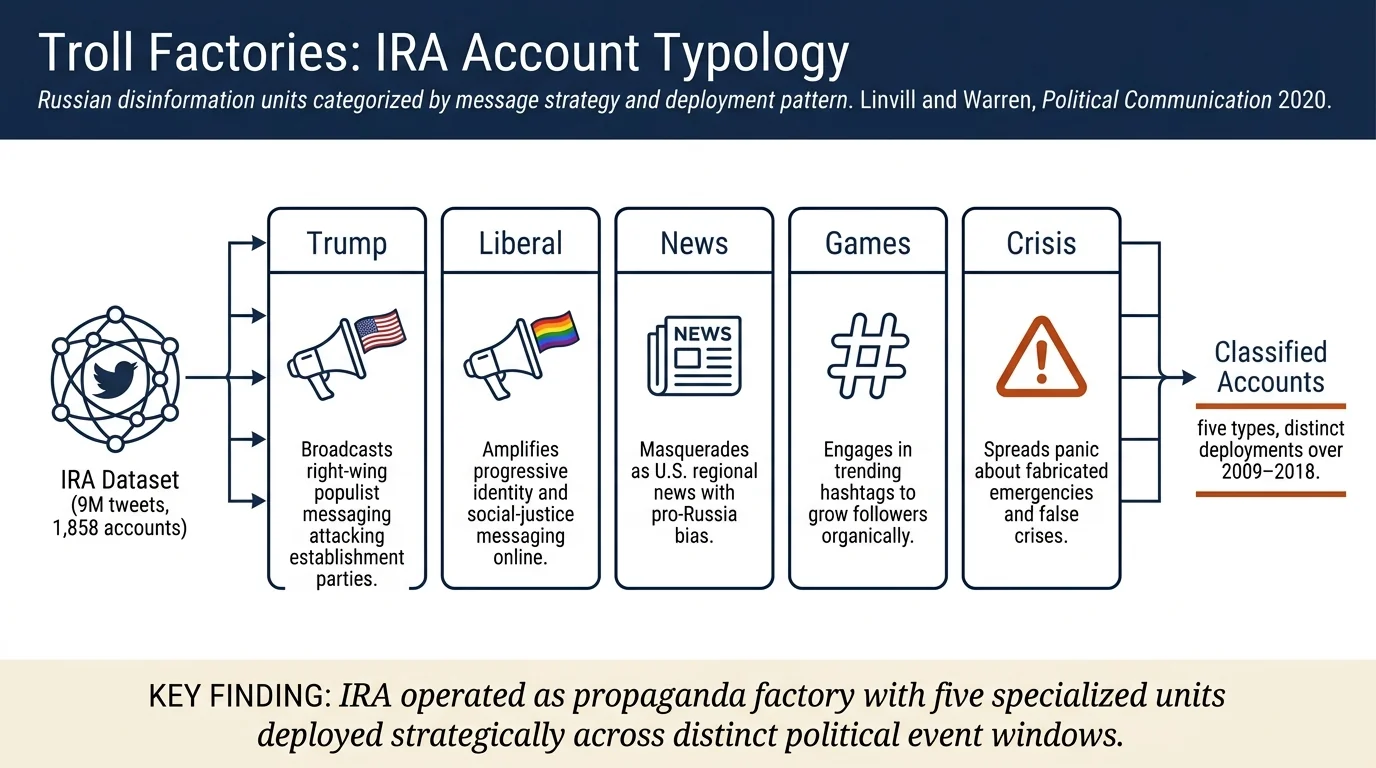
Troll Factories: Manufacturing Specialized Disinformation on TwitterLinvill and Warren analyze 9.04 million tweets from Russia's Internet Research Agency (IRA) spanning 2009–2018, identifying five specialized account categories—Right Troll, Left Troll, News Feed, Hashtag Gamer, and Fearmonger—each with distinct behavioral patterns, temporal deployment strategies, and communication styles. The authors…
 Bots & coordinated campaignsPlatforms, policy & society
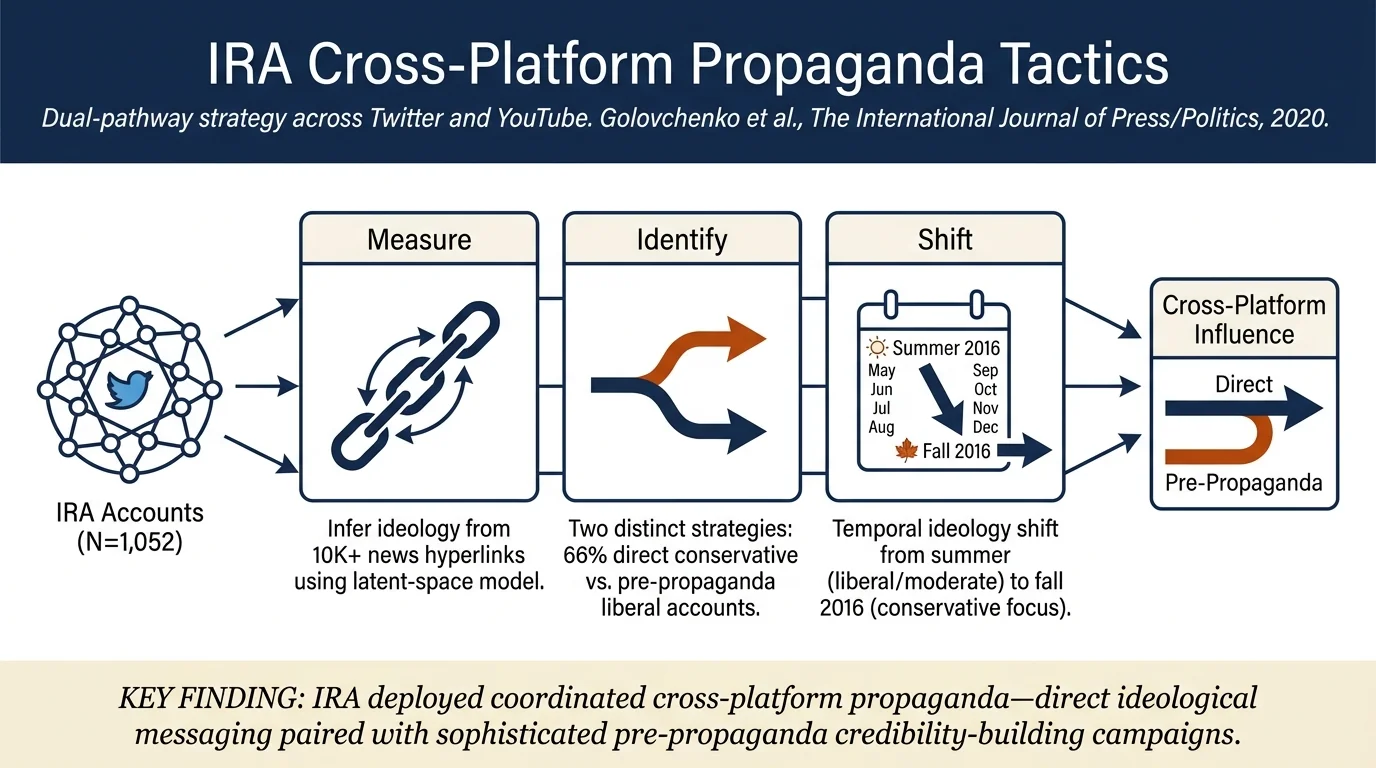
Cross-Platform State Propaganda: Russian Trolls on Twitter and YouTube during the 2016 U.S. Presidential ElectionThis paper analyzes 1,052 Russian IRA Twitter accounts to understand their propaganda strategy during the 2016 U.S. presidential election. By examining hyperlinks to news stories and YouTube videos, the authors find IRA accounts linked to conservative sources more frequently than liberal ones, consistent with supporting Trump.
 Bots & coordinated campaignsSpread & networks
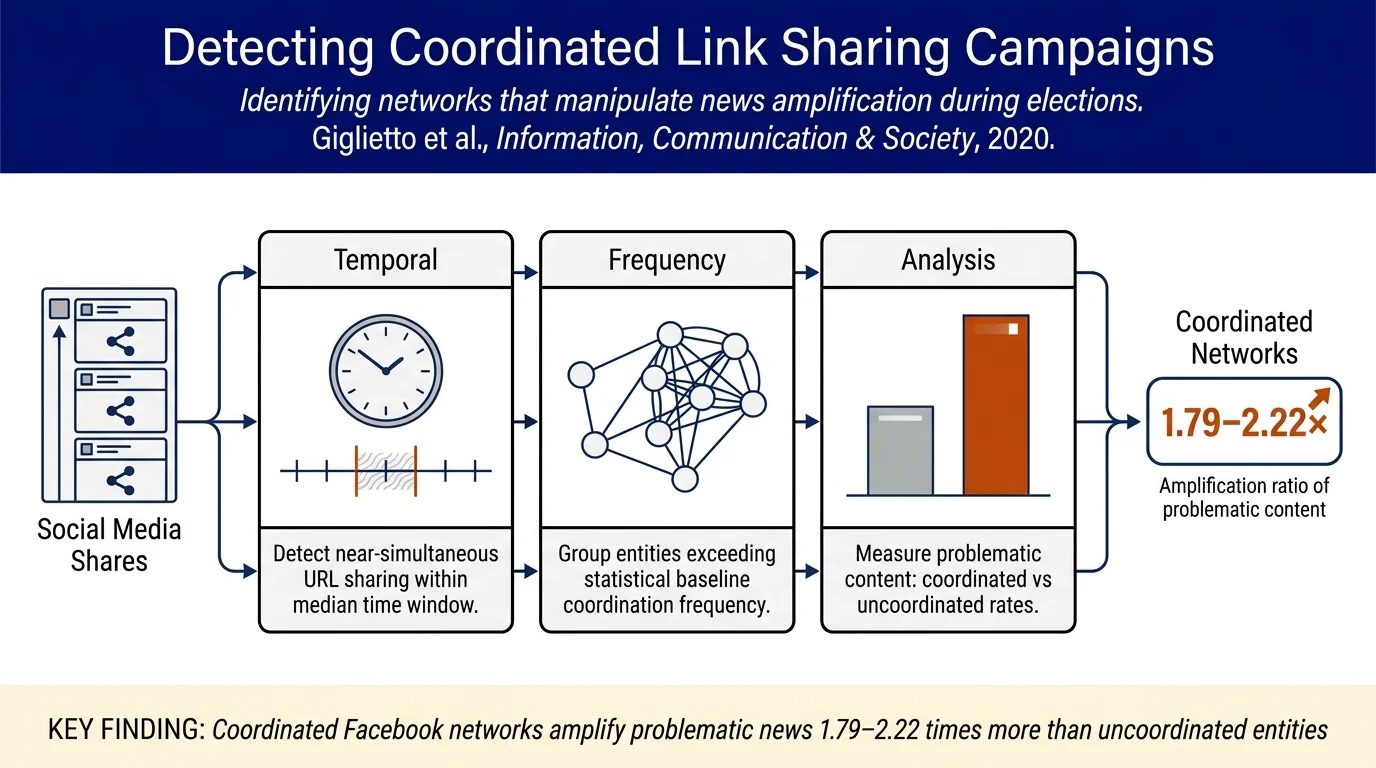
It takes a village to manipulate the media: coordinated link sharing behavior during 2018 and 2019 Italian electionsCoordinated networks of Facebook pages and groups substantially amplified problematic news during Italian elections: coordinated entities shared problematic domains 1.79×–2.22× more frequently than uncoordinated ones. The paper introduces a method to detect "coordinated inauthentic behavior" by identifying entities that…
 Bots & coordinated campaignsPlatforms, policy & society
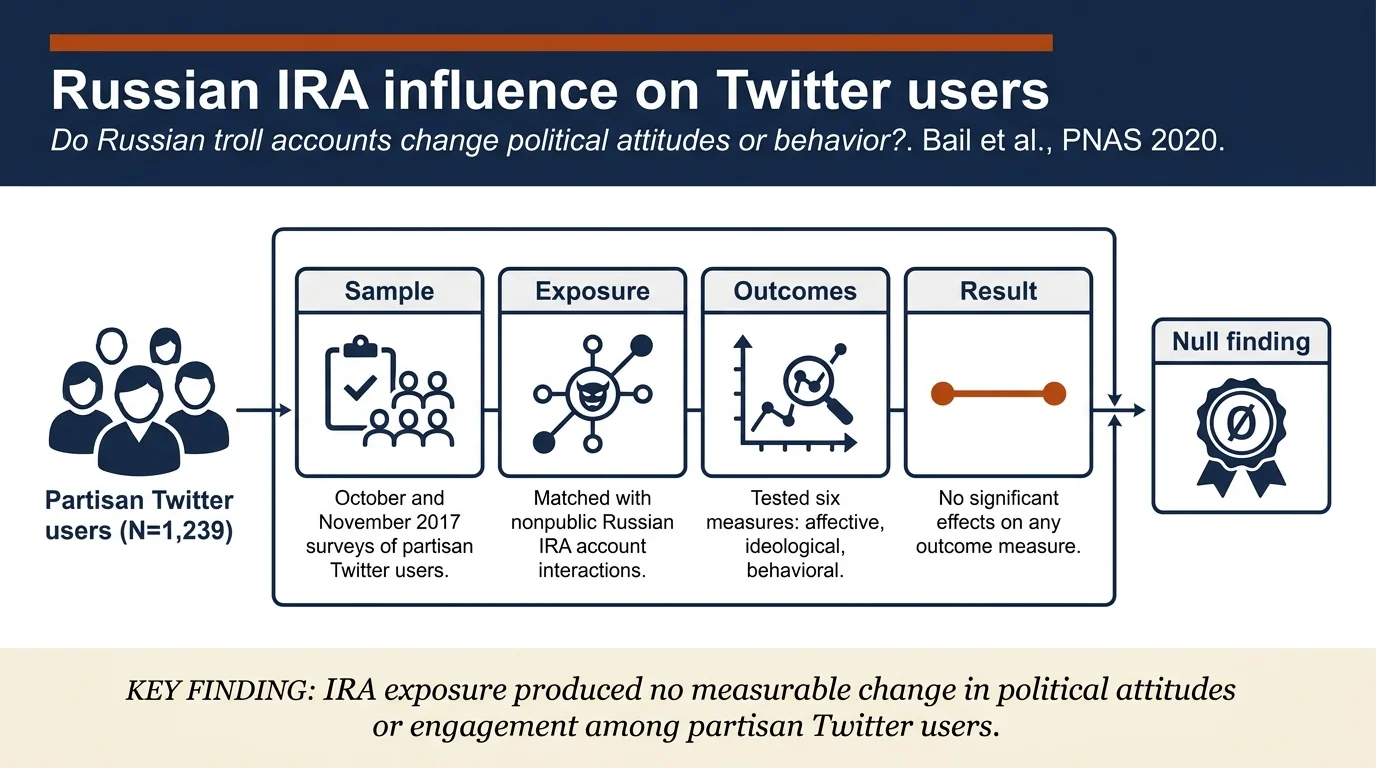
Assessing the Russian Internet Research Agency's impact on the political attitudes and behaviors of American Twitter users in late 2017Combining longitudinal survey data from 1,239 partisan Twitter users with nonpublic IRA account data, Bail et al. find no evidence that interaction with Russian Internet Research Agency accounts substantially impacted six measures of political attitudes (affective/ideological polarization) or behaviors (political engagement, network…