News literacy refers to individuals' knowledge of and ability to critically evaluate the processes by which news is created, distributed, consumed, and monetized. It encompasses understanding editorial standards, journalistic practices, source credibility assessment, platform algorithms, and the economic incentives underlying media production. News literacy is conceptualized as a protective factor against misinformation and conspiracy theories, particularly when individuals can apply critical evaluation skills across diverse sources and contexts.
The five-component model of news literacy—context, creation, content, circulation, and consumption—operationalizes the domain as knowledge spanning news production systems, content analysis, distribution mechanisms, and audience engagement patterns. Research has found that individuals with higher news literacy are more likely to reject false claims and misinformation, though the effectiveness varies by political ideology and the salience of misinformation to an individual's worldview.
Key papers
- Ashley et al. (2023) — Can News Literacy Help Reduce Belief in COVID Misinformation? — Tests the relationship between multifaceted news literacy and belief in COVID-19 misinformation, finding stronger effects for liberals than conservatives.
- Vraga & Tully (2021) — News Literacy, Social Media Behaviors, and Skepticism toward Information on Social Media — Examines how news literacy relates to skepticism and engagement on social platforms.
Related topics
- Misinformation Interventions (broader)
- media critical thinking (broader methodological foundation)
- Conspiracy theories (closely related concern)
Papers on this topic
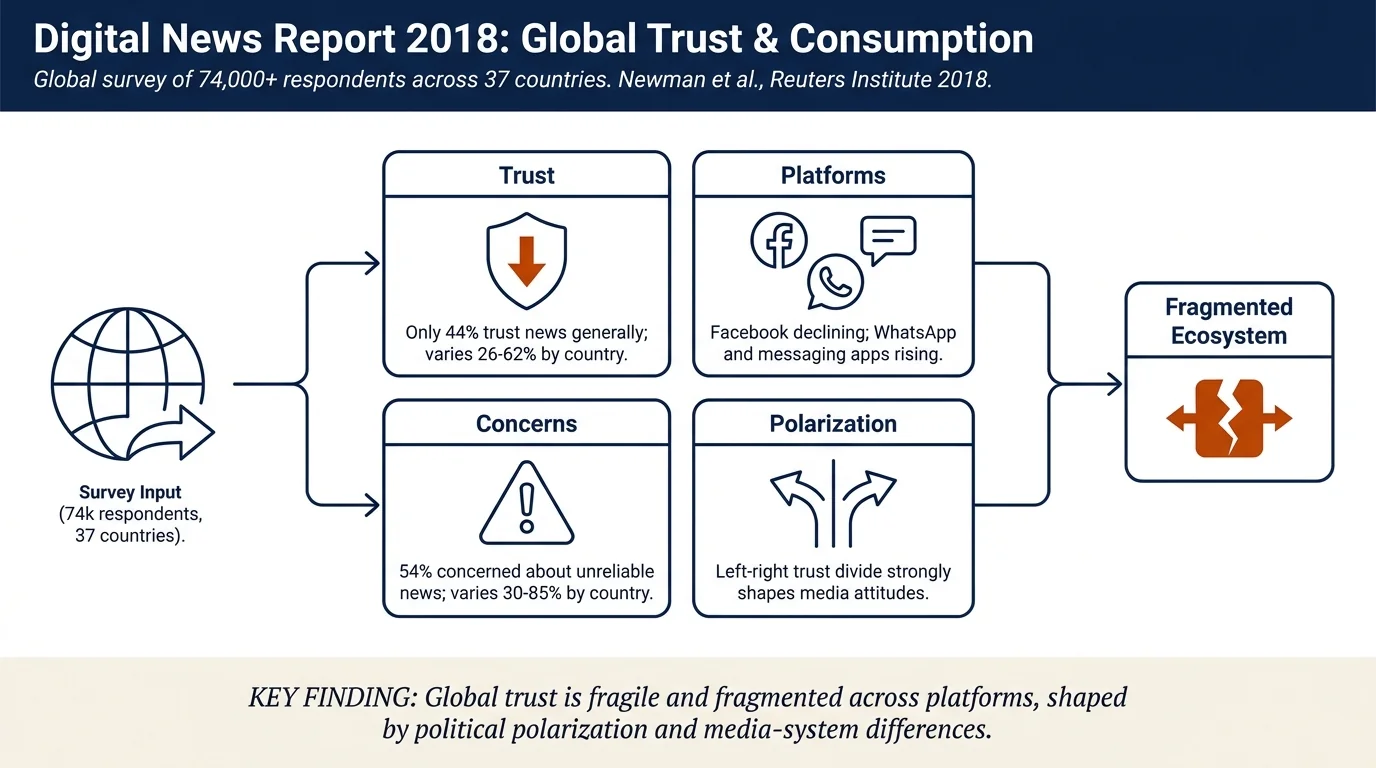 Platforms, policy & societyPsychology & interventions
Reuters Institute Digital News Report 2018
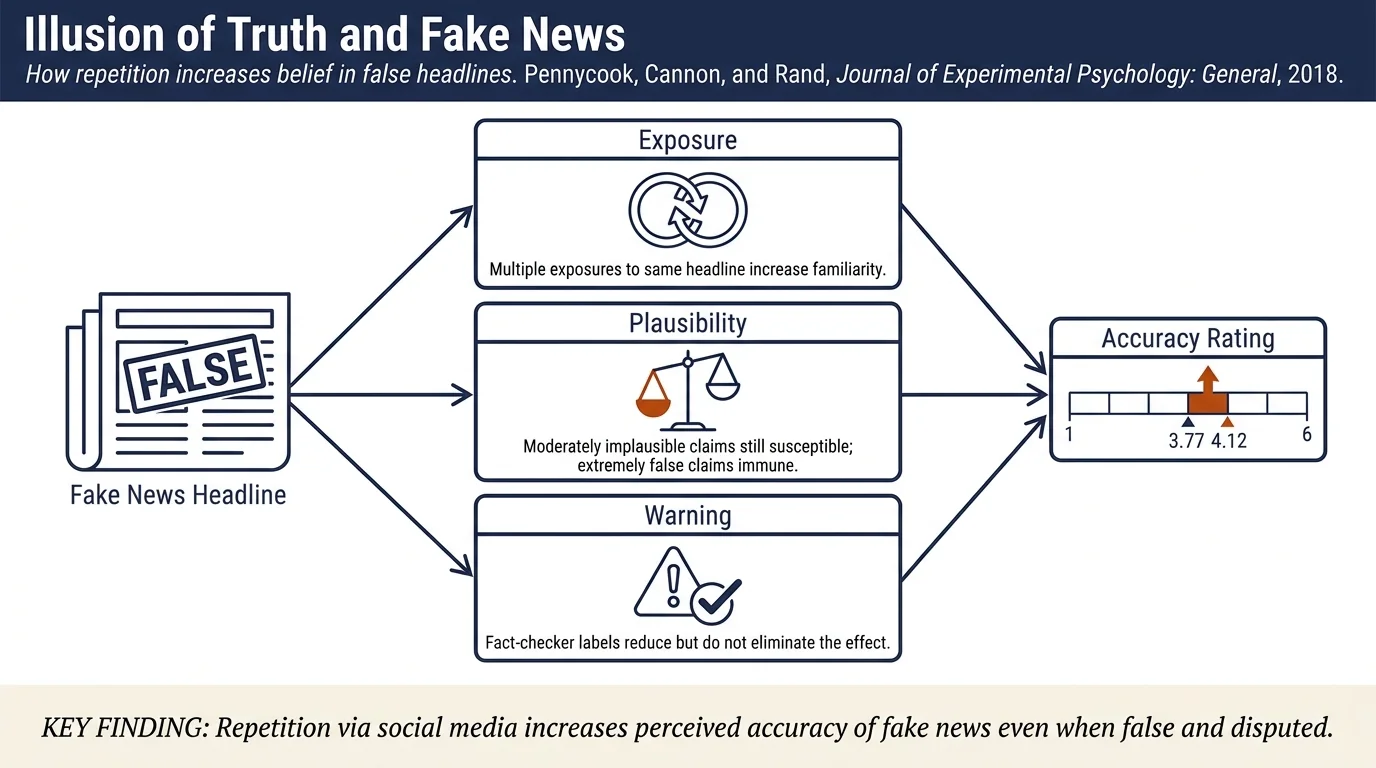 Psychology & interventionsDetection methods
Prior Exposure Increases Perceived Accuracy of Fake News