Explore everything
Filter by research area, year and venue. Every filter is in the address bar, so you can share a view as a link.
Detection methodsPlatforms, policy & society
Facts and Myths about MisperceptionsBrendan Nyhan surveys misperceptions in politics, science, and health, analyzing why false beliefs persist and how to counter them. While cognitive limits play a role, the strongest driver of misperceptions is group identity and directional motivation (partisanship) in low-incentive domains.
 Spread & networksDetection methods
Climate Change Misinformation: Supply, Demand, and the Challenges to ScienceLewandowsky examines climate denial through supply and demand lenses: well-funded disinformation campaigns (billions annually from fossil fuel interests and conservative think tanks) deploy cherry-picked data to infiltrate mainstream media and political rhetoric, while political ideology (conservatism, libertarianism) predisposes people…
 Psychology & interventionsPlatforms, policy & society
How to Pre-Bunk Misinformation and DisinformationJon Roozenbeek discusses psychological inoculation as a scalable defense against misinformation. Rather than focusing on veracity (which becomes politically contested), he proposes teaching people to recognize predictable manipulation techniques before encountering false content.
 Psychology & interventionsDetection methods
The Psychology of MisinformationEcker presents evidence that misinformation continues to influence reasoning even after people receive, believe, and remember corrections. Drawing on cognitive psychology, he demonstrates that corrections are only partially effective—typically halving (not eliminating) reliance on misinformation.
 Detection methodsPlatforms, policy & society
Truth DecayTruth Decay—the erosion of reliance on facts and data in policy-making and civil discourse—is not new but cyclically emerges during periods of technological disruption in media. Kavanagh traces this through yellow journalism, radio demagoguery, cable news, and now social media.
 Spread & networksBots & coordinated campaigns
The Spread of Misinformation in Social MediaMenczer presents a framework for understanding misinformation spread through social networks as an inevitable consequence of network structure and human cognitive limitations rather than platform design failures. He discusses how structural properties—scale-free topology, finite attention, information overload—create vulnerabilities…
 Detection methodsPsychology & interventions
From WMDs to the vaccine-autism myth: Understanding misperceptions in politics and health careNyhan presents research on why people hold and resist correcting false beliefs, spanning political misperceptions (Iraq WMDs, Obama birth certificate, death panels) and health misinformation (vaccine-autism link). His core finding is that simple fact-based corrections often fail and sometimes backfire—especially among politically…
 Spread & networksDetection methods
Computational Propaganda and the Lie MachinesPhilip Howard discusses his book The Lie Machines and describes computational propaganda as an industrialized system combining organized disinformation campaigns (social component) with social media algorithms (technical component). He outlines three production stages — creation, dissemination, and long-term marketing — and argues that…
 Psychology & interventionsDetection methods
Towards psychological herd immunity: Cross-cultural prebunking against COVID-19 misinformationJon Roozenbeek presents a cross-cultural randomized controlled trial testing two psychological interventions against COVID-19 misinformation. Comparing the "Go Viral" game (technique-based inoculation) against UNESCO infographics and a Tetris control condition across 1,777 participants in the UK, Germany, and France, he demonstrates that…
 Spread & networksPlatforms, policy & society
Network PropagandaBenkler presents research on media asymmetry during the 2016 U.S. election, revealing that the right-wing media ecosystem operates under a fundamentally different structure than the center and center-left press. Rather than technological systems (Facebook algorithms, Russian interference) or individual-level factors, the key driver of…
 Deepfakes & multimodalDetection methods
The Erosion of Shared Reality in the Age of DeepfakesGenerative AI has moved from nascent to commodity in just 18 months; text-to-image, text-to-video, and real-time interactive deepfakes are now trivial to create. Humans are bad at detecting them (performing ~60% accuracy on trained tasks vs. 50% chance).
 LLMs & generative AIFact-checking & verification
Factuality Challenges in the Era of Large Language ModelsNakov surveys the twin challenges posed by large language models (LLMs) to misinformation detection and fact-checking: (1) LLMs generate coherent, persuasive, and factually-unreliable text—hallucinations are pervasive and often hidden; (2) LLMs can be weaponized to automate misinformation production at scale through paraphrasing, persona…
 Psychology & interventionsPlatforms, policy & society
The Misinformation AgeFalse beliefs persist and spread through social factors—conformity, institutional curation of evidence, and network structure—rather than individual cognitive biases alone. O'Connor examines historical cases (variolation in 18th-century England, tobacco industry strategy) and mathematical models to show how unbiased actors (journalists,…
 Platforms, policy & societyFact-checking & verification
How Polarization Can Help Solve the Misinformation ProblemDavid Rand presents a counter-intuitive argument: while polarization is widely viewed as exacerbating misinformation, it may actually improve crowd-sourced fact-checking systems like Twitter's Birdwatch/Community Notes. Rather than a traditional technology approach (machine learning classifiers), platforms can scale fact-checking by…
 Psychology & interventionsFact-checking & verification
How You Can Help Combat Fake NewsA researcher presents empirical findings challenging the "motivated reasoning" account of why people believe false headlines. Instead, a multi-study investigation with 25,000+ participants shows that critical thinking and cognitive reasoning—not willful bias—are the primary determinants of misinformation susceptibility.
 Psychology & interventionsPlatforms, policy & society
Psychological Inoculation Against Misinformation (Trinity College, Cambridge)Van der Linden presents psychological inoculation as an alternative to reactive fact-checking. Rather than debunking false claims after people have been exposed, inoculation preemptively builds resistance to misinformation techniques.
 Psychology & interventionsPlatforms, policy & society
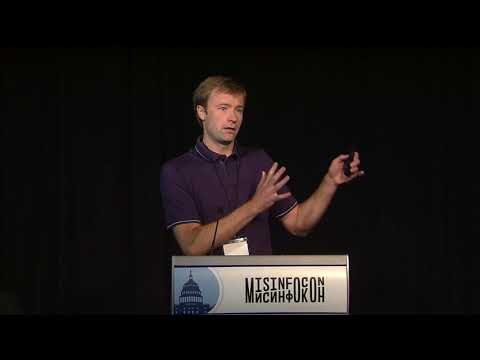
Prebunking and Inoculating Against DisinformationVan der Linden argues that reactive fact-checking fails to scale and leaves misinformation's psychological influence intact. Instead, he proposes psychological inoculation: preemptively exposing people to weakened examples of misinformation techniques before they encounter the real thing, building cognitive resistance.
 Psychology & interventionsLLMs & generative AI
Misinformation and Data LiteracyData and numbers are surprisingly effective misinformation tools because they convey false authority and precision—people trust numbers even more than words. West illustrates how charts can deliberately mislead through axis manipulation, bin-width distortion, and selective framing; these occur regularly in mainstream media and academic…
 Spread & networksPlatforms, policy & society
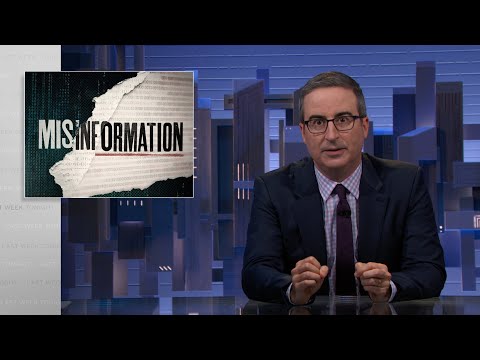
Misinformation (Last Week Tonight with John Oliver)Immigrant diaspora communities face disproportionate exposure to misinformation spread through private messaging apps (WhatsApp, WeChat, KakaoTalk) rather than public social media. Platforms invest 13% of moderation resources on 90% of non-US users; messaging apps' encrypted, group-based design makes content invisible to fact-checkers;…
Platforms, policy & societyBots & coordinated campaigns
How to Counter Russian Social Media Influence in Eastern EuropeRussia deploys sophisticated social media campaigns in Eastern Europe using state-funded media, coordinated troll and bot networks, fake hashtags, and nonattributed comments to sow dissent against neighboring governments and NATO. The RAND study analyzed social media data and expert interviews to identify counter-strategies: accelerating…
Spread & networksBots & coordinated campaigns
Media Manipulation and Disinformation OnlineInternet subcultures including trolls, gamergaters, white nationalists, and conspiracy theorists exploit online platforms' vulnerabilities—algorithmic amplification, engagement metrics, and participatory culture—to manipulate news frames and spread disinformation. These diverse groups employ coordinated tactics (memes, bots, strategic…
Psychology & interventionsSpread & networks
Lazy, not biased: Susceptibility to partisan fake news is better explained by lack of reasoning than by motivated reasoningTwo studies with 3,446 participants found that people who score higher on cognitive reflection tests (measuring analytic thinking) are significantly less likely to believe partisan fake news—contradicting the "motivated reasoning" theory that political bias drives misinformation susceptibility. The effect holds regardless of political…
Platforms, policy & societyPsychology & interventions
Lexicon of Lies: Terms for Problematic InformationWords matter in describing problematic information. This guide clarifies distinctions between misinformation (unintentional inaccuracy), disinformation (deliberate deception), propaganda, publicity, gaslighting, and related terms.
Spread & networksDetection methods
Climate Change Misinformation: Supply, Demand, and the Challenges to ScienceLewandowsky examines climate denial through supply and demand lenses: well-funded disinformation campaigns (billions annually from fossil fuel interests and conservative think tanks) deploy cherry-picked data to infiltrate mainstream media and political rhetoric, while political ideology (conservatism, libertarianism) predisposes people…
Psychology & interventionsPlatforms, policy & society
How to Pre-Bunk Misinformation and DisinformationJon Roozenbeek discusses psychological inoculation as a scalable defense against misinformation. Rather than focusing on veracity (which becomes politically contested), he proposes teaching people to recognize predictable manipulation techniques before encountering false content.
Psychology & interventionsDetection methods
The Psychology of MisinformationEcker presents evidence that misinformation continues to influence reasoning even after people receive, believe, and remember corrections. Drawing on cognitive psychology, he demonstrates that corrections are only partially effective—typically halving (not eliminating) reliance on misinformation.
Detection methodsPlatforms, policy & society
Truth DecayTruth Decay—the erosion of reliance on facts and data in policy-making and civil discourse—is not new but cyclically emerges during periods of technological disruption in media. Kavanagh traces this through yellow journalism, radio demagoguery, cable news, and now social media.
Spread & networksBots & coordinated campaigns
The Spread of Misinformation in Social MediaMenczer presents a framework for understanding misinformation spread through social networks as an inevitable consequence of network structure and human cognitive limitations rather than platform design failures. He discusses how structural properties—scale-free topology, finite attention, information overload—create vulnerabilities…
Detection methodsPsychology & interventions
From WMDs to the vaccine-autism myth: Understanding misperceptions in politics and health careNyhan presents research on why people hold and resist correcting false beliefs, spanning political misperceptions (Iraq WMDs, Obama birth certificate, death panels) and health misinformation (vaccine-autism link). His core finding is that simple fact-based corrections often fail and sometimes backfire—especially among politically…
Spread & networksDetection methods
Computational Propaganda and the Lie MachinesPhilip Howard discusses his book The Lie Machines and describes computational propaganda as an industrialized system combining organized disinformation campaigns (social component) with social media algorithms (technical component). He outlines three production stages — creation, dissemination, and long-term marketing — and argues that…
Psychology & interventionsDetection methods
Towards psychological herd immunity: Cross-cultural prebunking against COVID-19 misinformationJon Roozenbeek presents a cross-cultural randomized controlled trial testing two psychological interventions against COVID-19 misinformation. Comparing the "Go Viral" game (technique-based inoculation) against UNESCO infographics and a Tetris control condition across 1,777 participants in the UK, Germany, and France, he demonstrates that…
Spread & networksPlatforms, policy & society
Network PropagandaBenkler presents research on media asymmetry during the 2016 U.S. election, revealing that the right-wing media ecosystem operates under a fundamentally different structure than the center and center-left press. Rather than technological systems (Facebook algorithms, Russian interference) or individual-level factors, the key driver of…
Deepfakes & multimodalDetection methods
The Erosion of Shared Reality in the Age of DeepfakesGenerative AI has moved from nascent to commodity in just 18 months; text-to-image, text-to-video, and real-time interactive deepfakes are now trivial to create. Humans are bad at detecting them (performing ~60% accuracy on trained tasks vs. 50% chance).
LLMs & generative AIFact-checking & verification
Factuality Challenges in the Era of Large Language ModelsNakov surveys the twin challenges posed by large language models (LLMs) to misinformation detection and fact-checking: (1) LLMs generate coherent, persuasive, and factually-unreliable text—hallucinations are pervasive and often hidden; (2) LLMs can be weaponized to automate misinformation production at scale through paraphrasing, persona…
Psychology & interventionsPlatforms, policy & society
The Misinformation AgeFalse beliefs persist and spread through social factors—conformity, institutional curation of evidence, and network structure—rather than individual cognitive biases alone. O'Connor examines historical cases (variolation in 18th-century England, tobacco industry strategy) and mathematical models to show how unbiased actors (journalists,…
Platforms, policy & societyFact-checking & verification
How Polarization Can Help Solve the Misinformation ProblemDavid Rand presents a counter-intuitive argument: while polarization is widely viewed as exacerbating misinformation, it may actually improve crowd-sourced fact-checking systems like Twitter's Birdwatch/Community Notes. Rather than a traditional technology approach (machine learning classifiers), platforms can scale fact-checking by…
Psychology & interventionsFact-checking & verification
How You Can Help Combat Fake NewsA researcher presents empirical findings challenging the "motivated reasoning" account of why people believe false headlines. Instead, a multi-study investigation with 25,000+ participants shows that critical thinking and cognitive reasoning—not willful bias—are the primary determinants of misinformation susceptibility.
Psychology & interventionsPlatforms, policy & society
Psychological Inoculation Against Misinformation (Trinity College, Cambridge)Van der Linden presents psychological inoculation as an alternative to reactive fact-checking. Rather than debunking false claims after people have been exposed, inoculation preemptively builds resistance to misinformation techniques.
Psychology & interventionsPlatforms, policy & society
Prebunking and Inoculating Against DisinformationVan der Linden argues that reactive fact-checking fails to scale and leaves misinformation's psychological influence intact. Instead, he proposes psychological inoculation: preemptively exposing people to weakened examples of misinformation techniques before they encounter the real thing, building cognitive resistance.
Psychology & interventionsLLMs & generative AI
Misinformation and Data LiteracyData and numbers are surprisingly effective misinformation tools because they convey false authority and precision—people trust numbers even more than words. West illustrates how charts can deliberately mislead through axis manipulation, bin-width distortion, and selective framing; these occur regularly in mainstream media and academic…
Spread & networksPlatforms, policy & society
Misinformation (Last Week Tonight with John Oliver)Immigrant diaspora communities face disproportionate exposure to misinformation spread through private messaging apps (WhatsApp, WeChat, KakaoTalk) rather than public social media. Platforms invest 13% of moderation resources on 90% of non-US users; messaging apps' encrypted, group-based design makes content invisible to fact-checkers;…
Platforms, policy & societyBots & coordinated campaigns
How to Counter Russian Social Media Influence in Eastern EuropeRussia deploys sophisticated social media campaigns in Eastern Europe using state-funded media, coordinated troll and bot networks, fake hashtags, and nonattributed comments to sow dissent against neighboring governments and NATO. The RAND study analyzed social media data and expert interviews to identify counter-strategies: accelerating…
Spread & networksBots & coordinated campaigns
Media Manipulation and Disinformation OnlineInternet subcultures including trolls, gamergaters, white nationalists, and conspiracy theorists exploit online platforms' vulnerabilities—algorithmic amplification, engagement metrics, and participatory culture—to manipulate news frames and spread disinformation. These diverse groups employ coordinated tactics (memes, bots, strategic…
Psychology & interventionsSpread & networks
Lazy, not biased: Susceptibility to partisan fake news is better explained by lack of reasoning than by motivated reasoningTwo studies with 3,446 participants found that people who score higher on cognitive reflection tests (measuring analytic thinking) are significantly less likely to believe partisan fake news—contradicting the "motivated reasoning" theory that political bias drives misinformation susceptibility. The effect holds regardless of political…
Platforms, policy & societyPsychology & interventions
Lexicon of Lies: Terms for Problematic InformationWords matter in describing problematic information. This guide clarifies distinctions between misinformation (unintentional inaccuracy), disinformation (deliberate deception), propaganda, publicity, gaslighting, and related terms.