Explore papers
Filter by research area, year and venue. Every filter is in the address bar, so you can share a view as a link.
 Spread & networksPlatforms, policy & society
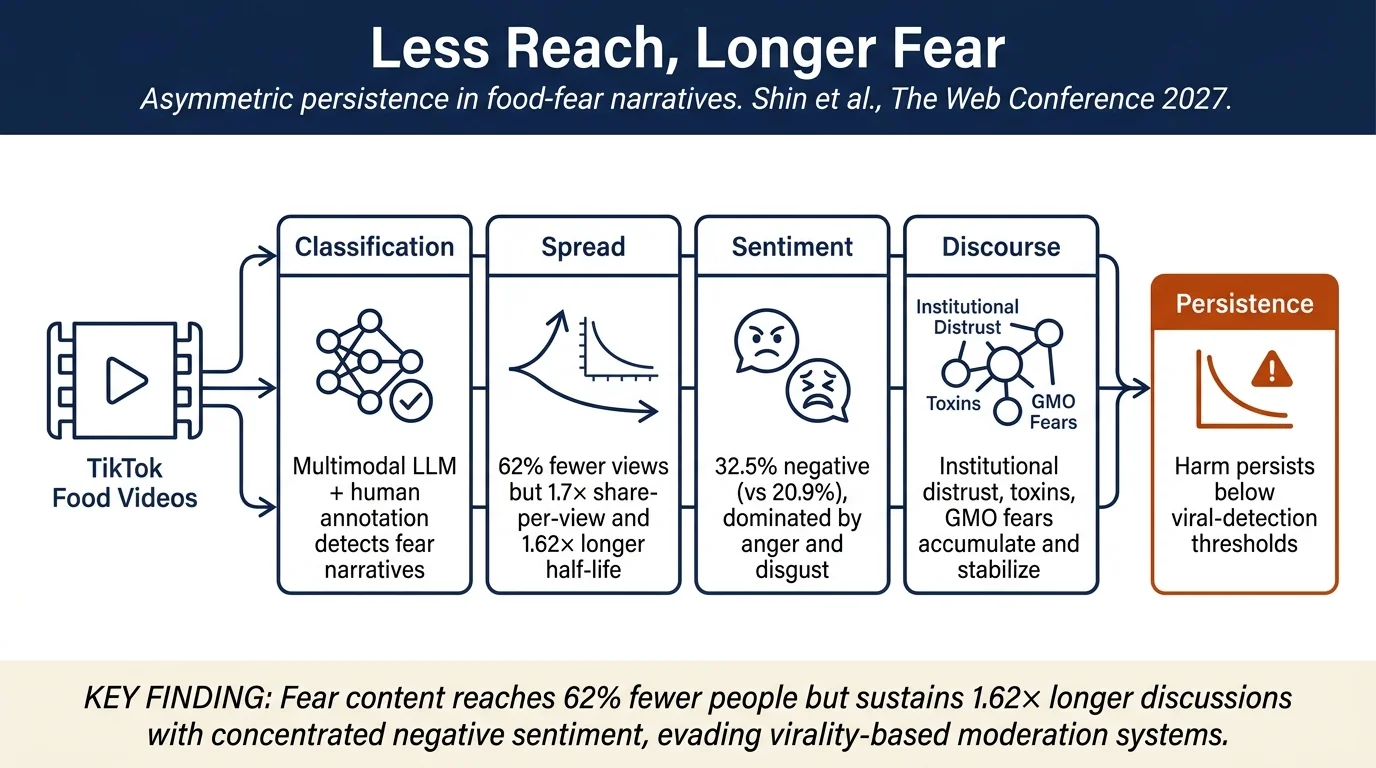
Fear Doesn't Go Viral, It Lingers: Spread, Affect, and Discourse of Food-Fear Content on TikTokFear-based content about food on TikTok reaches fewer people than non-fear nutrition videos but sustains engagement and discussion far longer. Fear videos trigger more negative, angry, and disgusted comments that persist for weeks; their discourse concentrates on distrust of food industry, contamination, and institutional skepticism.
 Bots & coordinated campaignsSpread & networks
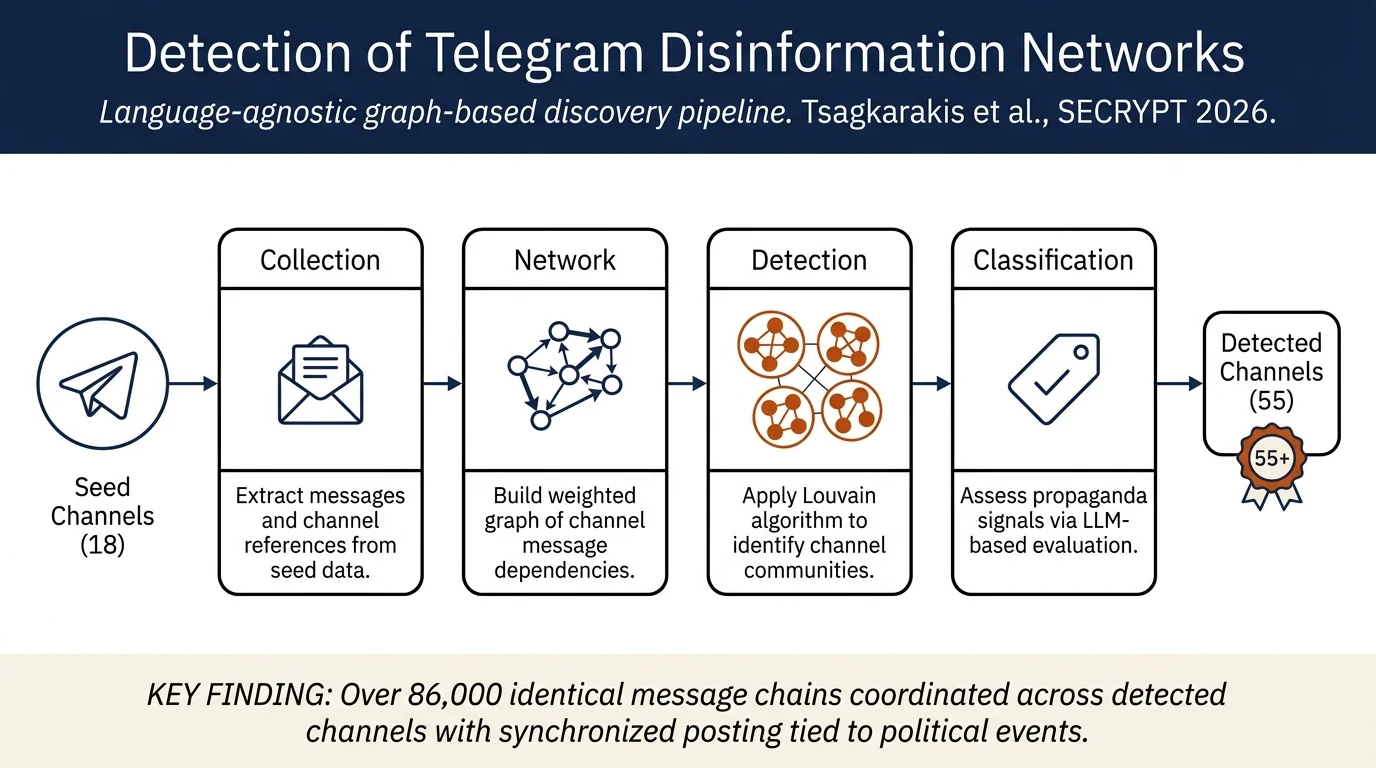
Birds of a Feather Flock Together: Network-Based Detection of Coordinated Disinformation Campaigns on TelegramA graph-based methodology discovers coordinated disinformation campaigns on Telegram by analyzing message-sharing patterns rather than content, requiring only structural relationships. The authors identified 55 disinformation channels and over 86,000 identical message chains spanning multiple channels, revealing a highly synchronized…
 Detection methodsPsychology & interventions
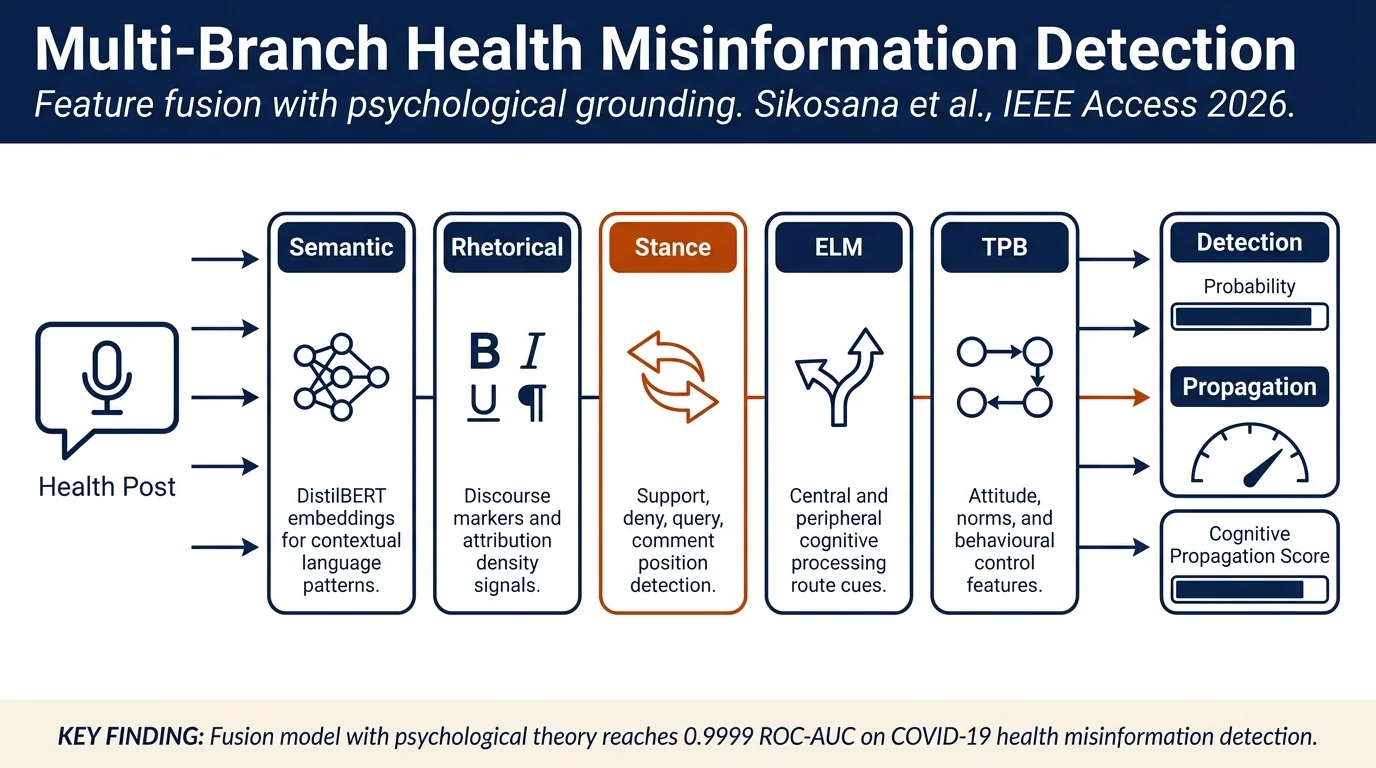
A Multi-Branch Feature Fusion Approach for Health Misinformation Detection and PropagationThe paper presents a multi-branch fusion framework for detecting and characterizing health misinformation on social media, grounded in psychological theories (Elaboration Likelihood Model and Theory of Planned Behaviour). The model fuses transformer embeddings with rhetorical, stance, and theory-motivated linguistic features in a unified…
 Spread & networksDetection methods
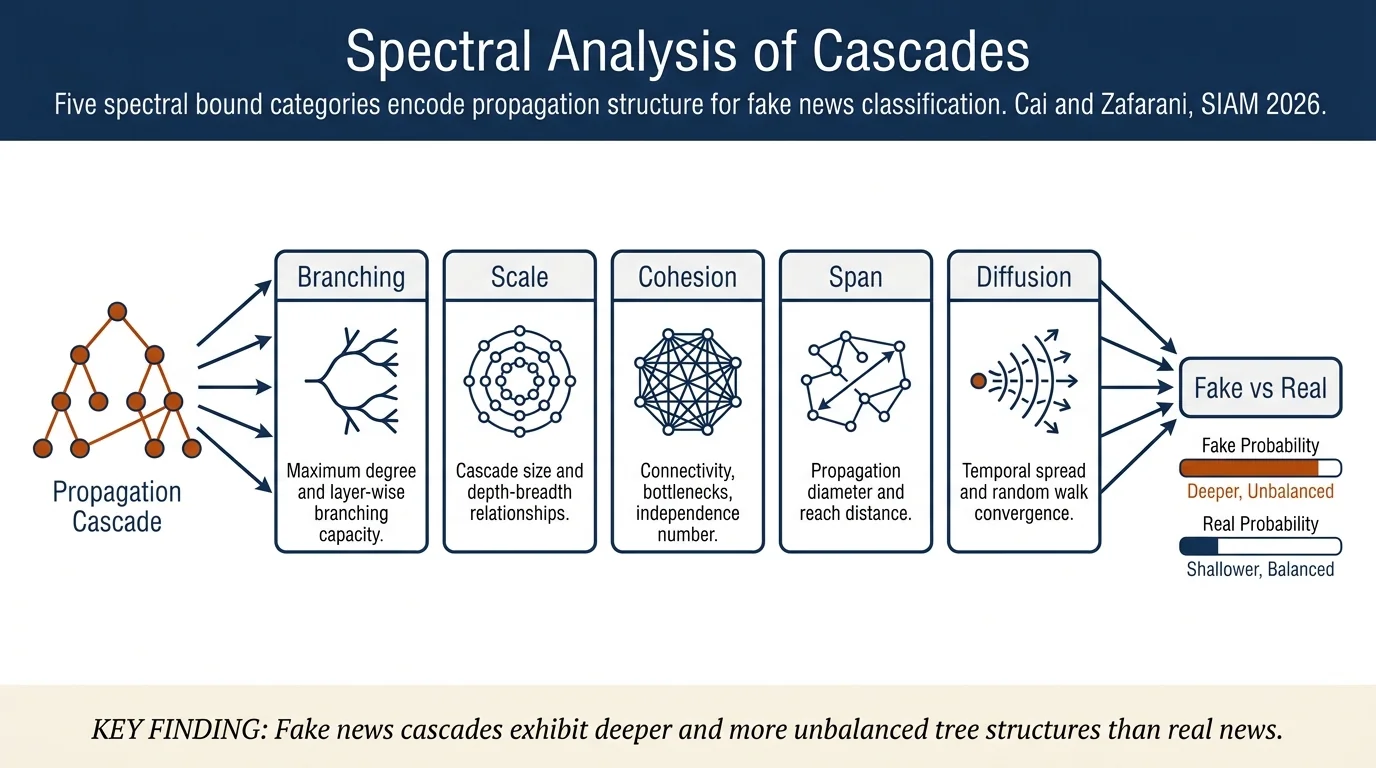
Spectral Analysis of Fake News PropagationThe paper develops a spectral view of fake news propagation by connecting graph spectra with structural properties of propagation trees. The authors derive spectral bounds capturing five key aspects of cascade structure—branching capacity, cascade scale, structural cohesion, propagation span, and diffusion dynamics—and use them as graph…