Explore talks and videos
Filter by research area, year and venue. Every filter is in the address bar, so you can share a view as a link.
 Psychology & interventionsPlatforms, policy & society
Can you outsmart a troll (by thinking like one)?Wardle uses a scenario-based approach to teach audiences how disinformation campaigns operate by role-playing as a malicious actor. The video demonstrates a real election disinformation strategy: creating fake accounts, spreading memes, exploiting confirmation bias to suppress opposing voters, making false voting claims, spreading…
 Psychology & interventionsPlatforms, policy & society
The dangers of the partisan brainOur brains are shaped by partisan identity to perceive reality differently, even when presented with identical evidence. Research shows that both liberals and conservatives reject factual information that contradicts their political beliefs—a phenomenon driven by motivated reasoning, structural differences in brain architecture, and…
 Psychology & interventionsPlatforms, policy & society
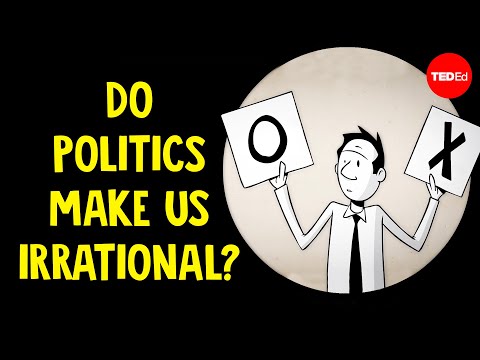
Do politics make us irrational?A 2013 study of 1,100 adults showed that political identity overrides mathematical ability: participants solved identical data-interpretation problems accurately when answers were neutral, but when the correct answer contradicted their political beliefs, even mathematically skilled participants failed. This partisan bias stems from…
 Psychology & interventionsDetection methods
Measuring and Reducing Misinformation SusceptibilityJon Roozenbeek presents two major contributions: (1) the Misinformation Susceptibility Test (MIST), a psychometrically validated 20-item measure of how well people distinguish true from false headlines, and (2) findings that video-based inoculation interventions teaching manipulation techniques significantly improve people's ability to…
 Psychology & interventionsDetection methods
Why People Believe Misinformation — and What We Can Do About ItJon Roozenbeek synthesizes eight years of misinformation research, examining why people believe false information and what interventions actually work. Grounding the analysis in the historical tobacco disinformation playbook, he argues that misinformation susceptibility stems not primarily from poor reasoning, but from media consumption…
 Psychology & interventionsFact-checking & verification
Psychological Inoculation Against MisinformationSander van der Linden surveys the psychology of misinformation susceptibility and defends the approach of psychological inoculation (pre-bunking) over fact-checking (debunking). He introduces the MIST (Misinformation Susceptibility Test), a psychometrically validated instrument for measuring individual variation in susceptibility to…
 Psychology & interventionsDetection methods
The Science of MisinformationVan Bavel synthesizes research on misinformation psychology, spread mechanisms, and evidence-based interventions. Misinformation is a persistent global risk (World Economic Forum priority).
 Psychology & interventionsDetection methods
Fact or Fake? The Psychology of MisinformationEcker presents an overview of misinformation psychology, covering definition, sources, behavioral impacts, and evidence-based interventions. He demonstrates that misinformation influences reasoning even after people receive corrections (the continued influence effect), and that corrections are only partially effective.
 Psychology & interventionsFact-checking & verification
Psychological Inoculation Against MisinformationSander van der Linden introduces psychological inoculation as a scalable alternative to fact-checking for building societal resistance to misinformation. Drawing on inoculation theory and his flagship intervention, the Bad News game, he demonstrates how preemptively exposing people to weakened examples of six core manipulation techniques…
 Psychology & interventionsDetection methods
Prebunking Misinformation on Social MediaJon Roozenbeek presents the case for prebunking—teaching people to recognize manipulation tactics before encountering false claims—rather than relying on reactive debunking. Drawing on inoculation theory from the 1960s, he argues that manipulation techniques recur across misinformation campaigns: emotional exploitation, false…
 Psychology & interventionsPlatforms, policy & society
Rumors, Truths, and Reality: Political Misinformation in the Modern DayAdam Berinsky surveys a decade of research on why Americans believe political rumors despite contradictory evidence. He identifies two key mechanisms: conspiratorial thinking (a personality trait that varies across individuals) and partisanship (which structures which rumors a person is likely to endorse).
 Psychology & interventionsDetection methods
The Continued Influence of MisinformationUllrich Ecker presents research on the continued influence effect—the phenomenon that misinformation continues to shape people's reasoning and memory even after they receive corrections and understand them. He examines four social factors that shape this effect: source credibility (trustworthiness matters more than expertise),…
 Spread & networksPlatforms, policy & society
Mis- and Disinformation During Crisis EventsKate Starbird, associate professor at UW's HCDE and co-founder of the Center for an Informed Public, discusses how misinformation and disinformation spread during crisis events, with case studies from the COVID-19 pandemic and 2020 election. She distinguishes between harmful misinformation (false but well-intentioned), disinformation…
 Platforms, policy & societyPsychology & interventions
Inside the bizarre world of internet trolls and propagandistsJournalist Andrew Marantz spent three years investigating propagandists and online extremists, tracing how fringe conspiracy theories and hate speech go viral on social media platforms. He exposes how social media algorithms optimized for engagement enable propagandists to leverage emotion over truth, and documents the pipeline through…
 Deepfakes & multimodalPlatforms, policy & society
How deepfakes undermine truth and threaten democracyDeepfakes use machine-learning technology to create fabricated audio and video of people doing or saying things they never did. Law professor Danielle Citron explores the dual threats: individual harm (non-consensual sexual deepfakes targeting women, especially minorities and journalists) and societal damage (eroding trust in…
 Psychology & interventionsDetection methods
How technology can fight extremism and online harassmentYasmin Green, head of Jigsaw, presents two technological interventions addressing online harms rooted in human psychology. For radicalization: the "Redirect Method" (piloted 2016) uses online advertising to intercept users searching for extremist content (e.g., "How do I join ISIS?") and show them counter-propaganda videos from credible…
 Psychology & interventionsFact-checking & verification
Why People Believe Fake News, Myths & Conspiracy TheoriesBrendan Nyhan surveys research on why people hold false beliefs about politics, health, and conspiracy theories despite exposure to corrective information. He identifies two core mechanisms: selective exposure (people seek out information matching their worldview) and selective acceptance (people dismiss contradictory information through…
 Spread & networksBots & coordinated campaigns
The Truth About False NewsA presentation discussing findings from a large-scale longitudinal study of false and true news spread on Twitter (2006–2017). The research found that false news spreads further, faster, and more broadly than truth by orders of magnitude—not primarily due to bots, but because humans are more susceptible to sharing novel information, and…
 Fact-checking & verificationPsychology & interventions
How to separate fact and fiction onlineMarkham Nolan, editor of Storyful, explains how journalists use open-source intelligence tools to verify content in the age of information overload. Through real-world case studies—including fake Hurricane Sandy photos and identifying locations in Syrian conflict videos—he demonstrates that truth-seeking requires human judgment combined…
 Psychology & interventionsPlatforms, policy & society
How We Create Our Own Fake NewsBobby Duffy's "Perils of Perception" research (100,000+ interviews across 40 countries) reveals that people systematically misestimate social realities by factors of 2–3×. Using concrete examples (teenage pregnancy, murder rates, immigration, social media adoption), Duffy traces these perception gaps to four psychological mechanisms: (1)…
 Psychology & interventionsDetection methods
Why People Fall for MisinformationJoseph Isaac traces how misconceptions persist using the tongue map myth as exemplar: David Hänig's 1901 research found modest taste-sensitivity variations across tongue regions, but through translation barriers, visual simplification, and our preference for clean narratives, it became the false claim that sweetness is imperceptible at…
 Psychology & interventionsDetection methods
Towards psychological herd immunity: Cross-cultural prebunking against COVID-19 misinformationJon Roozenbeek presents a cross-cultural randomized controlled trial testing two psychological interventions against COVID-19 misinformation. Comparing the "Go Viral" game (technique-based inoculation) against UNESCO infographics and a Tetris control condition across 1,777 participants in the UK, Germany, and France, he demonstrates that…
 Detection methodsPsychology & interventions
From WMDs to the vaccine-autism myth: Understanding misperceptions in politics and health careNyhan presents research on why people hold and resist correcting false beliefs, spanning political misperceptions (Iraq WMDs, Obama birth certificate, death panels) and health misinformation (vaccine-autism link). His core finding is that simple fact-based corrections often fail and sometimes backfire—especially among politically…
 Psychology & interventionsDetection methods
The Psychology of MisinformationEcker presents evidence that misinformation continues to influence reasoning even after people receive, believe, and remember corrections. Drawing on cognitive psychology, he demonstrates that corrections are only partially effective—typically halving (not eliminating) reliance on misinformation.