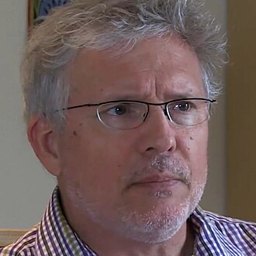
 Stephan Lewandowsky
Contributions
- Demonstrates that distrust in information sources is the strongest and most consistent predictor of noncompliance with COVID-19 public health measures, stronger than conspiracy beliefs or CAM endorsement alone.
- Shows that conspiracy beliefs are related to vaccine hesitancy, but the relationship is partly mediated through trust in information sources.
- Provides evidence that endorsement of complementary and alternative medicine (CAM) is independently associated with unwillingness to accept vaccination.
- Integrates three psychological factors—conspiracy beliefs, institutional trust, and CAM endorsement—into a single model of pandemic-era noncompliance.
Method
Survey administered online in Finnish or Swedish via Facebook (N=1,325, February–March 2020, peak of first COVID-19 wave in Finland). Structural regression model with:
Predictors: conspiracy beliefs (four items), trust in information sources (four items: doctors, scientists, media, authorities), and CAM endorsement (five items).
Outcomes: compliance with non-pharmaceutical interventions (NPIs; four items), emotional response to NPIs (four items), COVID-19 vaccination intentions (single item).
Results
Main findings:
- Trust in information sources was the strongest predictor across all three outcomes, explaining 12–14% of variance in NPI compliance and 20% in vaccination intentions.
- Conspiracy beliefs predicted reduced compliance with NPIs (β = −.19) and vaccine acceptance (β = −.06, not statistically significant direct effect, but mediated through trust and CAM).
- CAM endorsement predicted lower vaccine intentions (β = −.27) and weaker NPI compliance (β = −.14).
- The full model explained 36% of variance in NPI compliance, 27% in emotional response to NPIs, and 40% in vaccination intentions.
- Disturbance correlations revealed that NPI compliance and vaccination intentions were moderately correlated (r = −.17), suggesting shared underlying unwillingness to follow official guidance.
- Among participants who responded negatively to NPIs, some had a lower likelihood of accepting the vaccine, partly explained by lower trust in information sources.
Psychological mechanisms: Approximately 8% of respondents completely or somewhat believed in COVID-19 conspiracy theories; about 73% considered it very or somewhat likely they would accept a free vaccine. Those with stronger conspiracy beliefs, lower institutional trust, and higher CAM endorsement formed a cluster resistant to public health messaging.
Notes
Strength: The study moves beyond showing that conspiracy beliefs and low trust predict noncompliance to demonstrating the relative strength of each factor (trust > CAM endorsement > conspiracy beliefs). The structural model is well-identified and the sample, though recruited via Facebook and thus potentially self-selected, is large and demographically diverse enough to draw general conclusions about the Finnish population. The timing (early pandemic, before widespread vaccination campaigns) captures baseline resistance independent of vaccine-rollout messaging.
Limitation: The cross-sectional design prevents causal inference; the survey was administered via Facebook, introducing potential self-selection bias (individuals with strong opinions about COVID-19 may have been more likely to respond). The direct effect of conspiracy beliefs on vaccine intentions is weak and mediated through trust, raising questions about whether conspiracy is a symptom of distrust rather than a primary driver. The sample is Finnish, so generalization to other countries with different information environments or institutional trust levels requires caution.
Implications for intervention: Rebuilding trust in information sources appears more tractable than directly counter-messaging conspiracy theories. The finding that CAM endorsement is a distinct predictor suggests public health communication should address alternative medicine markets as a competing source of authority, not just counter conspiracy narratives.