Psychological interventions are evidence-based techniques designed to help individuals resist misinformation and build critical evaluation skills. Unlike reactive fact-checking, psychological interventions aim to prevent or reduce susceptibility to false information by modifying the cognitive and social processes underlying belief formation and sharing.
Key approaches
Inoculation and prebunking: Pre-exposure to weakened versions of persuasive arguments or advance warnings about manipulation techniques build psychological resistance before exposure to misinformation (see inoculation).
Accuracy priming: Subtle reminders to focus on accuracy (e.g., asking "would you rate the accuracy of this?") shift attention away from social cues, effectively increasing sharing of accurate content.
Digital literacy and media literacy: Teaching heuristics for source evaluation, lateral reading, and probability reasoning generalize across misinformation types.
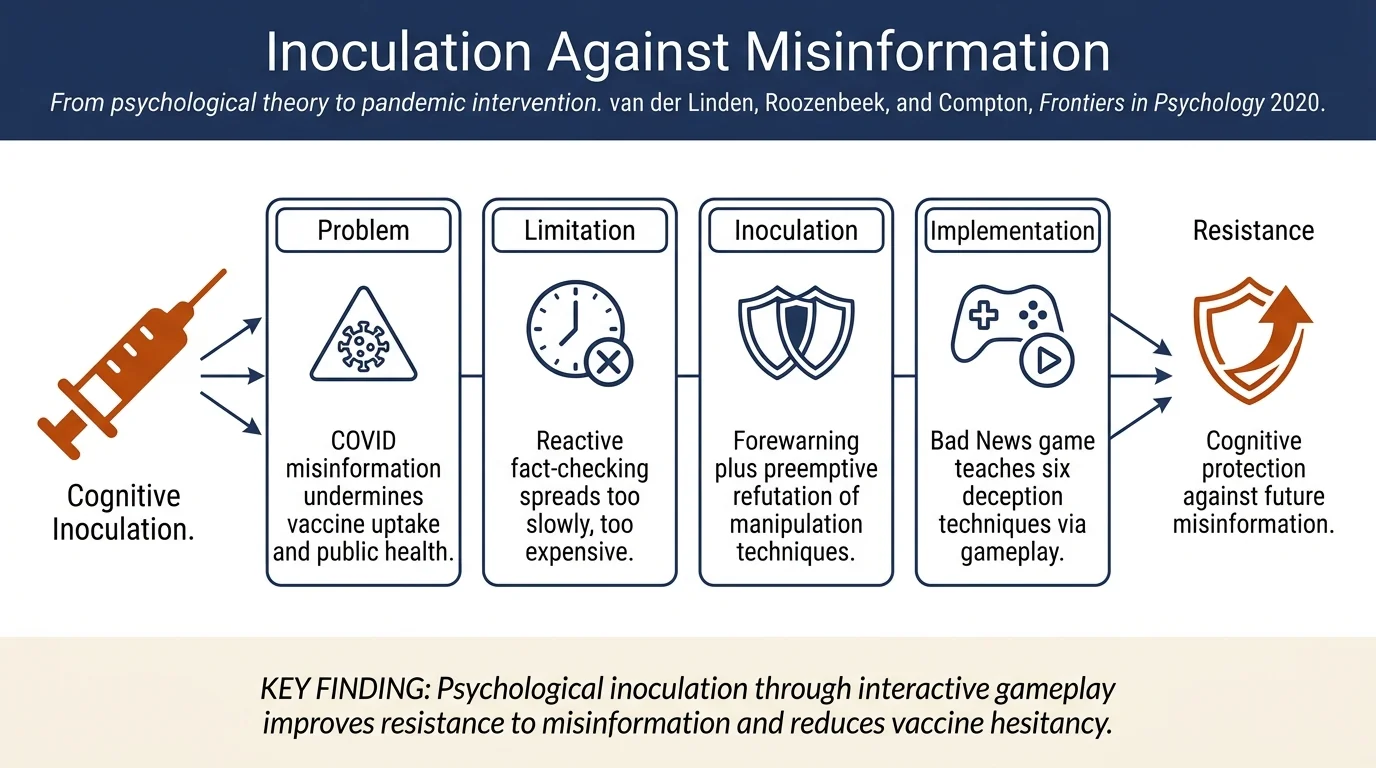
Gamified interventions: Interactive games (e.g., Bad News, Go Viral) teach recognition of manipulation techniques through gameplay, combining engagement with learning.
Dialogical approaches: Conversational debunking and AI-assisted dialogue personalize corrections to individual beliefs and concerns.
Effectiveness evidence
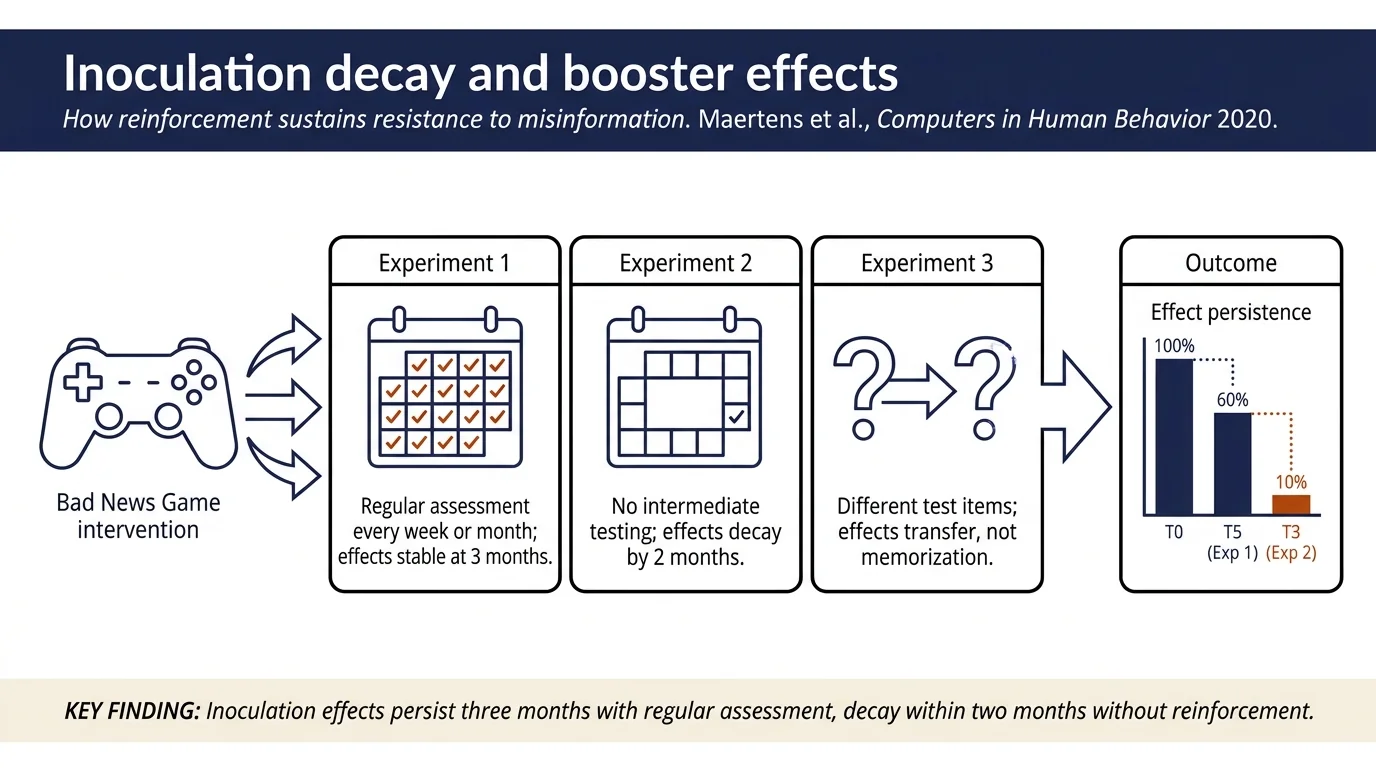
Psychological interventions show stronger effects than reactive debunking alone because they operate before misinformation has influenced beliefs. However, durability and scale remain open challenges. Effects typically decay without reinforcement ("booster shots"), and personalization at ecosystem scale requires significant infrastructure.
Key papers
- Compton, van der Linden, Cook, Basol (2021) — Inoculation theory in the post-truth era: Extant findings and new frontiers — Comprehensive review of inoculation theory applied to misinformation and conspiracy theories across multiple domains (climate, vaccines, GMOs, COVID-19). Evidence for both prophylactic and therapeutic inoculation effectiveness.
- Lewandowsky & van der Linden (2021) — Countering Misinformation and Fake News Through Inoculation and Prebunking
- Van der Linden (2022) — Misinformation: susceptibility, spread, and interventions to immunize the public
- Maertens et al. (2020) — Long-Term Effectiveness of Inoculation Against Misinformation
- Guess et al. (2020) — A digital media literacy intervention increases discernment between mainstream and false news
Related topics
- inoculation — psychological inoculation and prebunking
- debunking-misinformation — reactive correction approaches
- digital-literacy — media literacy and critical evaluation skills
- misinformation-responses — user-level countermeasures to misinformation
Papers on this topic
 Psychology & interventionsDetection methods
Long-Term Effectiveness of Inoculation Against Misinformation: Three Longitudinal Experiments
 Psychology & interventionsPlatforms, policy & society
Inoculating Against Fake News About COVID-19