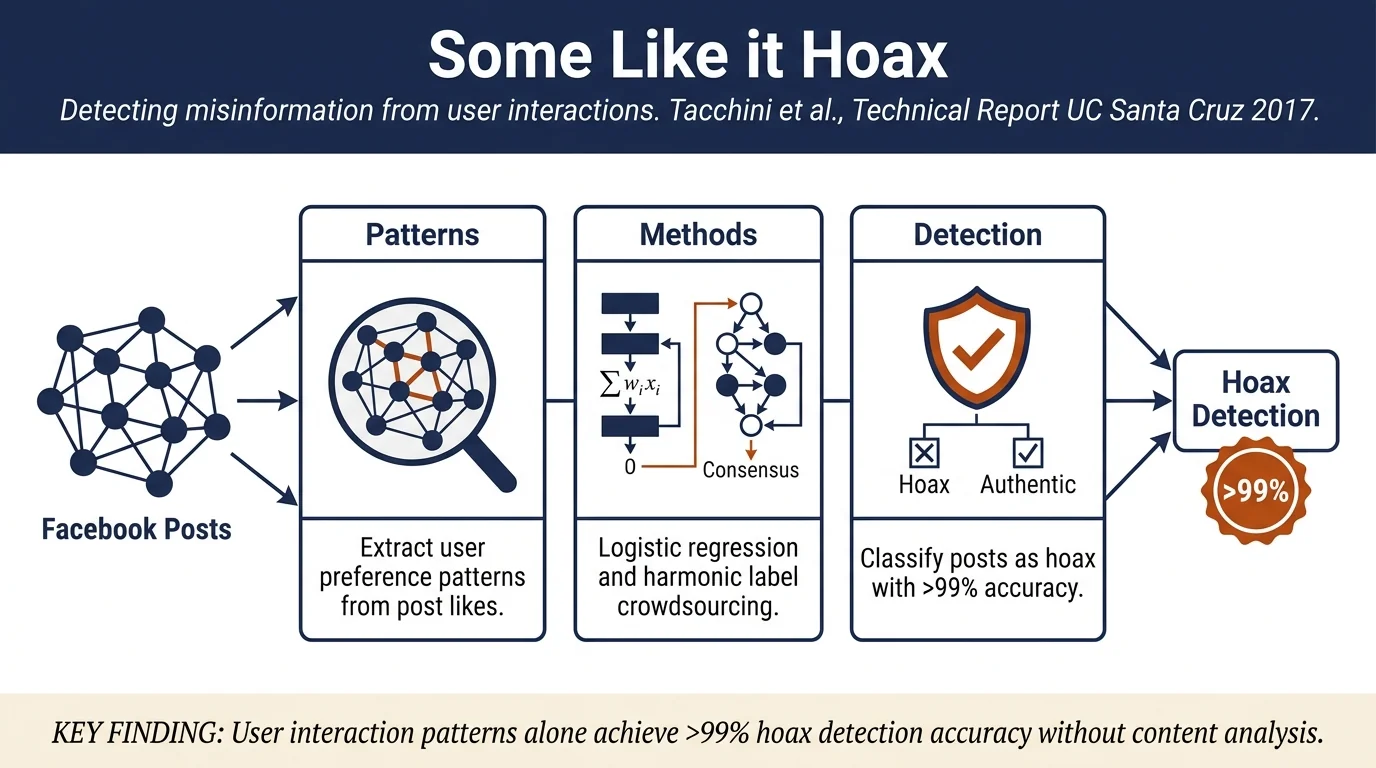
Hoax detection addresses the problem of identifying deliberately fabricated or false information, especially on user-generated content platforms where editorial oversight is distributed or delayed. Unlike rumor detection (which focuses on unverified claims), hoax detection targets information that is intentionally created to mislead.
Key characteristics
Hoaxes often exhibit distinct patterns:
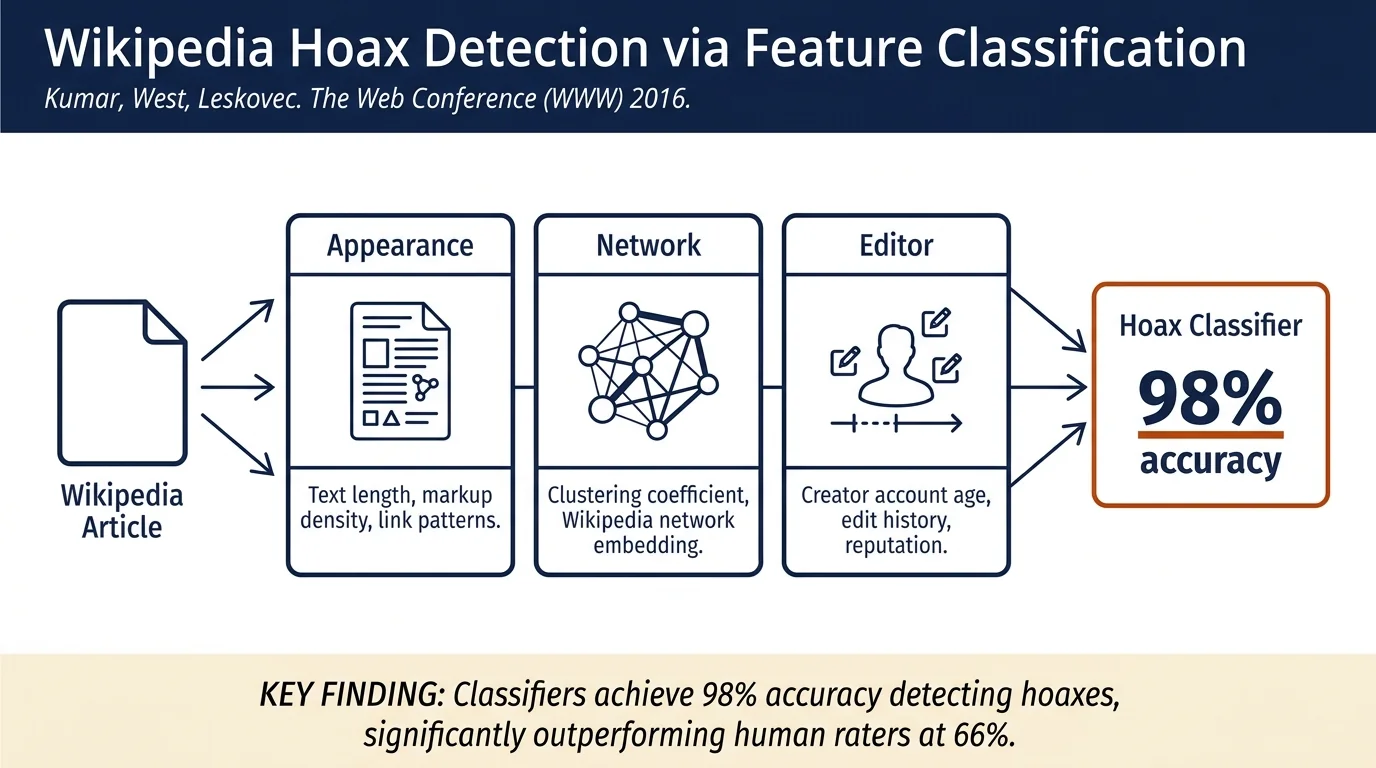
- Creation patterns: Often authored by newer, less-established accounts with shorter edit histories
- Content structure: Typically shorter and less densely cross-linked than legitimate content; fewer external references
- Editor behavior: Creators may employ specific tactics like planting supporting mentions in other articles or creating clustered false content
- Survival dynamics: Heavy-tailed distribution—most hoaxes are quickly caught, but some survive for extended periods and accumulate significant visibility
Key papers in this wiki
- 2016-kumar-wikipedia-hoaxes — Comprehensive empirical study of Wikipedia hoaxes; analyzes 2,692 false articles to measure real-world impact via pageviews and web citations; identifies appearance, network, and editor features that predict hoax success and develops classifiers achieving 98% AUC for detection.
Related topics
- misinformation-detection (broader category of false information detection)
- content-moderation (platform-level approaches to removing hoaxes)
- wikipedia (primary platform where hoaxes studied empirically)