Explore papers
Filter by research area, year and venue. Every filter is in the address bar, so you can share a view as a link.
LLMs & generative AIPlatforms, policy & society
Controlled Change(Stub page — referenced in context of GenAI adoption in journalism. To be expanded with full paper details.)
 LLMs & generative AIPlatforms, policy & society
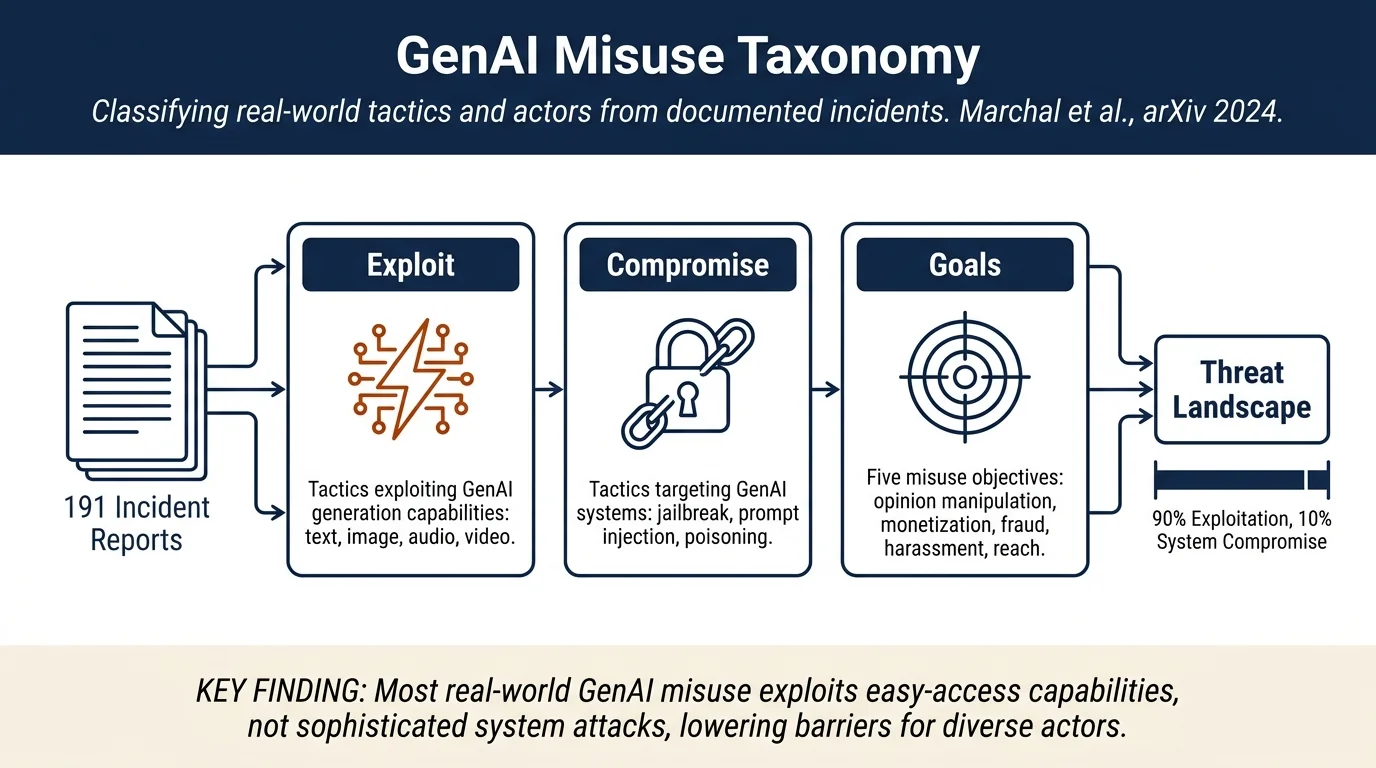
Generative AI Misuse: A Taxonomy of Tactics and Insights from Real-World DataThis paper presents the first comprehensive taxonomy of generative AI misuse tactics grounded in 191 real-world documented incidents (January 2023–March 2024). The authors identify two broad categories—exploitation of GenAI capabilities and compromise of GenAI systems—with 18 distinct tactics.
 LLMs & generative AIDetection methods
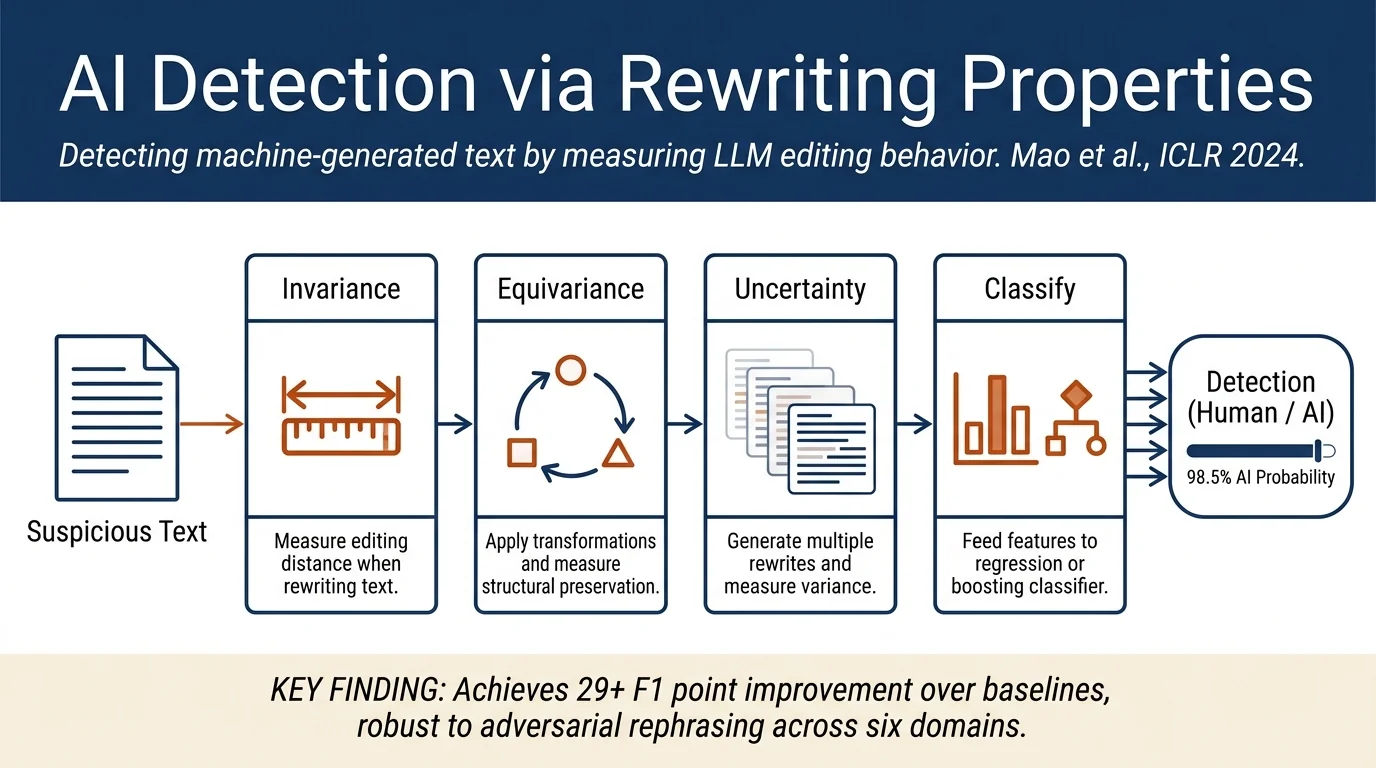
RAIDAR: Generative AI Detection via RewritingThis paper introduces Raidar, a method to detect machine-generated text by measuring how much LLMs modify text when asked to rewrite it. The key observation is that LLMs tend to preserve AI-generated text and modify human-written text more when rewriting.
 LLMs & generative AIDetection methods
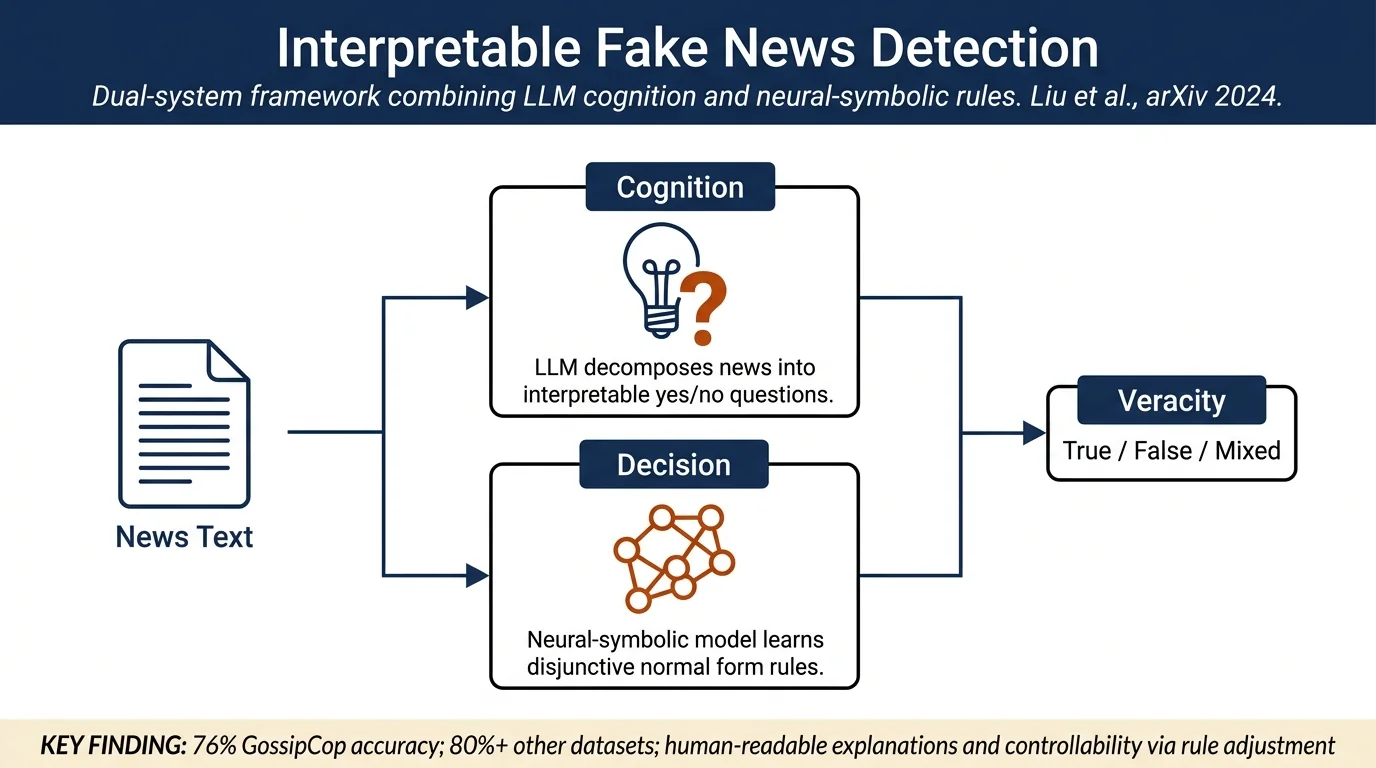
TELLER: A Trustworthy Framework For Explainable, Generalizable and Controllable Fake News DetectionTELLER proposes a dual-system framework for fake news detection that combines LLM-driven cognition (decomposing content into yes/no questions) with a neural-symbolic decision system (learning interpretable rules). The approach prioritizes explainability, generalizability, and human controllability, achieving 76% accuracy on GossipCop and…
 LLMs & generative AIPlatforms, policy & society
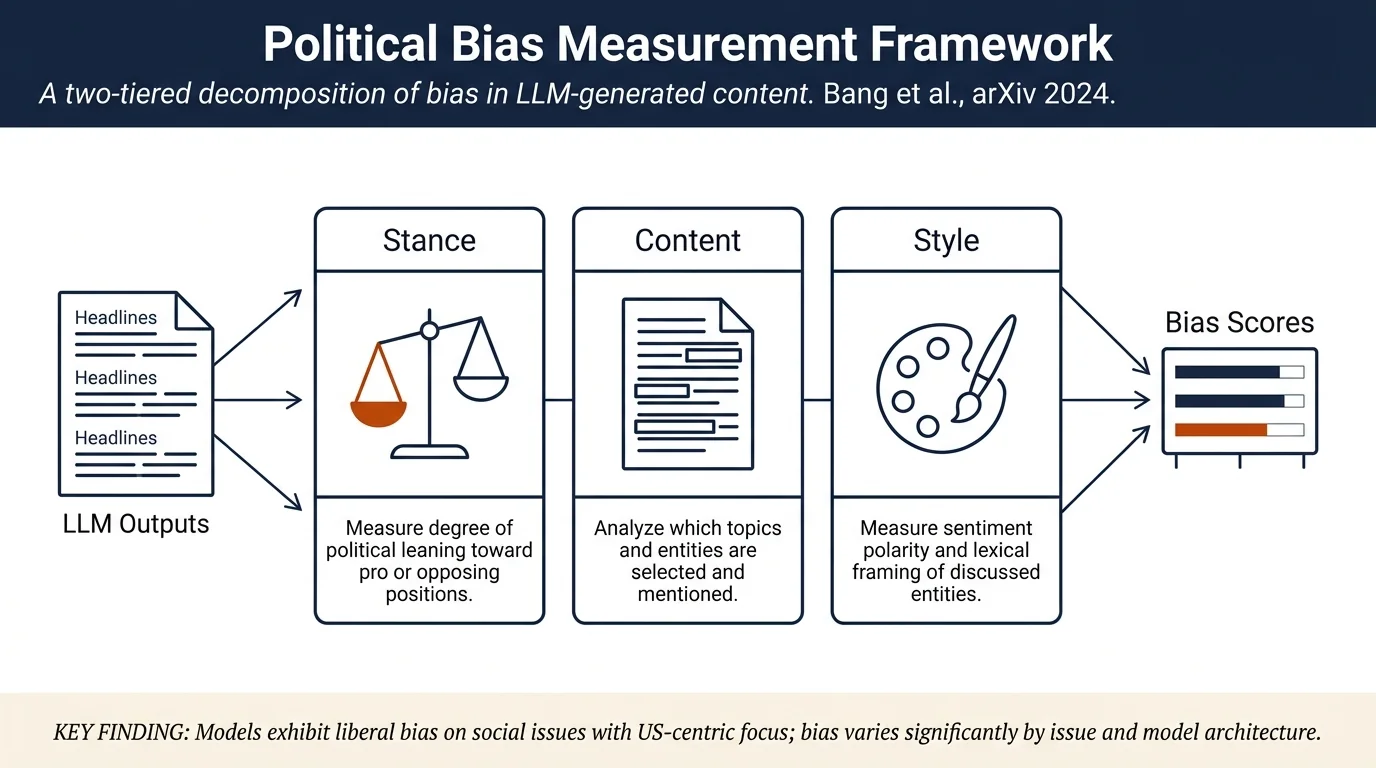
Measuring Political Bias in Large Language Models: What Is Said and How It Is SaidThis paper proposes a two-tiered framework for measuring political bias in LLM-generated content, separating bias into what is said (content bias) and how it is said (style/framing bias). Using extreme anchor comparison and frame analysis on 11 open-source LLMs across 14 politically divisive topics, the authors find that models exhibit…
 LLMs & generative AIDetection methods
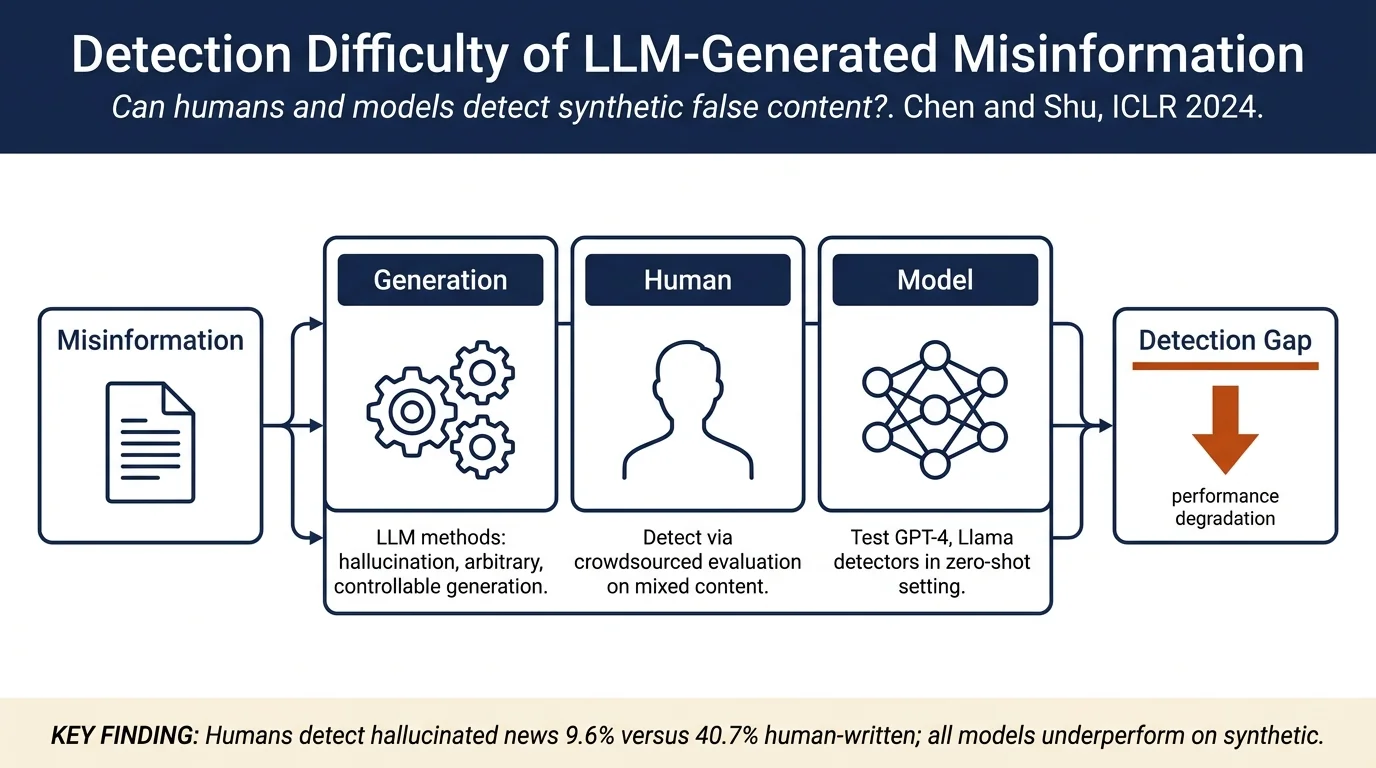
Can LLM-Generated Misinformation Be Detected?LLM-generated misinformation (from ChatGPT, Llama, Vicuna) is detectably harder for both humans and automated detectors to identify than human-written misinformation with identical semantics. The paper builds a taxonomy of LLM-generated misinformation across types, domains, and generation methods, then empirically demonstrates that…
LLMs & generative AIPlatforms, policy & society
Generative AI Misuse: A Taxonomy of Tactics and Insights from Real-World DataThis paper presents the first comprehensive taxonomy of generative AI misuse tactics grounded in 191 real-world documented incidents (January 2023–March 2024). The authors identify two broad categories—exploitation of GenAI capabilities and compromise of GenAI systems—with 18 distinct tactics.
LLMs & generative AIDetection methods
RAIDAR: Generative AI Detection via RewritingThis paper introduces Raidar, a method to detect machine-generated text by measuring how much LLMs modify text when asked to rewrite it. The key observation is that LLMs tend to preserve AI-generated text and modify human-written text more when rewriting.
LLMs & generative AIDetection methods
TELLER: A Trustworthy Framework For Explainable, Generalizable and Controllable Fake News DetectionTELLER proposes a dual-system framework for fake news detection that combines LLM-driven cognition (decomposing content into yes/no questions) with a neural-symbolic decision system (learning interpretable rules). The approach prioritizes explainability, generalizability, and human controllability, achieving 76% accuracy on GossipCop and…
LLMs & generative AIPlatforms, policy & society
Measuring Political Bias in Large Language Models: What Is Said and How It Is SaidThis paper proposes a two-tiered framework for measuring political bias in LLM-generated content, separating bias into what is said (content bias) and how it is said (style/framing bias). Using extreme anchor comparison and frame analysis on 11 open-source LLMs across 14 politically divisive topics, the authors find that models exhibit…
LLMs & generative AIDetection methods
Can LLM-Generated Misinformation Be Detected?LLM-generated misinformation (from ChatGPT, Llama, Vicuna) is detectably harder for both humans and automated detectors to identify than human-written misinformation with identical semantics. The paper builds a taxonomy of LLM-generated misinformation across types, domains, and generation methods, then empirically demonstrates that…