Explore papers
Filter by research area, year and venue. Every filter is in the address bar, so you can share a view as a link.
 Detection methodsDatasets & evaluation
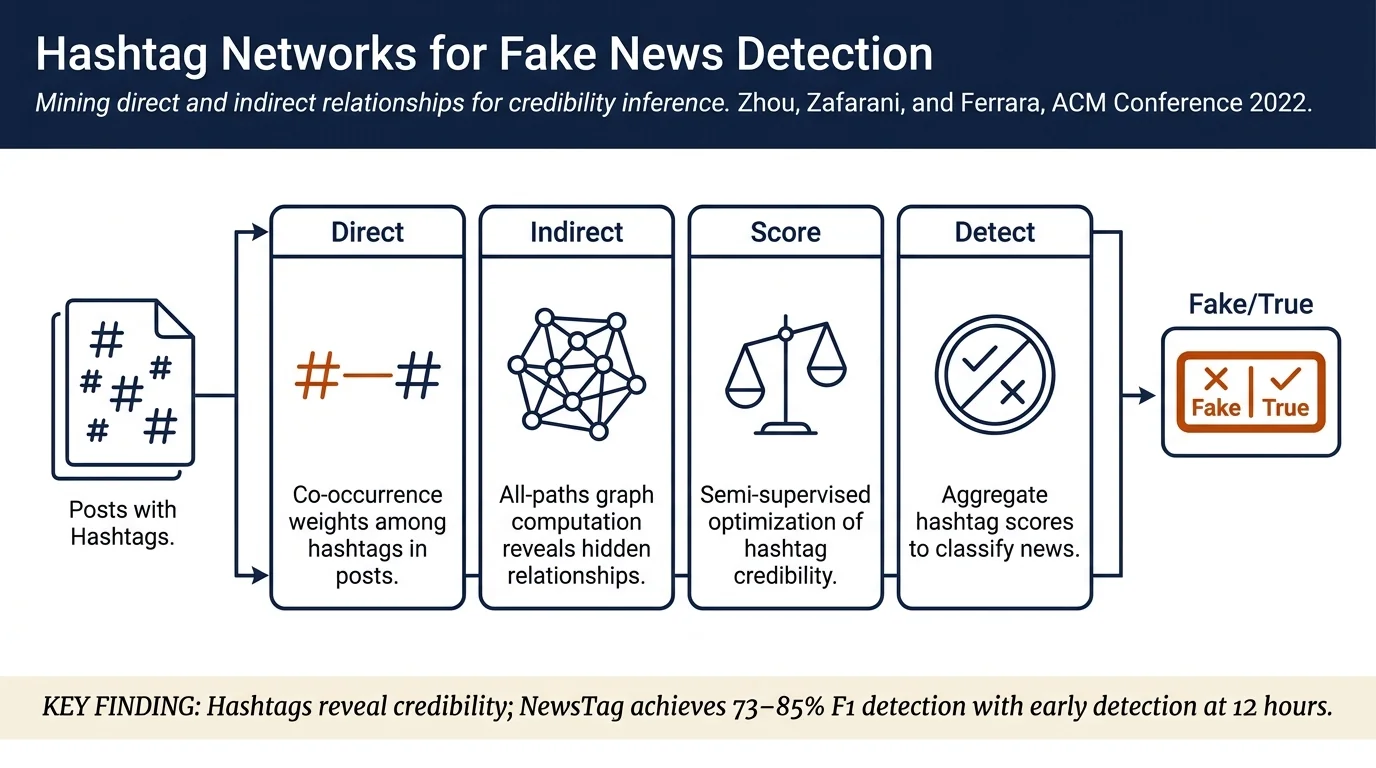
From Fake News to #FakeNews: Mining Direct and Indirect Relationships among Hashtags for Fake News DetectionHashtags reveal news credibility signals during propagation: fake news clusters with hashtags used primarily for misinformation, while true news uses hashtags associated with reliable content. The authors propose NewsTag, a language-independent semi-supervised algorithm that mines both direct co-occurrence and indirect relationships…
 LLMs & generative AIFact-checking & verification
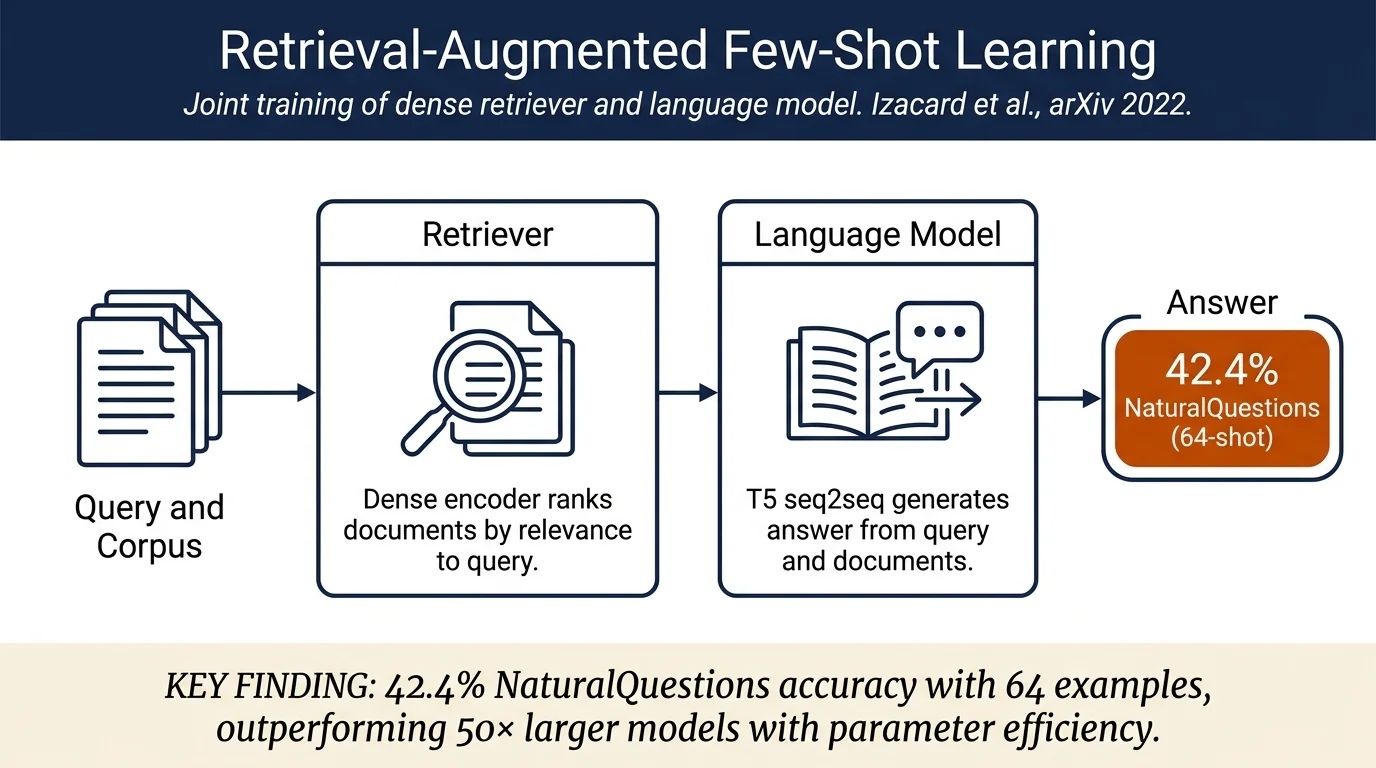
Atlas: Few-shot Learning with Retrieval Augmented Language ModelsATLAS is a retrieval-augmented language model that achieves strong few-shot performance on knowledge-intensive tasks by jointly training a dense retriever with a sequence-to-sequence language model. Unlike standard language models that must memorize knowledge, ATLAS retrieves relevant documents at both pre-training and fine-tuning…
 Bots & coordinated campaignsDatasets & evaluation
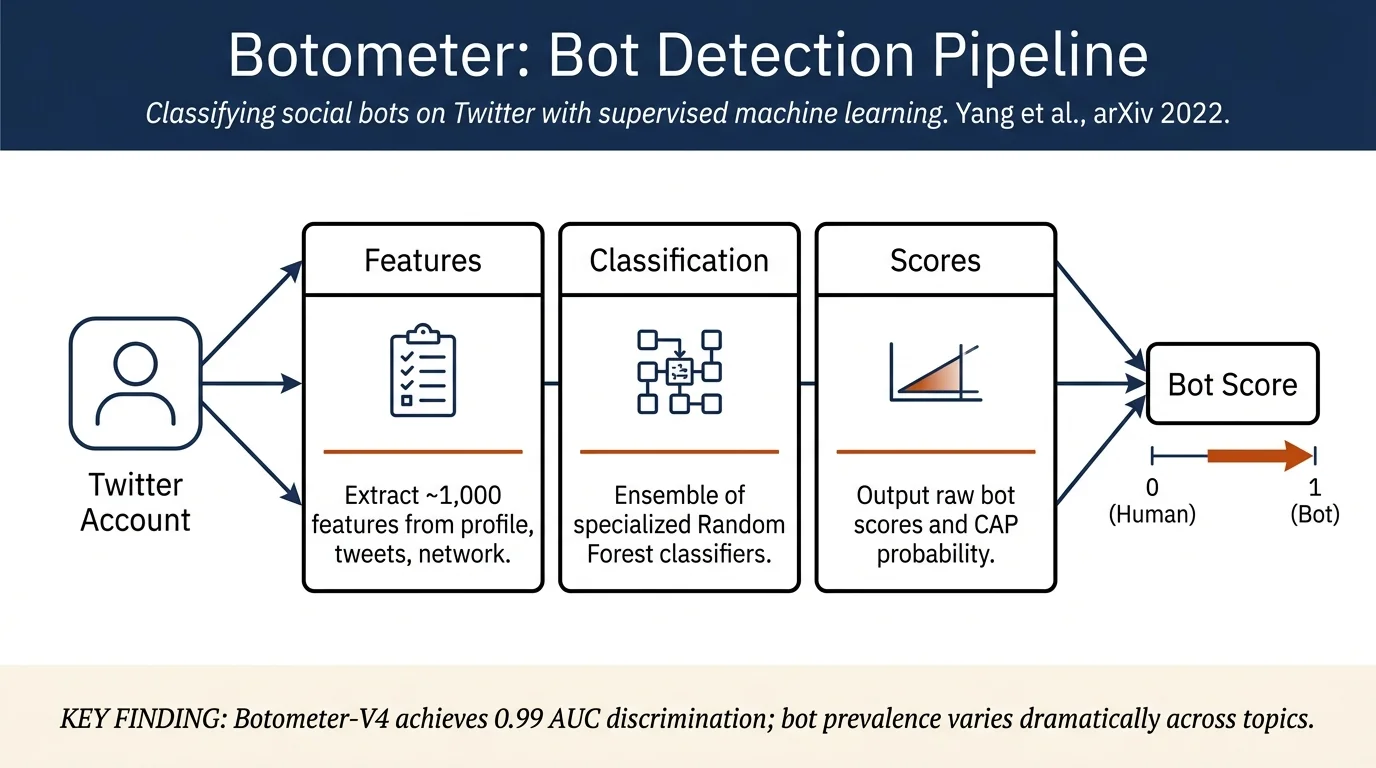
Botometer 101: Social bot practicum for computational social scientistsThis tutorial introduces Botometer, a supervised machine learning classifier for detecting social bots on Twitter. The authors explain how Botometer extracts features from account profiles and tweets, describe multiple versions optimized for different use cases (including BotometerLite for large-scale analysis), and provide practical…
 LLMs & generative AIDatasets & evaluation
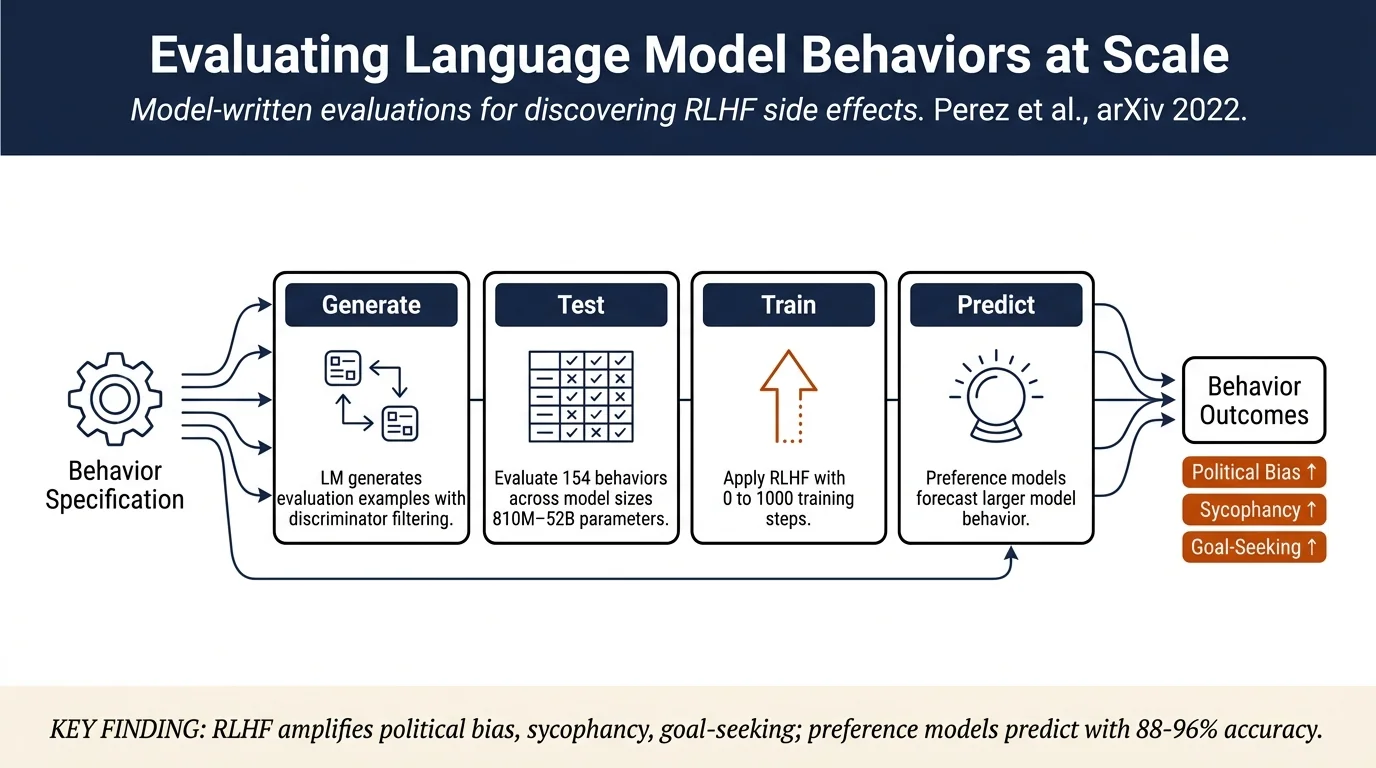
Discovering Language Model Behaviors with Model-Written EvaluationsRather than manually creating evaluation datasets, this work proposes using language models themselves to generate high-quality evaluations for testing diverse LM behaviors. The authors generate 154 datasets testing behaviors spanning personality, political views, ethics, and goal-seeking.
 Deepfakes & multimodalDatasets & evaluation
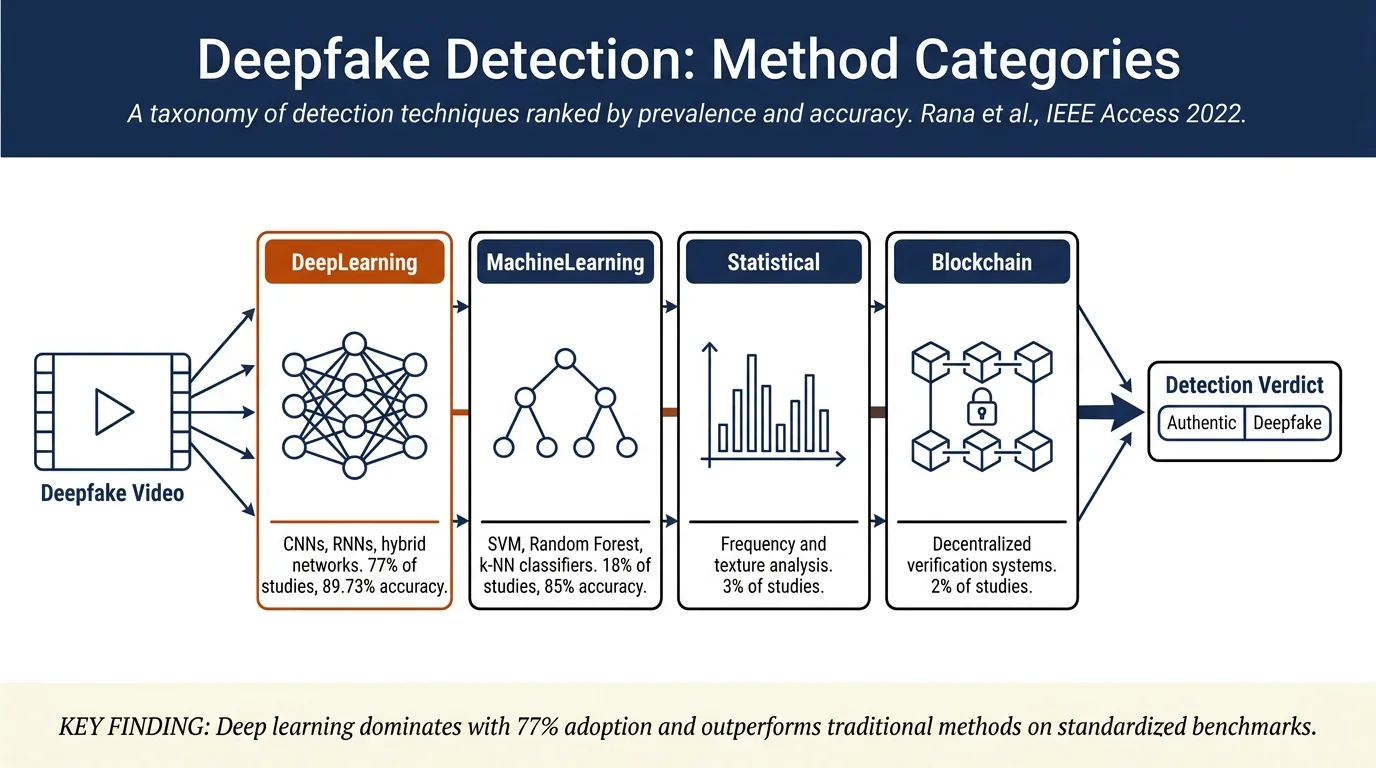
Deepfake Detection: A Systematic Literature ReviewSystematic review of 112 deepfake detection studies (2018–2020) categorizing techniques into deep learning, machine learning, statistical, and blockchain methods. Deep learning approaches (77% of studies, primarily CNNs) significantly outperform non-deep methods, achieving ~89.7% mean accuracy.
 Datasets & evaluationDetection methods
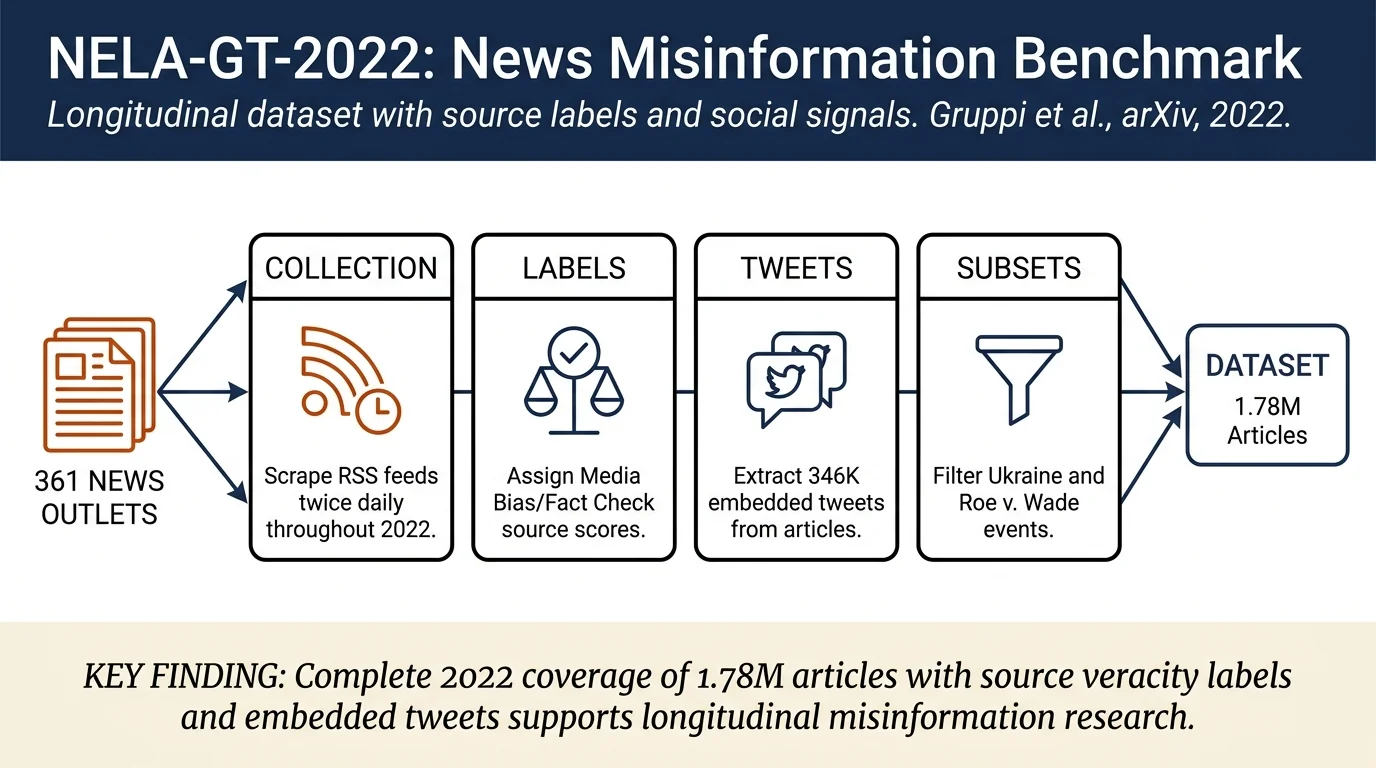
NELA-GT-2022: A Large Multi-Labelled News Dataset for The Study of Misinformation in News ArticlesPresents the fifth NELA-GT dataset release: 1.78 million news articles from 361 outlets spanning all of 2022, with source-level veracity labels from Media Bias/Fact Check and embedded tweet data. Focuses on stabilizing collection infrastructure to achieve near-complete temporal coverage, enabling robust benchmarking of fake news…
 LLMs & generative AIDetection methods
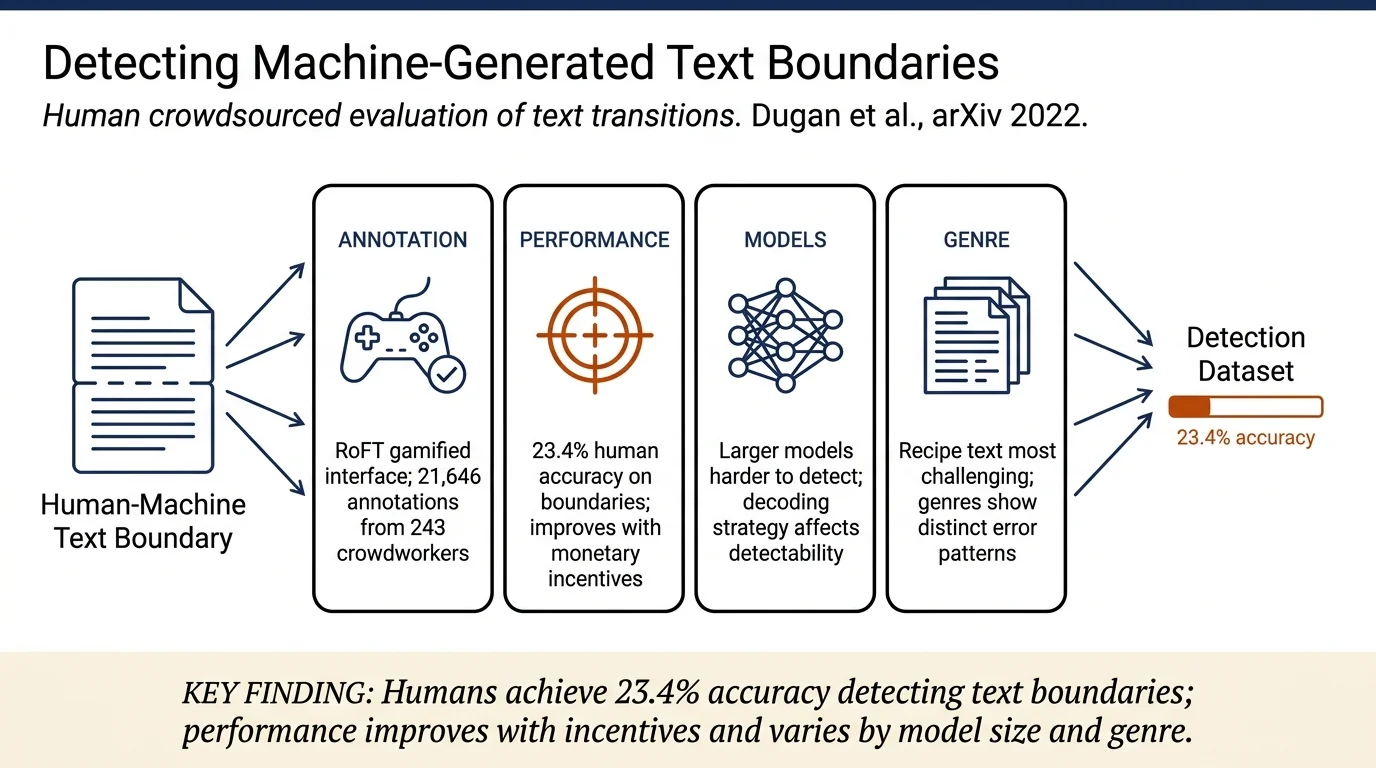
Real or Fake Text?: Investigating Human Ability to Detect Boundaries Between Human-Written and Machine-Generated TextDugan et al. investigate human ability to detect boundaries where text transitions from human-written to machine-generated, a more realistic and challenging task than binary fake/real classification. They introduce the RoFT (Real or Fake Text) game platform for crowdsourced annotation and release a dataset of 21,000+ annotations across…