Explore papers
Filter by research area, year and venue. Every filter is in the address bar, so you can share a view as a link.
 Bots & coordinated campaignsSpread & networks
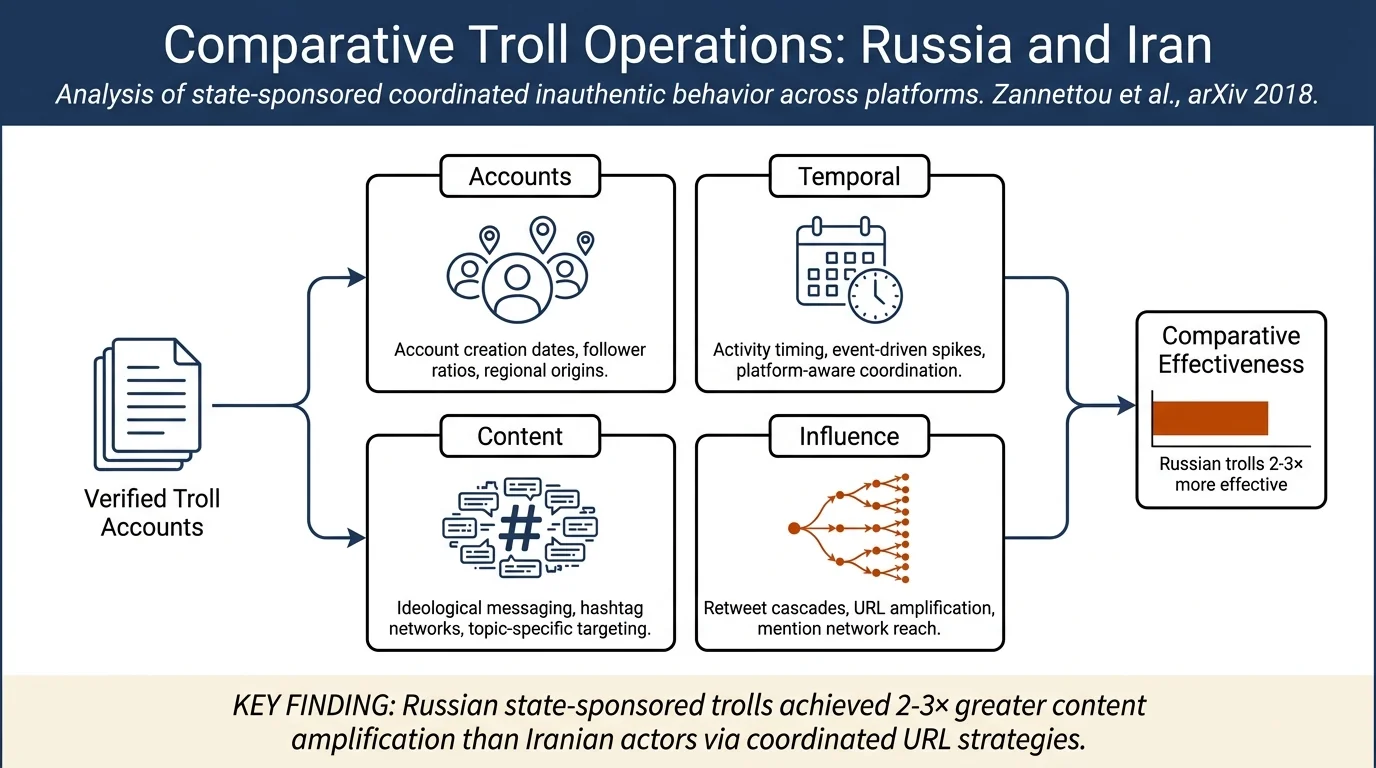
Who Let The Trolls Out? Towards Understanding State-Sponsored TrollsComparative analysis of 934 Russian and 770 Iranian state-sponsored trolls across Twitter and Reddit (10M posts) reveals distinct operational patterns: Russian trolls prioritized URL amplification (retweets, mentions) and pro-Trump messaging; Iranian trolls pursued regional and anti-Trump narratives motivated by real-world events. Both…
 Spread & networksBots & coordinated campaigns
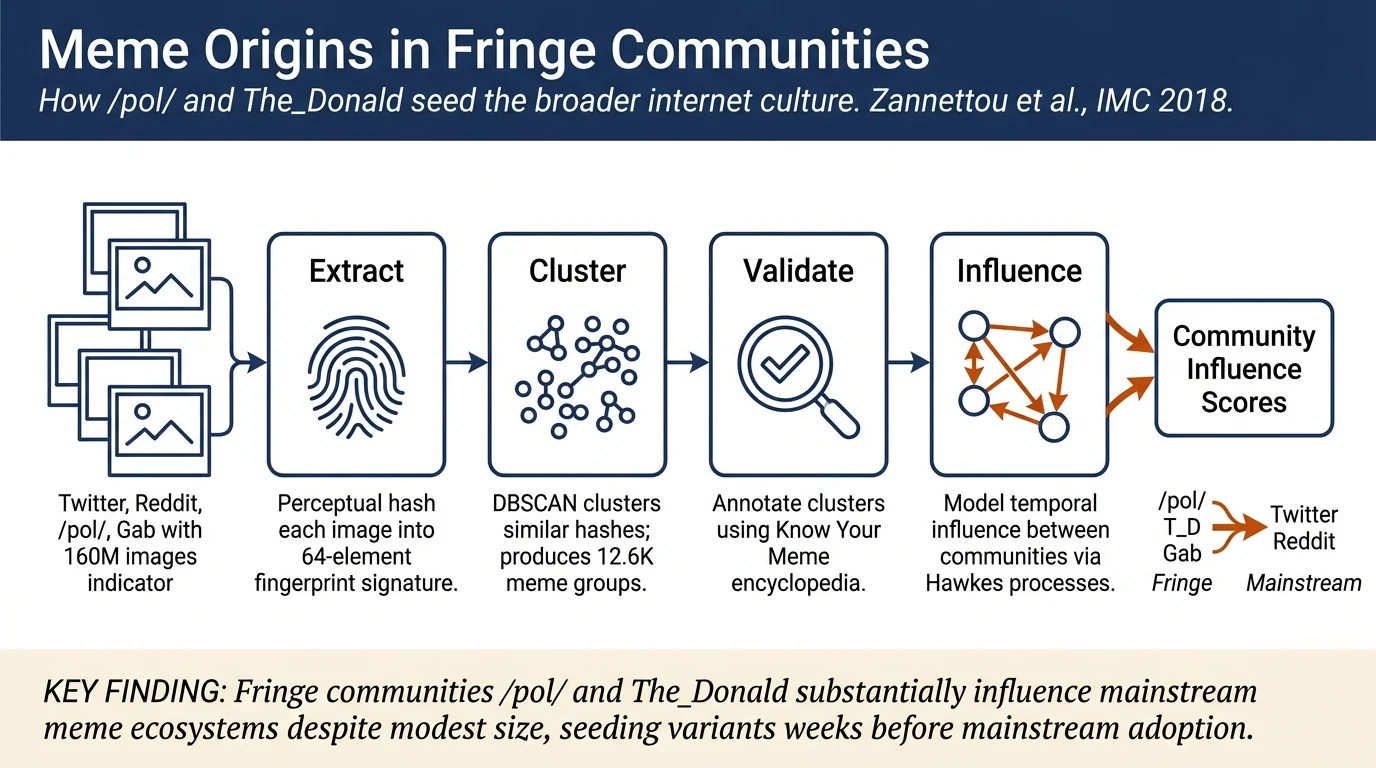
On the Origins of Memes by Means of Fringe Web CommunitiesLarge-scale empirical study of how image memes originate and propagate across fringe and mainstream Web communities. Analyzes 160M images posted to Twitter, Reddit, /pol/, and Gab (2016–2017) using perceptual hashing, clustering, and custom distance metrics.
 Bots & coordinated campaignsPlatforms, policy & society
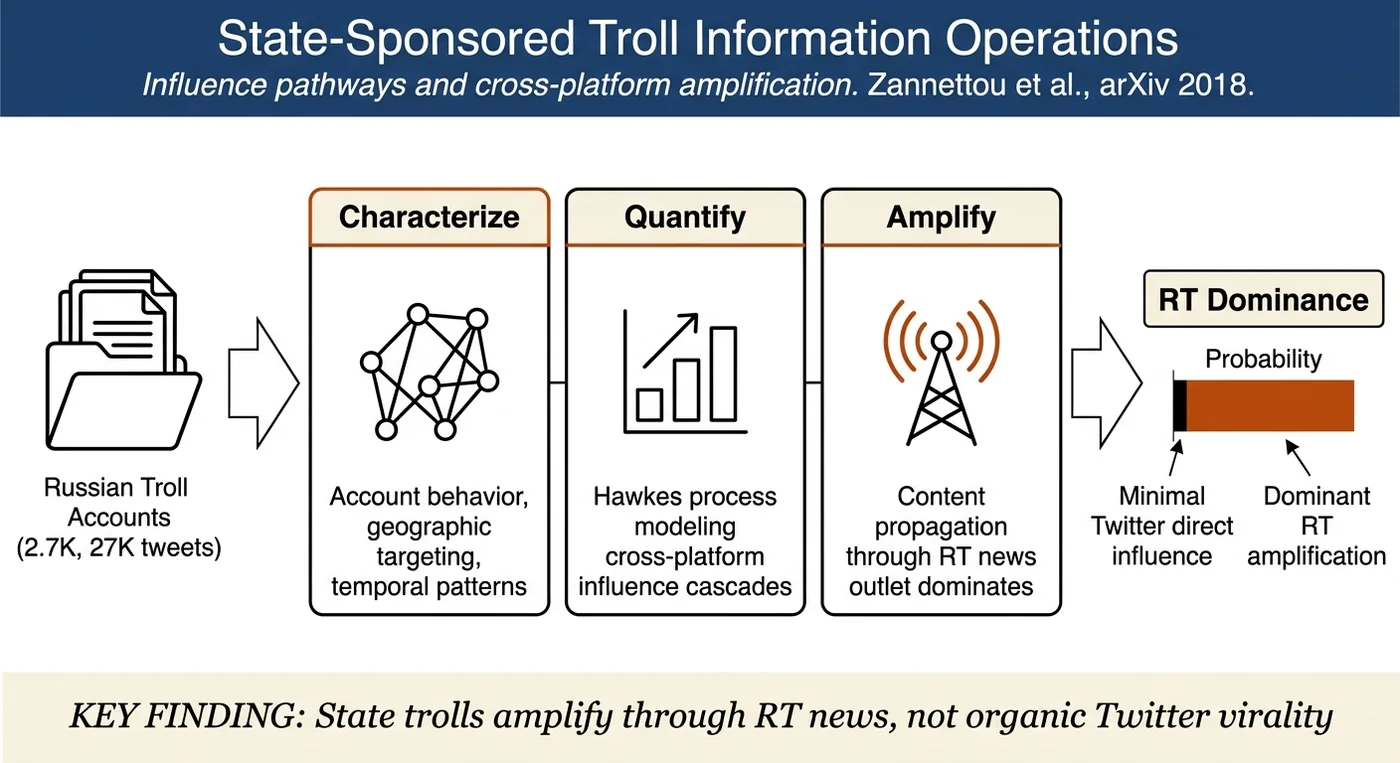
Disinformation Warfare: Understanding State-Sponsored Trolls on Twitter and Their Influence on the WebLarge-scale empirical study of 2.7K Russian state-sponsored troll accounts and 27K tweets (Jan 2016–Sep 2017) reveals minimal direct Twitter influence but significant content amplification through RT news outlet. Trolls actively target political events, adopt multiple identities, concentrate geographically in USA/Germany/Eastern Europe,…
 Spread & networksBots & coordinated campaigns
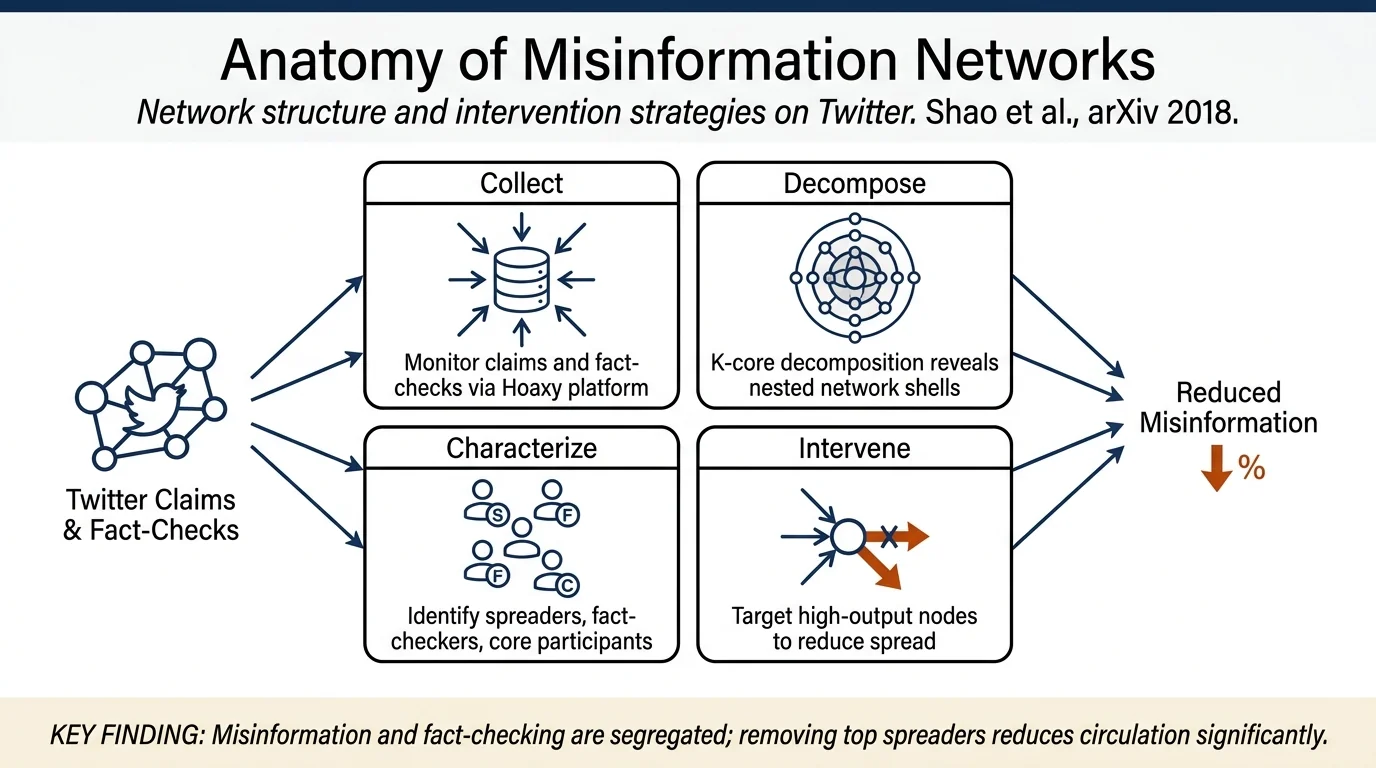
Anatomy of an online misinformation networkA network analysis of misinformation and fact-checking spread during the 2016 US Presidential Election reveals stark segregation between the two communities on Twitter. The core of the network is dominated by misinformation spreaders; fact-checking nearly disappears in the densest regions.
 Bots & coordinated campaignsSpread & networks
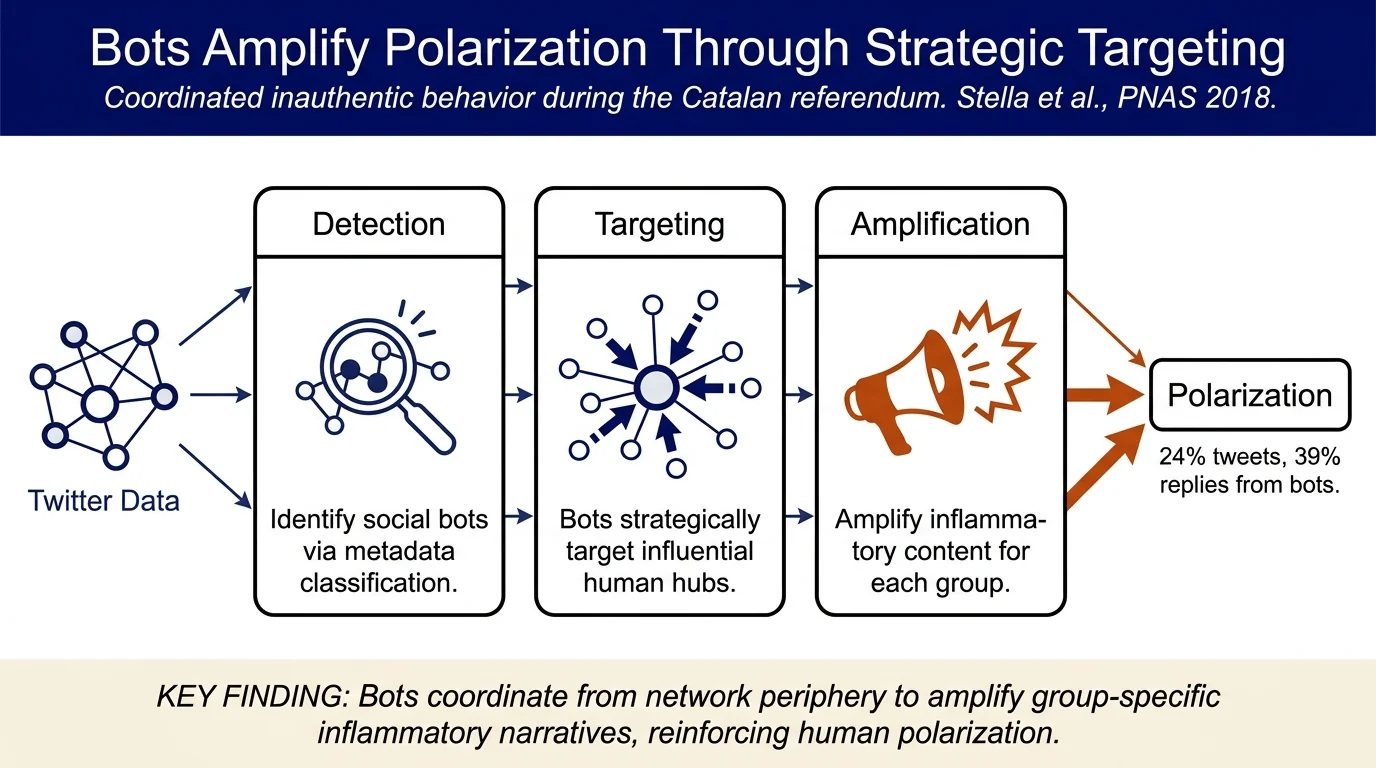
Bots increase exposure to negative and inflammatory content in online social systemsSocial bots during the 2017 Catalan independence referendum strategically targeted influential humans to amplify negative and inflammatory content. Operating from network peripheries, bots coordinated sentiment-driven amplification that exacerbated polarization, with approximately one in three referendum-related tweets generated by bots.
 Spread & networksBots & coordinated campaigns
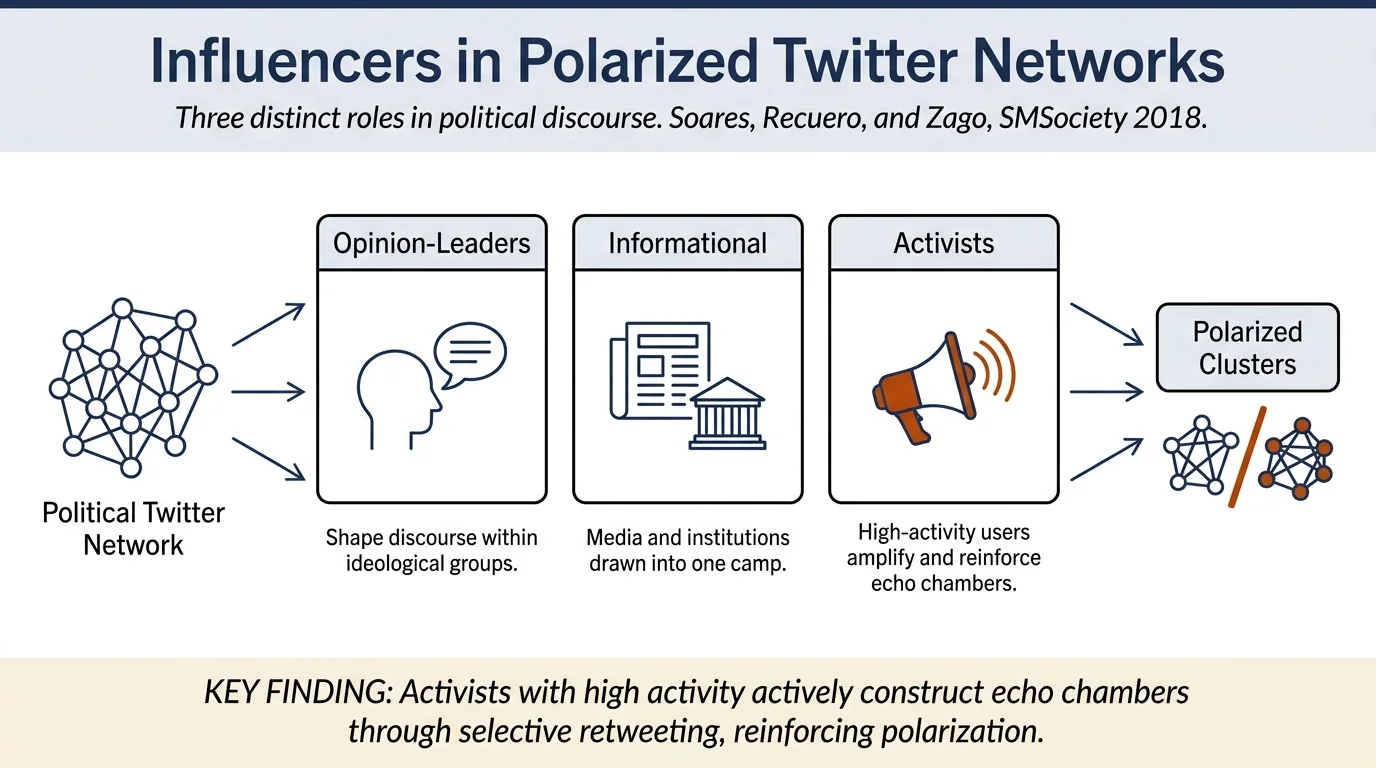
Influencers in Polarized Political Networks on TwitterThis paper identifies three types of influencers in polarized political Twitter conversations during Brazil's 2016 Dilma Rousseff impeachment: "opinion leaders" who shape discourse within ideological groups, "informational influencers" (media/institutions) drawn into one camp, and "activists" who amplify like-minded messages. The…