Explore papers
Filter by research area, year and venue. Every filter is in the address bar, so you can share a view as a link.
 Bots & coordinated campaignsDetection methods
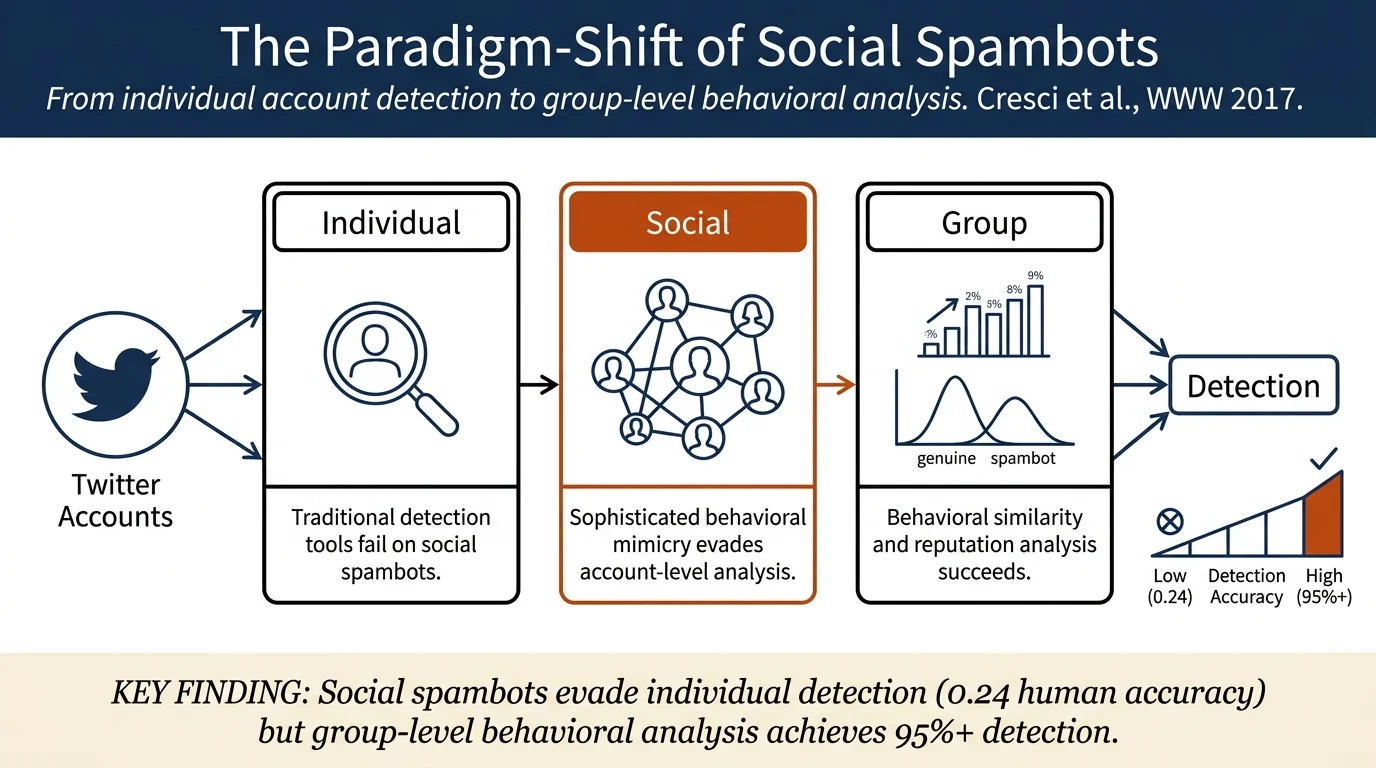
The Paradigm-Shift of Social Spambots: Evidence, Theories, and Tools for the Arms RaceThis paper provides empirical evidence of a paradigm shift in spambot design on Twitter, where new "social spambots" closely mimic genuine user behavior and successfully evade detection. Neither Twitter's automated systems, human annotators, nor established academic detection tools can effectively identify these accounts; however,…
 Bots & coordinated campaignsDatasets & evaluation
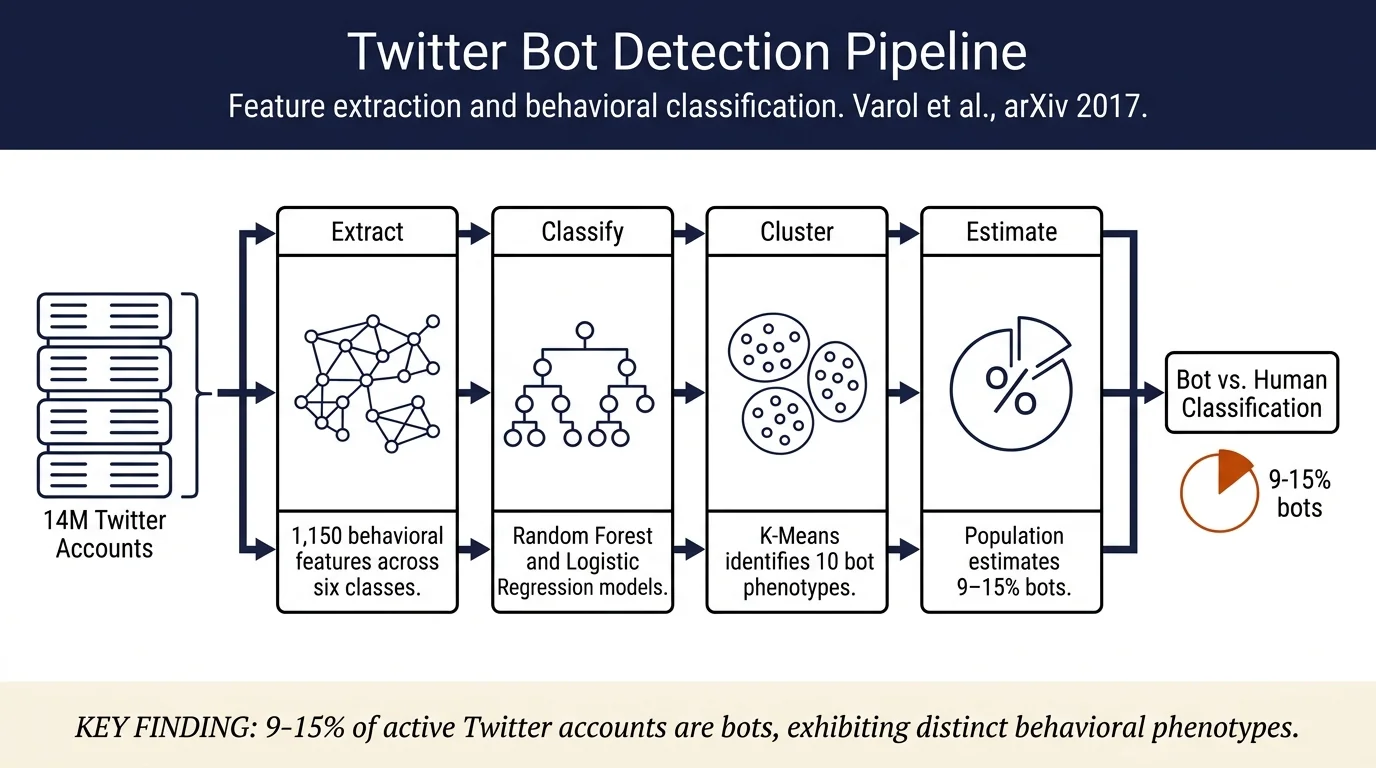
Online Human-Bot Interactions: Detection, Estimation, and CharacterizationSocial media accounts controlled by software can mimic human behavior while executing coordinated campaigns. This paper develops a machine-learning framework extracting 1,150 behavioral features from Twitter account metadata, posting patterns, and social networks to classify bots with 95% accuracy on honeypot data.
 Spread & networksBots & coordinated campaigns
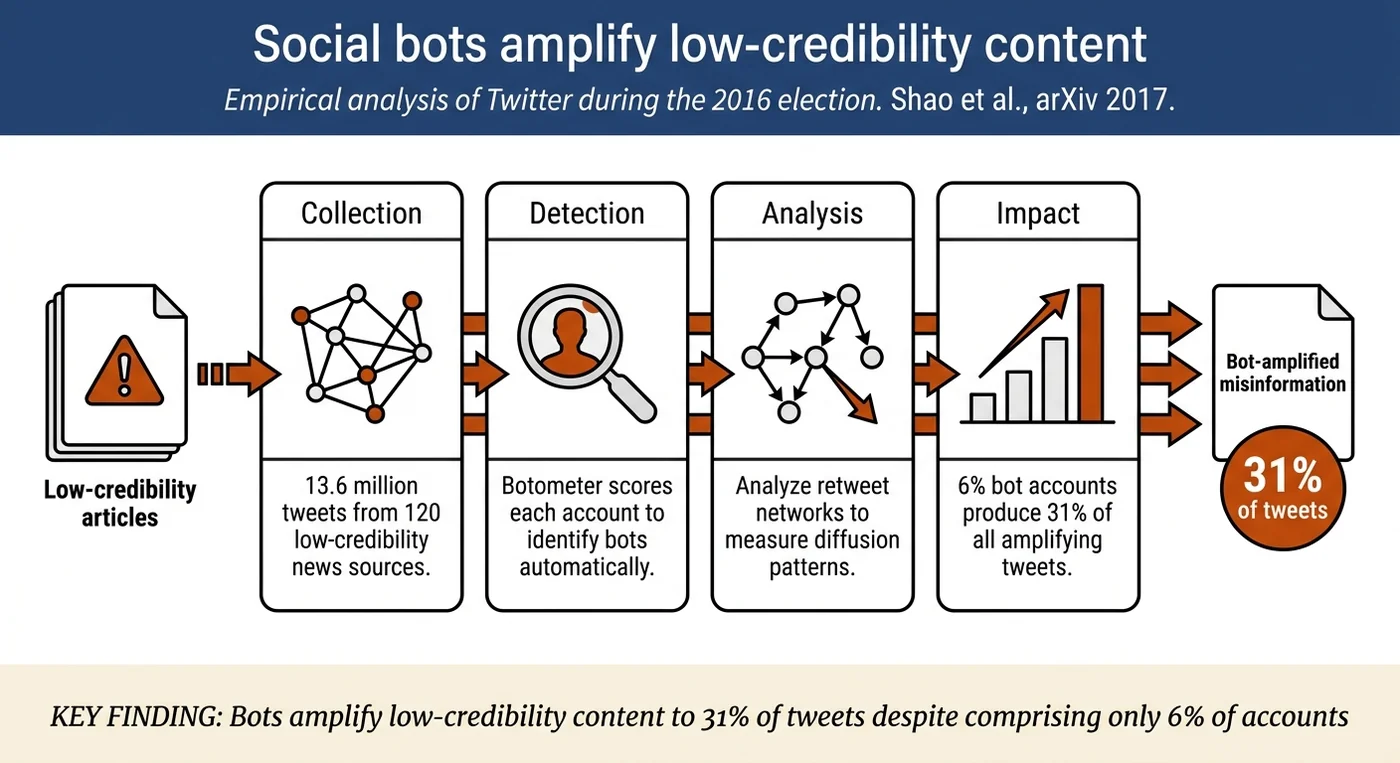
The spread of low-credibility content by social botsEmpirical analysis of 14 million Twitter messages during the 2016 U.S. election finds social bots disproportionately amplify low-credibility content: though bots comprise only 6% of accounts sharing such content, they account for 31% of tweets. Bots employ two strategies—rapid early amplification and targeting of influential users—making…
 Bots & coordinated campaignsPlatforms, policy & society
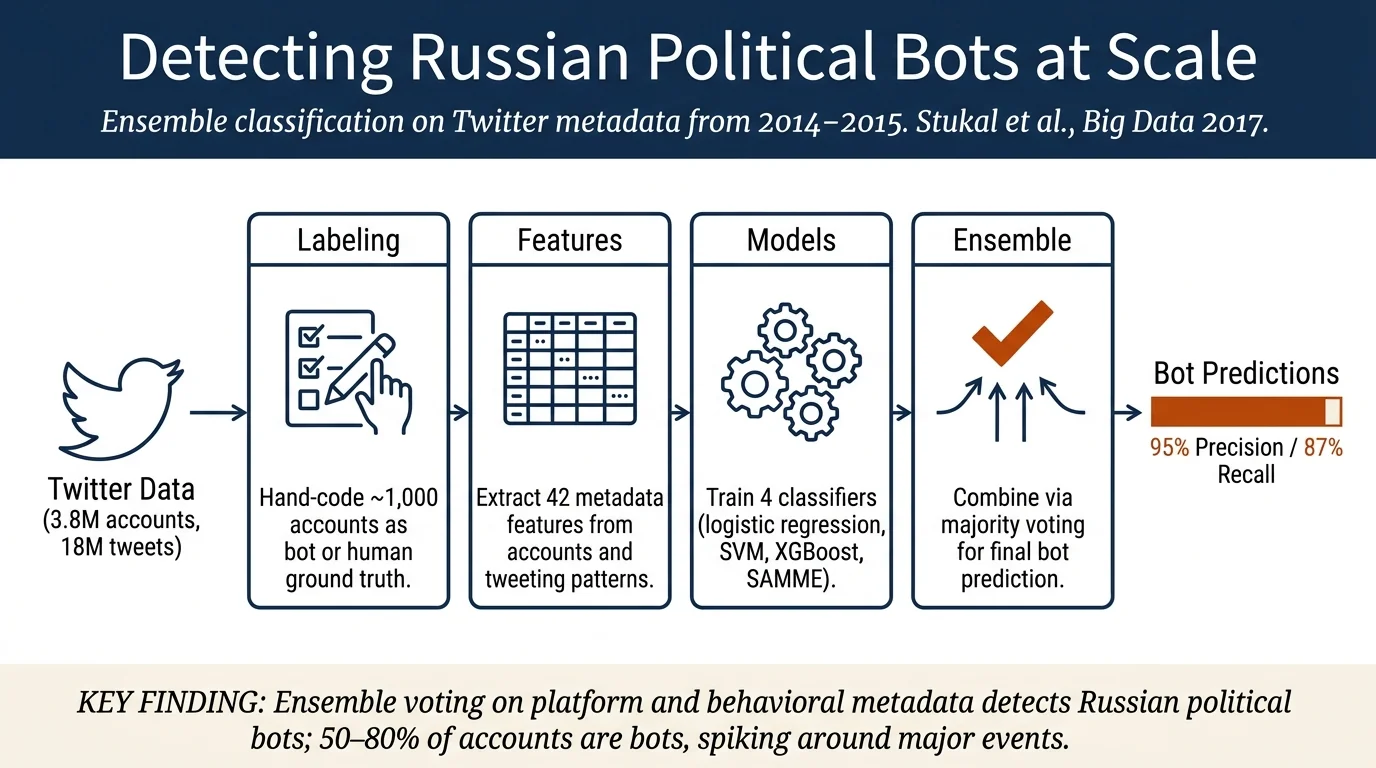
Detecting Bots on Russian Political TwitterAutomated Twitter accounts (bots) represent 50% of activity in Russian political discourse. Using supervised ensemble classifiers on 3.8M accounts and 18M tweets from 2014–2015, the authors achieve 95% precision in detecting bots while maintaining 75% recall.
 Spread & networksBots & coordinated campaigns
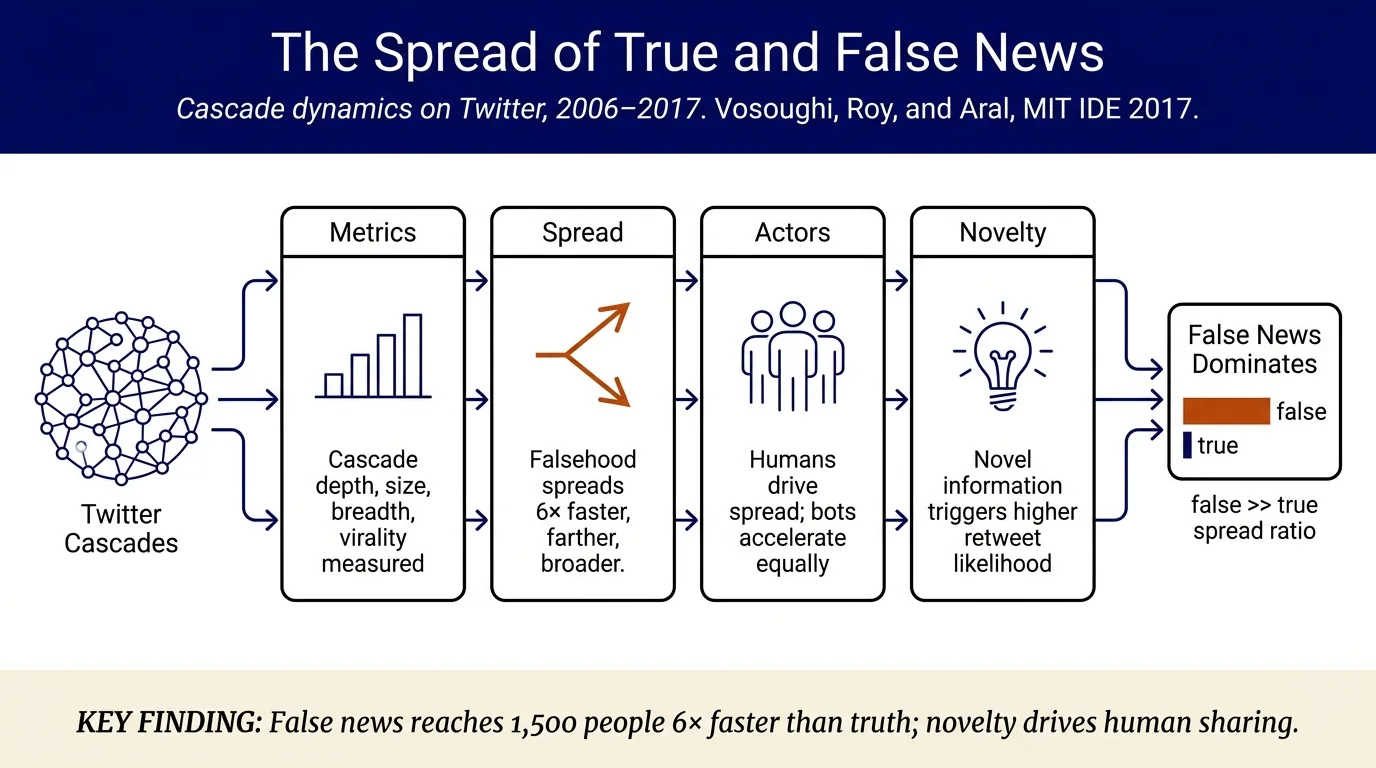
The Spread of True and False News OnlineAnalyzes 126,000 verified true and false news cascades from Twitter (2006–2017) covering 3 million users and 4.5 million shares. False news diffuses significantly farther, faster, deeper, and more broadly than truth across all categories, with false political news spreading fastest.