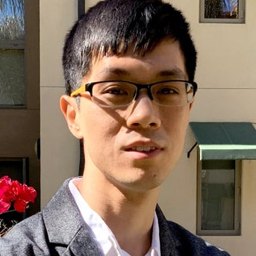
 Wenhu Chen
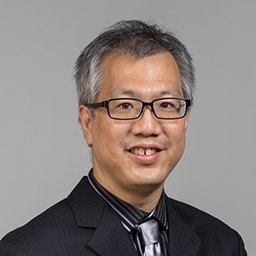 Min-Yen Kan
 William Yang Wang
Contributions
- First application of zero-shot fact verification using automatically generated claims
- QACG framework combining question generation (QG) with QA-to-claim conversion to produce three claim types: supported, refuted, and not-enough-info (NEI)
- Empirical demonstration that 300K synthetic claims achieve comparable performance to 2K+ manually-curated examples in zero-shot settings
- Evidence that models trained on synthetic claims are more robust than supervised models, showing smaller performance drops on the debiased FEVER-Symmetric test set
- Public release of code and training methodology enabling reproducibility
Method
QACG operates in two stages:
Stage 1: Question Generation. Given evidence from Wikipedia, a BART model (finetuned on SQuAD) generates question–answer pairs by treating named entities as answers. For each entity $e$ in the evidence $P$, the question generator produces a question $Q$ where $e$ is the correct answer.
Stage 2: QA-to-Claim Conversion. A second BART model (finetuned on QA2D dataset) converts each $(Q, A)$ pair into a declarative claim $C$.
Claim Labeling then applies three strategies:
- Supported claims: Use the original correct answer. If the evidence answers the question with this answer, the resulting claim is supported.
- Refuted claims: Replace the correct answer with an incorrect answer of the same entity type using Sense2Vec similarity. The resulting claim becomes refuted.
- NEI (Not Enough Info) claims: Expand the evidence with extra context sentences from the original Wikipedia article not in the evidence passage. Generate a supported claim from these extra sentences. This claim is relevant but unverifiable from the original evidence alone.
The framework generates 100K pairs per class (300K total), balancing the dataset to force models to rely on evidence rather than claim-only features.
Results
Zero-shot Performance on FEVER:
| Model | FEVER-Symmetric | FEVER-S/R | FEVER-S/R/N |
|---|---|---|---|
| RoBERTa (supervised) | 85.5 | 95.1 | 87.8 |
| QACG (zero-shot) | 77.1 | 78.1 | 62.6 |
| Gap | 8.4 F1 | 17.0 F1 | 25.2 F1 |
The zero-shot QACG model achieves 77.1% F1 on FEVER-Symmetric (a carefully designed unbiased test set), narrowing the gap to supervised performance. On binary classification (S/R), it reaches 78.1% F1 versus 95.1% for supervised, closing ~70% of the gap.
Few-shot Learning: Pretraining with synthetic claims substantially accelerates convergence. With only 50 labeled examples per class, the QACG-pretrained model achieves 78.6% F1 on FEVER-Symmetric, compared to 52.9% F1 without pretraining—a 25.7 point improvement—leaving only a 7.9 point gap to full supervision (86.5% F1).
Model Robustness: The zero-shot QACG model (77.1% F1) shows a performance drop of only 1.2 F1 when moving from FEVER-Symmetric to other test sets, compared to a 9.6 F1 drop for the supervised RoBERTa model. This suggests synthetic claim diversity eliminates annotation artifacts present in FEVER, yielding more generalizable models.
Datasets
The paper generates QACG-Full (795K claims total: 176K supported, 361K refuted, 258K NEI) and QACG-Filtered (balanced 300K: 100K per class) using all 18,541 Wikipedia articles in FEVER's training set. Models are evaluated on three FEVER test sets: standard binary (S/R), debiased (FEVER-Symmetric), and three-class (S/R/N).
Notes
Strengths: The core insight—that question-answer pairs naturally encode claim-evidence relationships—is elegant and intuitive. The zero-shot results directly challenge the assumption that fact verification requires expensive human-annotated training data. The robustness gains on FEVER-Symmetric suggest synthetic data mitigates annotation artifacts and distributional bias present in crowdsourced datasets. Few-shot results demonstrate practical value for new domains.
Limitations: The paper acknowledges that generated claims are "mostly shallow" because SQuAD-pretrained question generators produce factoid questions (>80%) rather than complex multi-hop reasoning. 38% of human-written supported claims and 16% of refuted claims require commonsense or world knowledge, while generated claims rarely do. This domain gap limits applicability to datasets requiring deeper reasoning (scientific claims, medical claims, legal claims). Answer replacement via Sense2Vec sometimes produces coincidentally valid answers (2 out of 100 sampled refuted claims), introducing label noise.
Follow-ups: Extending QACG to generate complex claims requiring multi-hop reasoning, numerical reasoning, or commonsense knowledge; applying the framework beyond Wikipedia to news, social media, and scientific domains; combining synthetic pretraining with active learning to minimize required human annotation in few-shot scenarios; investigating why model robustness improves despite lower absolute performance on synthetic data.