Explore talks and videos
Filter by research area, year and venue. Every filter is in the address bar, so you can share a view as a link.
 Platforms, policy & societySpread & networks
Investigating Media Manipulation and DisinformationResearchers at Harvard Kennedy School present frameworks and practical tools for investigating online media manipulation. Joan Donovan introduces mediammanipulation.org's encyclopedia of manipulation tactics and a detailed case study of how the COVID lab-leak disinformation campaign exploited academic preprint archives.
 Platforms, policy & societySpread & networks
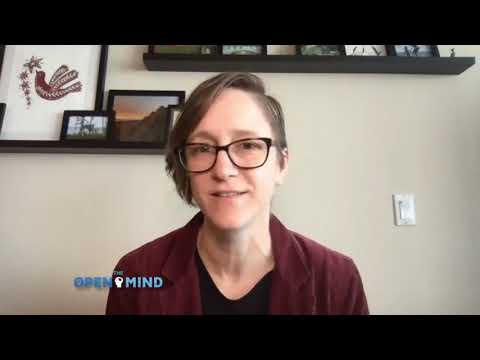
How to Demolish the Disinformation InfrastructureKate Starbird, co-principal investigator at the University of Washington's Center for an Informed Public, discusses the state of disinformation in the aftermath of platform removals (Trump, QAnon), focusing on how moderation actions redirect harmful activity to alternative ("alt-tech") platforms rather than eliminating it. She emphasizes…
 Spread & networksPlatforms, policy & society
The Hype MachineA book talk by MIT's Sinan Aral on "The Hype Machine," which explores how social media simultaneously disrupts elections, the economy, and public health while offering tremendous potential for good. The presentation synthesizes 20 years of research on social media diffusion, arguing that misinformation spreads faster than truth because…
 Spread & networksPlatforms, policy & society
Mis- and Disinformation During Crisis EventsKate Starbird, associate professor at UW's HCDE and co-founder of the Center for an Informed Public, discusses how misinformation and disinformation spread during crisis events, with case studies from the COVID-19 pandemic and 2020 election. She distinguishes between harmful misinformation (false but well-intentioned), disinformation…
 Detection methodsSpread & networks
Fake News in the 2016 and 2018 Campaigns: Prevalence, Detection, and EffectsNyhan presents empirical findings on fake news consumption in the 2016 and 2018 U.S. campaigns, drawing from survey data with browser tracking to measure actual article visits. While mainstream media reported on fake news as a widespread crisis, his research shows that only ~25% of Americans visited fake news websites, and consumption…
 Platforms, policy & societyPsychology & interventions
Inside the bizarre world of internet trolls and propagandistsJournalist Andrew Marantz spent three years investigating propagandists and online extremists, tracing how fringe conspiracy theories and hate speech go viral on social media platforms. He exposes how social media algorithms optimized for engagement enable propagandists to leverage emotion over truth, and documents the pipeline through…
 Platforms, policy & societyBots & coordinated campaigns
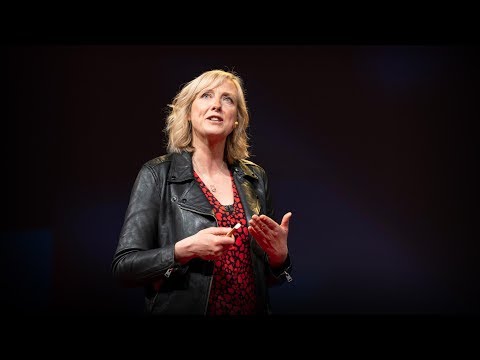
Facebook's role in Brexit — and the threat to democracyInvestigative journalist Carole Cadwalladr exposes the systematic abuse of Facebook as an instrument for election interference during the 2016 Brexit referendum. She documents illegal campaign spending, microtargeted disinformation, Cambridge Analytica's harvesting of 87 million user profiles, and traces connections between Brexit and…
 Platforms, policy & societySpread & networks
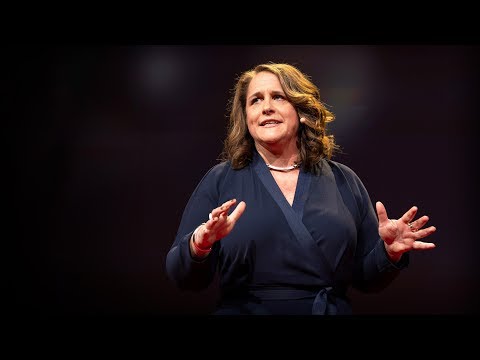
How You Can Help Transform the Internet into a Place of TrustWardle examines the systemic challenges of moderating harmful content at internet scale while preserving freedom of expression. She argues that the core problem is not technical (AI could theoretically detect violations) but structural: platforms and governments lack clear authority to decide what constitutes harmful speech, face…
 Spread & networksBots & coordinated campaigns
5 Reasons Why Social Networks Make Us Vulnerable to MisinformationMenczer presents five fundamental factors that make social networks inherently vulnerable to misinformation spread. Information and misinformation propagate through networks at equivalent rates due to structural properties of scale-free networks combined with human cognitive limitations.
 Spread & networksDeepfakes & multimodal
Don't Blame Bots, Fake News Is Spread by HumansA comprehensive talk covering the scale of misinformation campaigns on social media (ranging from Syrian hackers compromising the AP's Twitter account to Russian interference in the 2016 US election), empirical findings on how false news spreads faster than truth, and emerging threats from synthetic media (deepfakes) created via…
 Bots & coordinated campaignsSpread & networks
Social Bots and the Spread of Fake NewsA presentation on how social bots amplify misinformation spread on Twitter and other social platforms. The speaker discusses bot detection techniques (network structure, user behavior, temporal patterns), case studies of coordinated bot campaigns (2010–2016 elections, vaccine debates, Brexit), findings showing bots act as "igniters" in…
 Spread & networksBots & coordinated campaigns
The Truth About False NewsA presentation discussing findings from a large-scale longitudinal study of false and true news spread on Twitter (2006–2017). The research found that false news spreads further, faster, and more broadly than truth by orders of magnitude—not primarily due to bots, but because humans are more susceptible to sharing novel information, and…
 Spread & networksPlatforms, policy & society
Beware online filter bubblesAlgorithmic personalization on major platforms like Facebook and Google has created "filter bubbles" — personalized information universes that show us what we're predicted to like rather than what we need to see. This invisible algorithmic gatekeeping threatens democracy and information diversity by isolating us in narrow perspectives,…
 Spread & networksPlatforms, policy & society
Network PropagandaBenkler presents research on media asymmetry during the 2016 U.S. election, revealing that the right-wing media ecosystem operates under a fundamentally different structure than the center and center-left press. Rather than technological systems (Facebook algorithms, Russian interference) or individual-level factors, the key driver of…
 Spread & networksDetection methods
Computational Propaganda and the Lie MachinesPhilip Howard discusses his book The Lie Machines and describes computational propaganda as an industrialized system combining organized disinformation campaigns (social component) with social media algorithms (technical component). He outlines three production stages — creation, dissemination, and long-term marketing — and argues that…
 Spread & networksBots & coordinated campaigns
The Spread of Misinformation in Social MediaMenczer presents a framework for understanding misinformation spread through social networks as an inevitable consequence of network structure and human cognitive limitations rather than platform design failures. He discusses how structural properties—scale-free topology, finite attention, information overload—create vulnerabilities…
 Spread & networksDetection methods
Climate Change Misinformation: Supply, Demand, and the Challenges to ScienceLewandowsky examines climate denial through supply and demand lenses: well-funded disinformation campaigns (billions annually from fossil fuel interests and conservative think tanks) deploy cherry-picked data to infiltrate mainstream media and political rhetoric, while political ideology (conservatism, libertarianism) predisposes people…
 Psychology & interventionsPlatforms, policy & society
The Misinformation AgeFalse beliefs persist and spread through social factors—conformity, institutional curation of evidence, and network structure—rather than individual cognitive biases alone. O'Connor examines historical cases (variolation in 18th-century England, tobacco industry strategy) and mathematical models to show how unbiased actors (journalists,…
 Spread & networksPlatforms, policy & society
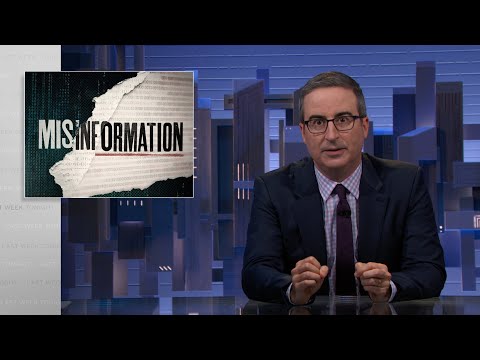
Misinformation (Last Week Tonight with John Oliver)Immigrant diaspora communities face disproportionate exposure to misinformation spread through private messaging apps (WhatsApp, WeChat, KakaoTalk) rather than public social media. Platforms invest 13% of moderation resources on 90% of non-US users; messaging apps' encrypted, group-based design makes content invisible to fact-checkers;…