Explore everything
Filter by research area, year and venue. Every filter is in the address bar, so you can share a view as a link.
 Spread & networksDetection methods
Computational Propaganda and the Lie MachinesPhilip Howard discusses his book The Lie Machines and describes computational propaganda as an industrialized system combining organized disinformation campaigns (social component) with social media algorithms (technical component). He outlines three production stages — creation, dissemination, and long-term marketing — and argues that…
 Spread & networksPlatforms, policy & society
Network PropagandaBenkler presents research on media asymmetry during the 2016 U.S. election, revealing that the right-wing media ecosystem operates under a fundamentally different structure than the center and center-left press. Rather than technological systems (Facebook algorithms, Russian interference) or individual-level factors, the key driver of…
 Psychology & interventionsPlatforms, policy & society
The Misinformation AgeFalse beliefs persist and spread through social factors—conformity, institutional curation of evidence, and network structure—rather than individual cognitive biases alone. O'Connor examines historical cases (variolation in 18th-century England, tobacco industry strategy) and mathematical models to show how unbiased actors (journalists,…
 Spread & networksPlatforms, policy & society
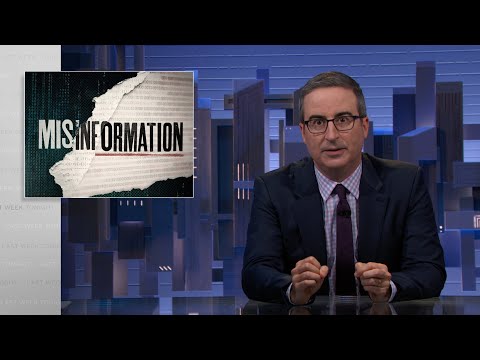
Misinformation (Last Week Tonight with John Oliver)Immigrant diaspora communities face disproportionate exposure to misinformation spread through private messaging apps (WhatsApp, WeChat, KakaoTalk) rather than public social media. Platforms invest 13% of moderation resources on 90% of non-US users; messaging apps' encrypted, group-based design makes content invisible to fact-checkers;…
Platforms, policy & societyBots & coordinated campaigns
How to Counter Russian Social Media Influence in Eastern EuropeRussia deploys sophisticated social media campaigns in Eastern Europe using state-funded media, coordinated troll and bot networks, fake hashtags, and nonattributed comments to sow dissent against neighboring governments and NATO. The RAND study analyzed social media data and expert interviews to identify counter-strategies: accelerating…
Spread & networksBots & coordinated campaigns
Media Manipulation and Disinformation OnlineInternet subcultures including trolls, gamergaters, white nationalists, and conspiracy theorists exploit online platforms' vulnerabilities—algorithmic amplification, engagement metrics, and participatory culture—to manipulate news frames and spread disinformation. These diverse groups employ coordinated tactics (memes, bots, strategic…
Psychology & interventionsSpread & networks
Lazy, not biased: Susceptibility to partisan fake news is better explained by lack of reasoning than by motivated reasoningTwo studies with 3,446 participants found that people who score higher on cognitive reflection tests (measuring analytic thinking) are significantly less likely to believe partisan fake news—contradicting the "motivated reasoning" theory that political bias drives misinformation susceptibility. The effect holds regardless of political…