Explore talks and videos
Filter by research area, year and venue. Every filter is in the address bar, so you can share a view as a link.
 Psychology & interventionsPlatforms, policy & society
How to Pre-Bunk Misinformation and DisinformationJon Roozenbeek discusses psychological inoculation as a scalable defense against misinformation. Rather than focusing on veracity (which becomes politically contested), he proposes teaching people to recognize predictable manipulation techniques before encountering false content.
 Psychology & interventionsPlatforms, policy & society
Prebunking and Inoculating Against DisinformationVan der Linden argues that reactive fact-checking fails to scale and leaves misinformation's psychological influence intact. Instead, he proposes psychological inoculation: preemptively exposing people to weakened examples of misinformation techniques before they encounter the real thing, building cognitive resistance.
 Psychology & interventionsPlatforms, policy & society
Psychological Inoculation Against Misinformation (Trinity College, Cambridge)Van der Linden presents psychological inoculation as an alternative to reactive fact-checking. Rather than debunking false claims after people have been exposed, inoculation preemptively builds resistance to misinformation techniques.
 Psychology & interventionsFact-checking & verification
How You Can Help Combat Fake NewsA researcher presents empirical findings challenging the "motivated reasoning" account of why people believe false headlines. Instead, a multi-study investigation with 25,000+ participants shows that critical thinking and cognitive reasoning—not willful bias—are the primary determinants of misinformation susceptibility.
 Platforms, policy & societyFact-checking & verification
How Polarization Can Help Solve the Misinformation ProblemDavid Rand presents a counter-intuitive argument: while polarization is widely viewed as exacerbating misinformation, it may actually improve crowd-sourced fact-checking systems like Twitter's Birdwatch/Community Notes. Rather than a traditional technology approach (machine learning classifiers), platforms can scale fact-checking by…
 Psychology & interventionsPlatforms, policy & society
The Misinformation AgeFalse beliefs persist and spread through social factors—conformity, institutional curation of evidence, and network structure—rather than individual cognitive biases alone. O'Connor examines historical cases (variolation in 18th-century England, tobacco industry strategy) and mathematical models to show how unbiased actors (journalists,…
 Psychology & interventionsLLMs & generative AI
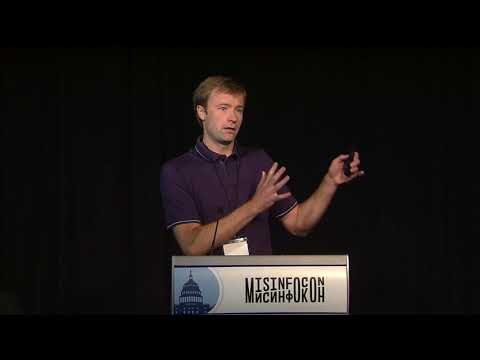
Misinformation and Data LiteracyData and numbers are surprisingly effective misinformation tools because they convey false authority and precision—people trust numbers even more than words. West illustrates how charts can deliberately mislead through axis manipulation, bin-width distortion, and selective framing; these occur regularly in mainstream media and academic…
 Spread & networksPlatforms, policy & society
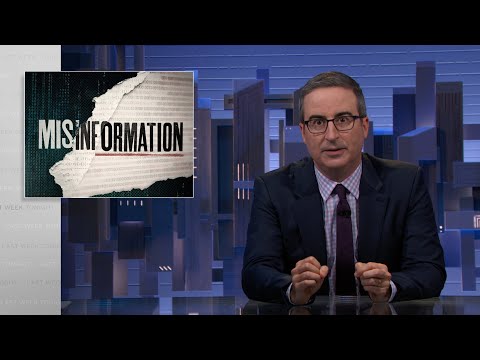
Misinformation (Last Week Tonight with John Oliver)Immigrant diaspora communities face disproportionate exposure to misinformation spread through private messaging apps (WhatsApp, WeChat, KakaoTalk) rather than public social media. Platforms invest 13% of moderation resources on 90% of non-US users; messaging apps' encrypted, group-based design makes content invisible to fact-checkers;…