 Kate Starbird
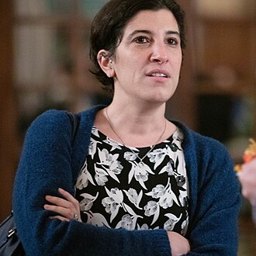 Renée DiResta
Contributions
- Demonstrates that the 2020 voter-fraud disinformation campaign was neither purely top-down (elite-driven) nor purely bottom-up, but a hybrid combining both dynamics.
- Introduces a framework based on influencer audience size (mega, macro, meso, micro, nano, established users, low-follower) to analyze differentiated roles in spreading false narratives.
- Provides three detailed case studies—Sonoma Ballots, SharpieGate, and Maidenga—showing how individual false claims emerged, evolved, and spread across social-media platforms over hours to days.
- Shows how "unwitting agents" (ordinary users, journalists, hyperpartisan media) participated alongside coordinated elites in amplifying disinformation.
Method
The authors employed a grounded-theory approach integrating qualitative and quantitative methods. They collected over 1 billion tweets from August 2020 to January 2021 using the Twitter Streaming API, focusing on voting-related terms and conspiracy-related keywords. For each of their three case studies, they traced the timeline of narrative emergence and spread, identified key accounts and influencers, and analyzed both the content of tweets and the network dynamics of retweets and quote tweets. They categorized influencers by audience size using a framework adapted from marketing (Mediakix 2019), distinguishing roles from mega-influencers (1M+ followers) down to low-follower accounts (<1K). They anonymized accounts to protect user privacy and followed ethical practices from prior crisis-informatics research (Paalen & Anderson 2016; Starbird et al. 2015).
Results
Sonoma Ballots: A claim that mail-in ballots had been found in a dumpster in Sonoma, California emerged in September 2020. The original source was a journalist's tweet that was false. The narrative spread primarily through retweets and quote tweets, reaching mega-influencers like Donald Trump Jr. (5.7M followers) within hours. The story's spread involved micro-influencers and established users initially amplifying it, then macro/mega-influencers propelling it further, before official correction by Sonoma County. The vast majority of tweets (75%) were retweets or quote tweets of the original false claim.
SharpieGate: Claims emerged that Sharpie pens used at polling locations in Arizona and other states would invalidate ballots. This developed through five stages: (1) collective sensemaking by Arizona residents, (2) narrative development by hyperpartisan media, (3) viral spread through macro/mega-influencers, (4) fact-checking correction attempts, and (5) resurgence among partisan media. The narrative exhibited multi-stage activation with peaks corresponding to key moments (election day, recounts).
Maidenga: A claim that "political predators" had committed voter fraud by casting inauthentic votes using voters' maiden names emerged in November 2020. This case showed similar patterns of initial emergence, amplification by influencers of varying sizes, and eventual debunking.
Notes
This paper makes an important methodological contribution by moving beyond dichotomies of "top-down vs. bottom-up" and showing how both operate simultaneously in real-world disinformation campaigns. The influencer-classification framework is useful for understanding differentiated roles in spreading false narratives. The focus on specific, traceable false claims and their detailed trajectories provides granular understanding often missing in broader surveys. The paper is strong on describing how the campaign operated dynamically, though the mechanistic "why" of individual belief adoption remains outside its scope. The fact that this campaign ultimately contributed to the 6 January Capitol riot gives it significant real-world impact and institutional relevance.