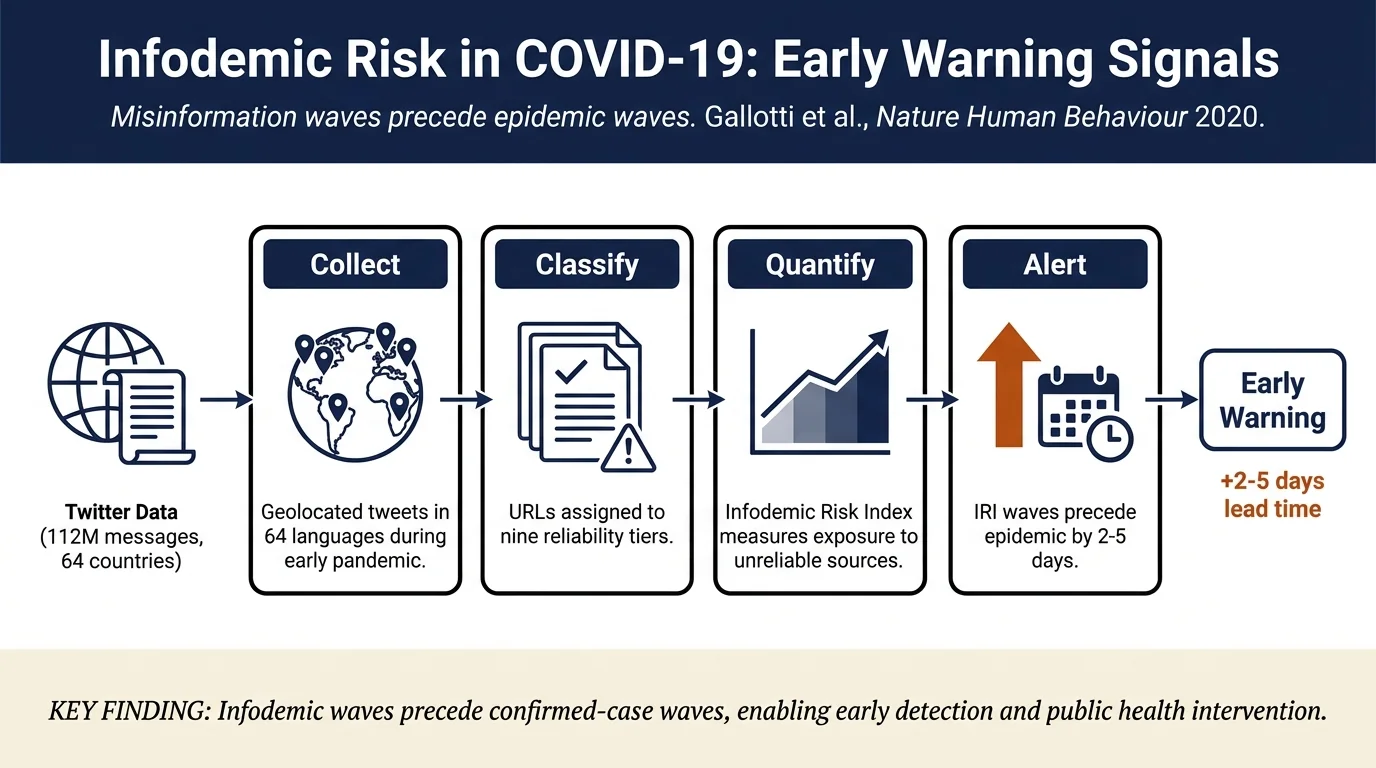
This topic covers research on identifying, characterizing, and assessing risks and threats to information integrity, including:
- Threat modeling: Systematic analysis of how misinformation, disinformation, and manipulation can be deployed and their potential impacts
- Vulnerability assessment: Identification of weaknesses in technologies, platforms, institutions, and human cognition that make populations susceptible to false information
- Risk frameworks: Analytical approaches (e.g., SWOT analysis, threat modeling) for evaluating the balance of opportunities and risks in new technologies and interventions
- Consequence analysis: Evaluation of unintended consequences and collateral damage from misinformation and correction efforts
Key papers
- Nygren et al. (2026) — The seven roles of generative AI: Potential & pitfalls in combatting misinformation — Uses SWOT analysis to systematically assess opportunities and threats across seven roles of generative AI; identifies cross-cutting risks (bias, manipulation, overreliance) and proposes mitigation strategies including regulatory oversight and human oversight
Related topics
- Large Language Models (risk assessment of generative AI systems)
- Platform Policy (risk mitigation through regulation)
- Misinformation Interventions (unintended consequences of interventions)