Explore talks and videos
Filter by research area, year and venue. Every filter is in the address bar, so you can share a view as a link.
 Psychology & interventionsPlatforms, policy & society
Can you outsmart a troll (by thinking like one)?Wardle uses a scenario-based approach to teach audiences how disinformation campaigns operate by role-playing as a malicious actor. The video demonstrates a real election disinformation strategy: creating fake accounts, spreading memes, exploiting confirmation bias to suppress opposing voters, making false voting claims, spreading…
 Psychology & interventionsPlatforms, policy & society
The dangers of the partisan brainOur brains are shaped by partisan identity to perceive reality differently, even when presented with identical evidence. Research shows that both liberals and conservatives reject factual information that contradicts their political beliefs—a phenomenon driven by motivated reasoning, structural differences in brain architecture, and…
 Psychology & interventionsPlatforms, policy & society
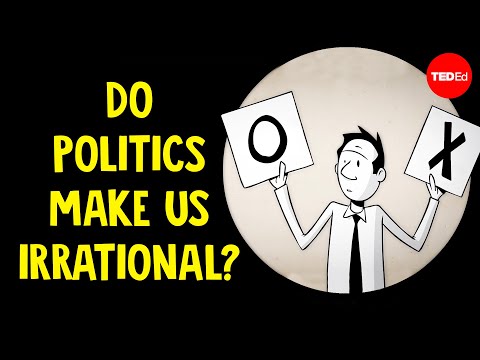
Do politics make us irrational?A 2013 study of 1,100 adults showed that political identity overrides mathematical ability: participants solved identical data-interpretation problems accurately when answers were neutral, but when the correct answer contradicted their political beliefs, even mathematically skilled participants failed. This partisan bias stems from…
 Psychology & interventionsDetection methods
Measuring and Reducing Misinformation SusceptibilityJon Roozenbeek presents two major contributions: (1) the Misinformation Susceptibility Test (MIST), a psychometrically validated 20-item measure of how well people distinguish true from false headlines, and (2) findings that video-based inoculation interventions teaching manipulation techniques significantly improve people's ability to…
 Platforms, policy & societySpread & networks
Investigating Media Manipulation and DisinformationResearchers at Harvard Kennedy School present frameworks and practical tools for investigating online media manipulation. Joan Donovan introduces mediammanipulation.org's encyclopedia of manipulation tactics and a detailed case study of how the COVID lab-leak disinformation campaign exploited academic preprint archives.
 Deepfakes & multimodalFact-checking & verification
Presenting: The Bellingcat Online Open Source Investigations ToolkitBellingcat presents their newly restructured Online Open Source Investigations Toolkit, an AI-powered search interface that aggregates tools for digital verification and investigative research. The toolkit provides categorized access to resources for satellite imagery, social media analysis, transportation tracking, and source archiving,…
 Psychology & interventionsDetection methods
Why People Believe Misinformation — and What We Can Do About ItJon Roozenbeek synthesizes eight years of misinformation research, examining why people believe false information and what interventions actually work. Grounding the analysis in the historical tobacco disinformation playbook, he argues that misinformation susceptibility stems not primarily from poor reasoning, but from media consumption…
 Psychology & interventionsFact-checking & verification
Psychological Inoculation Against MisinformationSander van der Linden surveys the psychology of misinformation susceptibility and defends the approach of psychological inoculation (pre-bunking) over fact-checking (debunking). He introduces the MIST (Misinformation Susceptibility Test), a psychometrically validated instrument for measuring individual variation in susceptibility to…
 Psychology & interventionsDetection methods
The Science of MisinformationVan Bavel synthesizes research on misinformation psychology, spread mechanisms, and evidence-based interventions. Misinformation is a persistent global risk (World Economic Forum priority).
 Psychology & interventionsDetection methods
Fact or Fake? The Psychology of MisinformationEcker presents an overview of misinformation psychology, covering definition, sources, behavioral impacts, and evidence-based interventions. He demonstrates that misinformation influences reasoning even after people receive corrections (the continued influence effect), and that corrections are only partially effective.
 Deepfakes & multimodalPlatforms, policy & society
Digital Forensic Expert Breaks Down Political DeepfakesFarid surveys the state of deepfake technology in the 2024 election cycle, demonstrating how synthetic images, audio, and video are weaponized to manipulate voters through fake endorsements, false statements, and inauthentic imagery. He details forensic detection techniques—perspective geometry, shadow physics, lip-sync analysis—that…
 Psychology & interventionsFact-checking & verification
Psychological Inoculation Against MisinformationSander van der Linden introduces psychological inoculation as a scalable alternative to fact-checking for building societal resistance to misinformation. Drawing on inoculation theory and his flagship intervention, the Bad News game, he demonstrates how preemptively exposing people to weakened examples of six core manipulation techniques…
 Psychology & interventionsDetection methods
Prebunking Misinformation on Social MediaJon Roozenbeek presents the case for prebunking—teaching people to recognize manipulation tactics before encountering false claims—rather than relying on reactive debunking. Drawing on inoculation theory from the 1960s, he argues that manipulation techniques recur across misinformation campaigns: emotional exploitation, false…
 Psychology & interventionsPlatforms, policy & society
Rumors, Truths, and Reality: Political Misinformation in the Modern DayAdam Berinsky surveys a decade of research on why Americans believe political rumors despite contradictory evidence. He identifies two key mechanisms: conspiratorial thinking (a personality trait that varies across individuals) and partisanship (which structures which rumors a person is likely to endorse).
 Platforms, policy & societySpread & networks
How to Demolish the Disinformation InfrastructureKate Starbird, co-principal investigator at the University of Washington's Center for an Informed Public, discusses the state of disinformation in the aftermath of platform removals (Trump, QAnon), focusing on how moderation actions redirect harmful activity to alternative ("alt-tech") platforms rather than eliminating it. She emphasizes…
 Psychology & interventionsDetection methods
The Continued Influence of MisinformationUllrich Ecker presents research on the continued influence effect—the phenomenon that misinformation continues to shape people's reasoning and memory even after they receive corrections and understand them. He examines four social factors that shape this effect: source credibility (trustworthiness matters more than expertise),…
 Spread & networksPlatforms, policy & society
The Hype MachineA book talk by MIT's Sinan Aral on "The Hype Machine," which explores how social media simultaneously disrupts elections, the economy, and public health while offering tremendous potential for good. The presentation synthesizes 20 years of research on social media diffusion, arguing that misinformation spreads faster than truth because…
 Spread & networksPlatforms, policy & society
Mis- and Disinformation During Crisis EventsKate Starbird, associate professor at UW's HCDE and co-founder of the Center for an Informed Public, discusses how misinformation and disinformation spread during crisis events, with case studies from the COVID-19 pandemic and 2020 election. She distinguishes between harmful misinformation (false but well-intentioned), disinformation…
 Detection methodsSpread & networks
Fake News in the 2016 and 2018 Campaigns: Prevalence, Detection, and EffectsNyhan presents empirical findings on fake news consumption in the 2016 and 2018 U.S. campaigns, drawing from survey data with browser tracking to measure actual article visits. While mainstream media reported on fake news as a widespread crisis, his research shows that only ~25% of Americans visited fake news websites, and consumption…
 Platforms, policy & societyPsychology & interventions
Inside the bizarre world of internet trolls and propagandistsJournalist Andrew Marantz spent three years investigating propagandists and online extremists, tracing how fringe conspiracy theories and hate speech go viral on social media platforms. He exposes how social media algorithms optimized for engagement enable propagandists to leverage emotion over truth, and documents the pipeline through…
 Deepfakes & multimodalPlatforms, policy & society
How deepfakes undermine truth and threaten democracyDeepfakes use machine-learning technology to create fabricated audio and video of people doing or saying things they never did. Law professor Danielle Citron explores the dual threats: individual harm (non-consensual sexual deepfakes targeting women, especially minorities and journalists) and societal damage (eroding trust in…
 Platforms, policy & societyBots & coordinated campaigns
Facebook's role in Brexit — and the threat to democracyInvestigative journalist Carole Cadwalladr exposes the systematic abuse of Facebook as an instrument for election interference during the 2016 Brexit referendum. She documents illegal campaign spending, microtargeted disinformation, Cambridge Analytica's harvesting of 87 million user profiles, and traces connections between Brexit and…
 Platforms, policy & societySpread & networks
How You Can Help Transform the Internet into a Place of TrustWardle examines the systemic challenges of moderating harmful content at internet scale while preserving freedom of expression. She argues that the core problem is not technical (AI could theoretically detect violations) but structural: platforms and governments lack clear authority to decide what constitutes harmful speech, face…
 Spread & networksBots & coordinated campaigns
5 Reasons Why Social Networks Make Us Vulnerable to MisinformationMenczer presents five fundamental factors that make social networks inherently vulnerable to misinformation spread. Information and misinformation propagate through networks at equivalent rates due to structural properties of scale-free networks combined with human cognitive limitations.